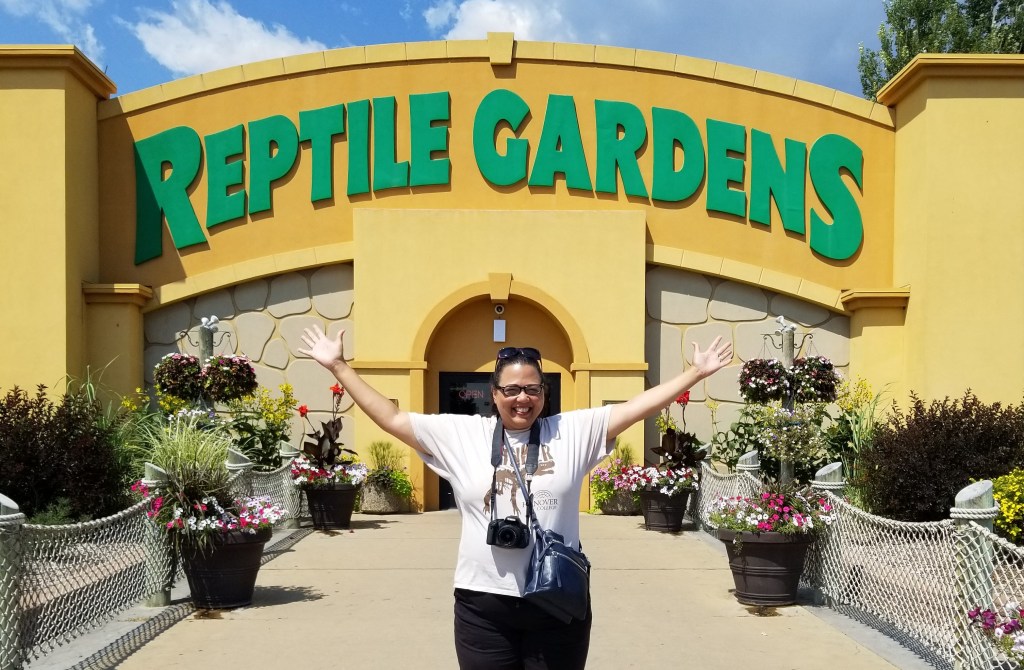
One of the places where I always wanted to stop when we took our annual trip to grandpa’s house was Reptile Gardens in Rapid City, S.D. Mom always replied with, “I’m not paying to go to that tourist trap!”
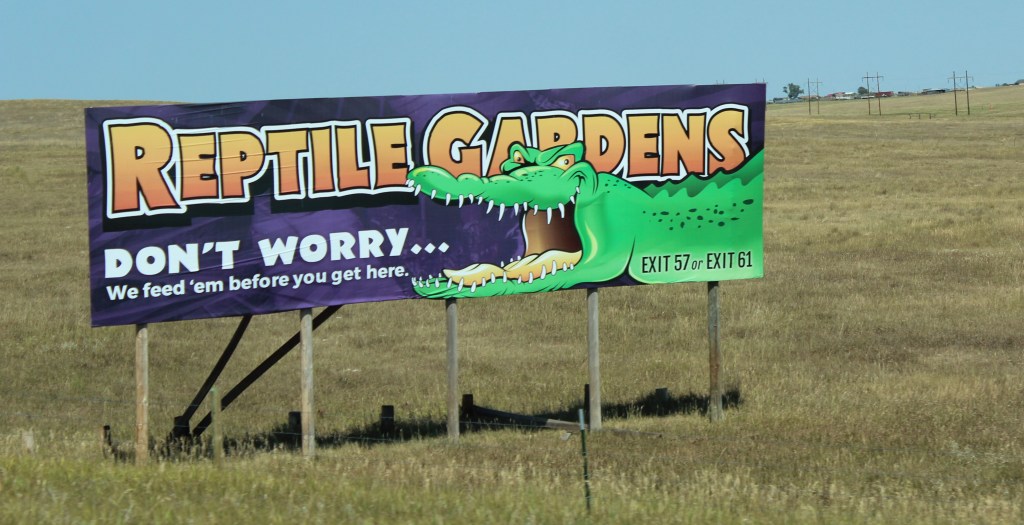
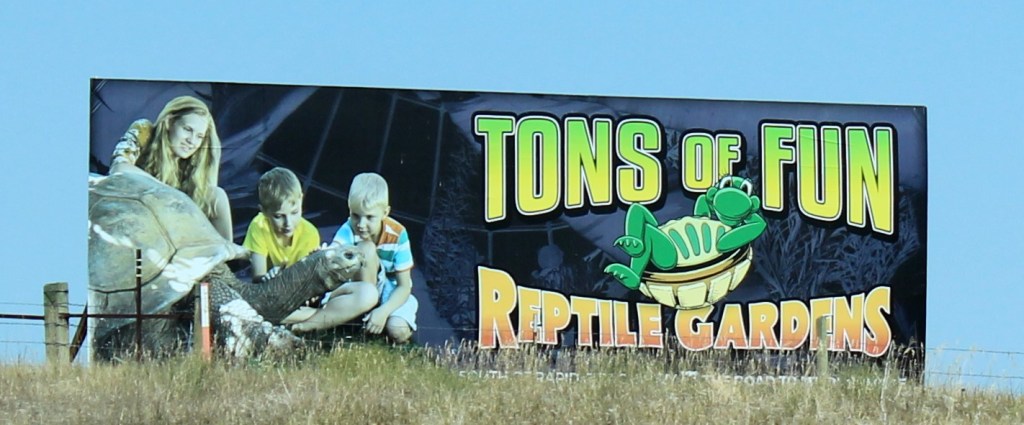
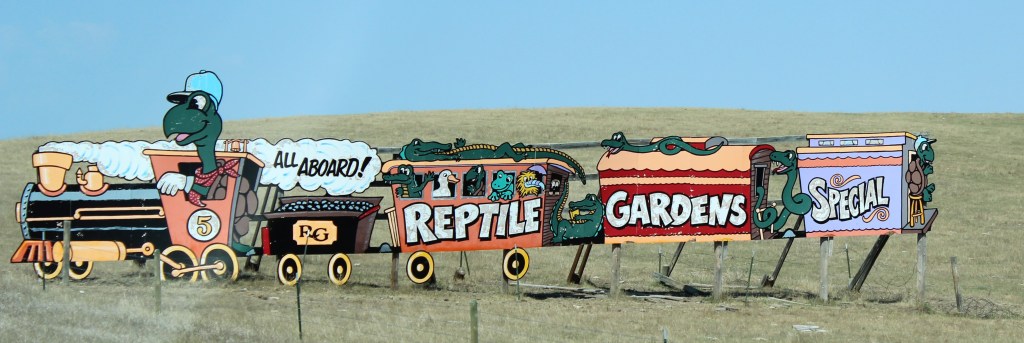
My 13-year-old mind looked at dozens of billboards urging us to “See Reptile Gardens.” They were illustrated with compelling photos and drawings that screamed out that there was a great adventure for all who stopped. But we never stopped.
Reptile Gardens billboards start appearing almost as soon as you enter South Dakota.
For decades I’ve been thinking about that place. It had become an obsession. I must see Reptile Gardens!
This summer, I finally walked through those gates, and yes, it was as exciting as I thought it would be.
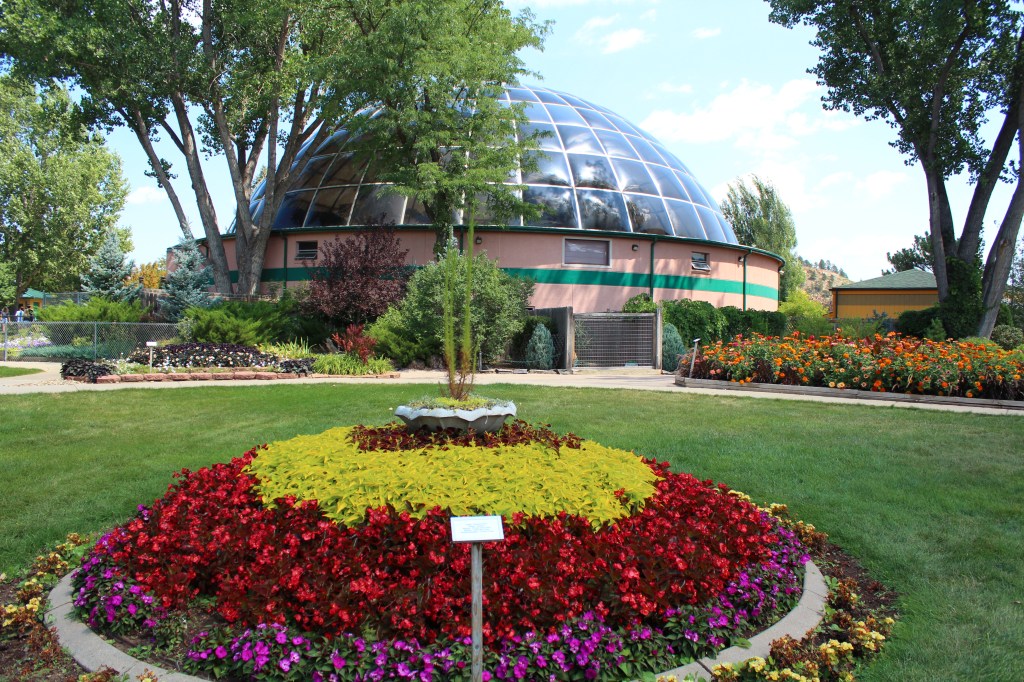
First of all, the place was gorgeous! Not only is it a zoo of sorts, but it is also a botanical garden. Plants and flowers from all over the world line the walkways and decorate the lawns. It is breathtakingly beautiful. The gardens alone are worth the trip.
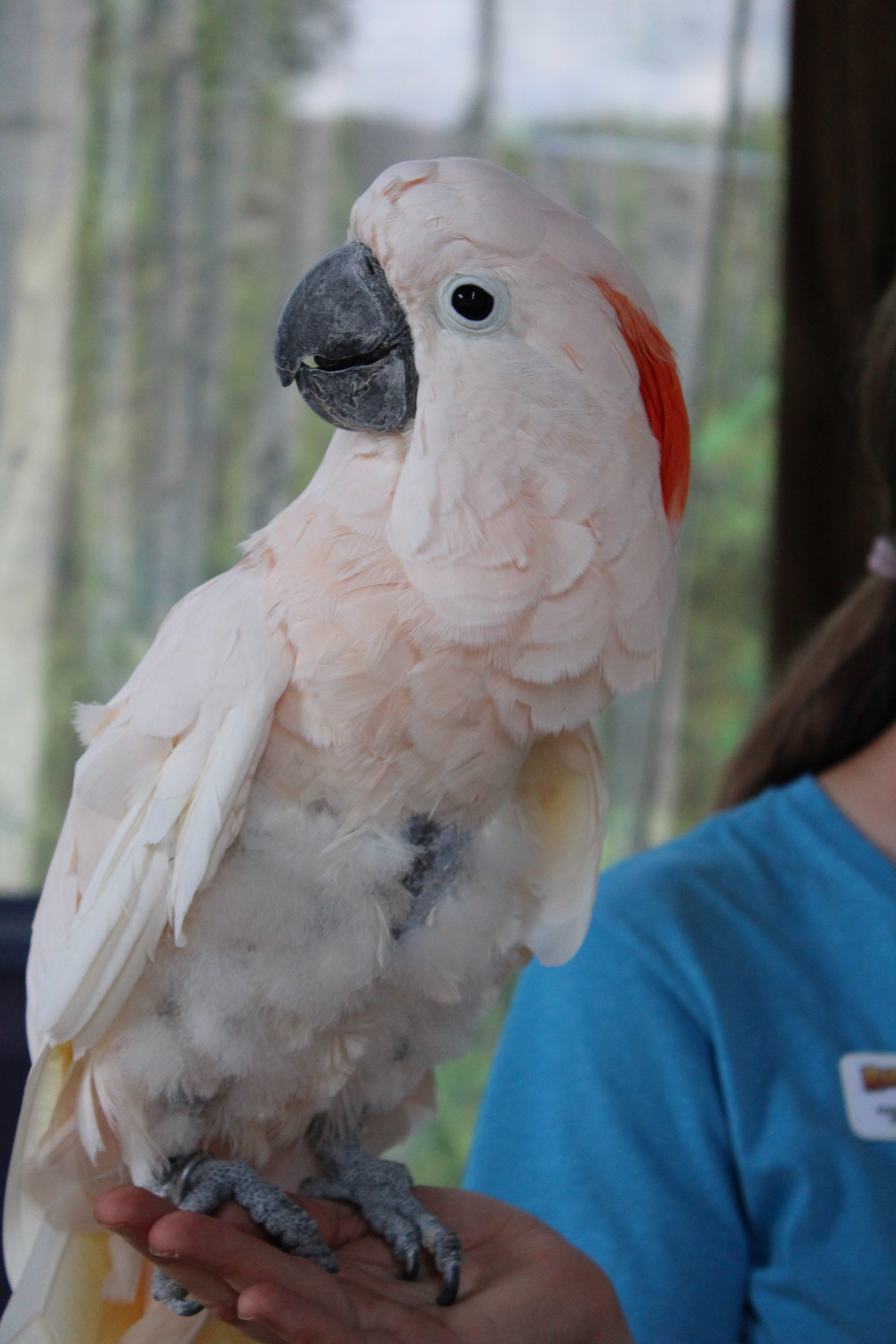
Then you get to meet the animals. The place is called Reptile Gardens, but they have way more than just reptiles. In addition to snakes, alligators, crocodiles, and lizards, they have a variety of amphibians and a very nice selection of birds.
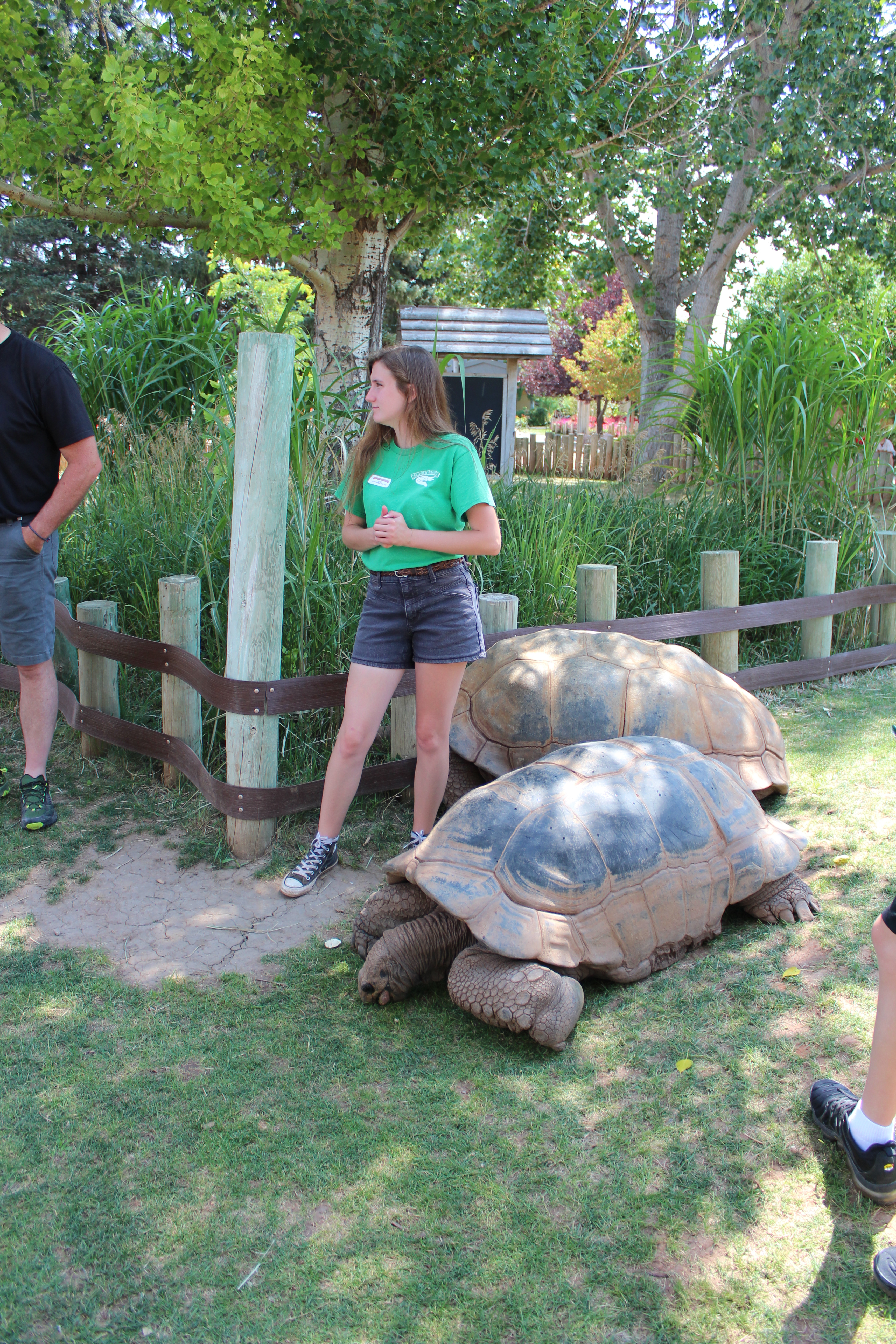
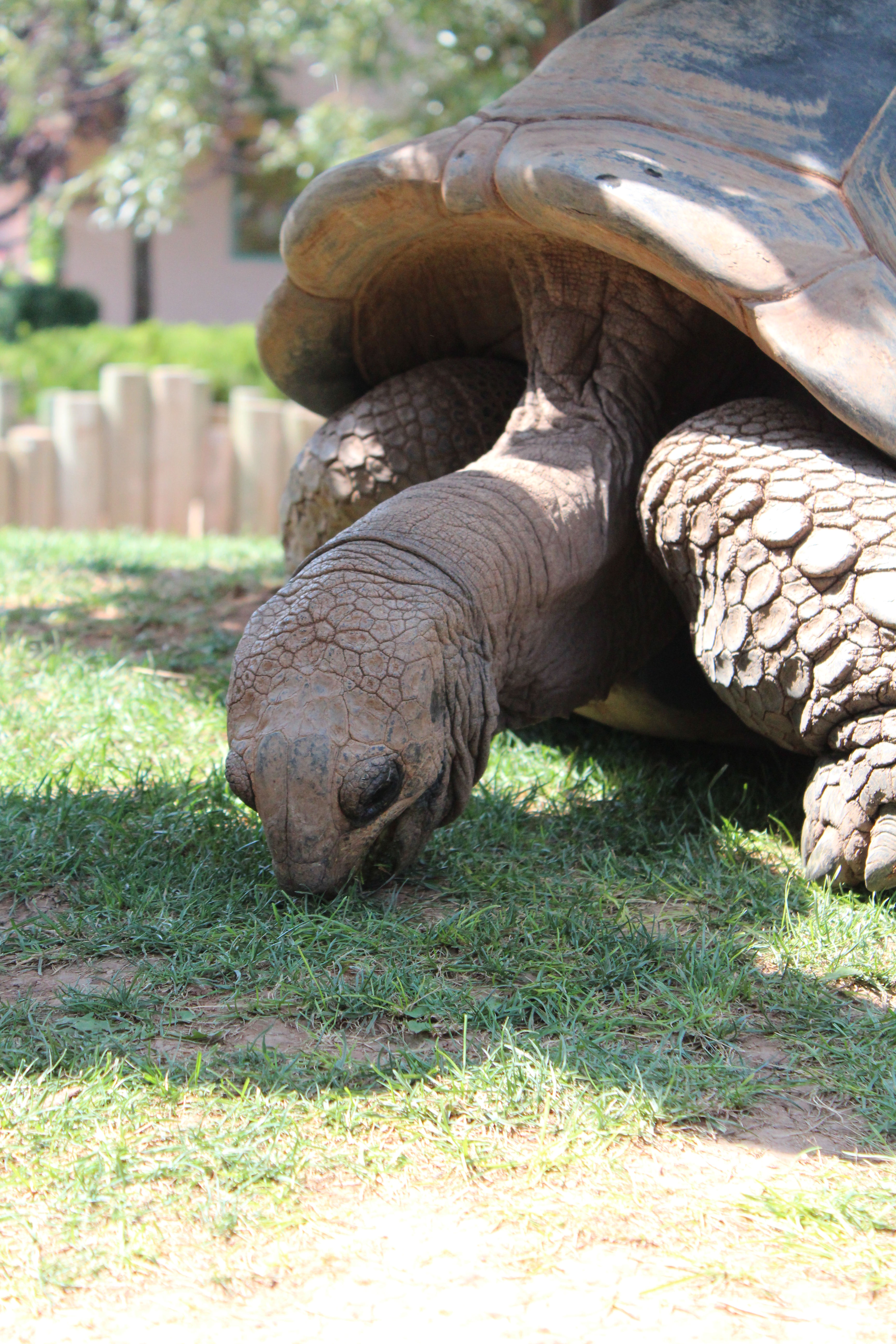
This place is awesome for anyone, no matter their age. My favorite exhibit was the giant turtles, or Aldabra Tortoises. We were able to get up close and personal with Tank, Orville, and Samson. The three tortoises range in age from 30 years old to 116 years old. They love to have their necks scratched – who knew?!
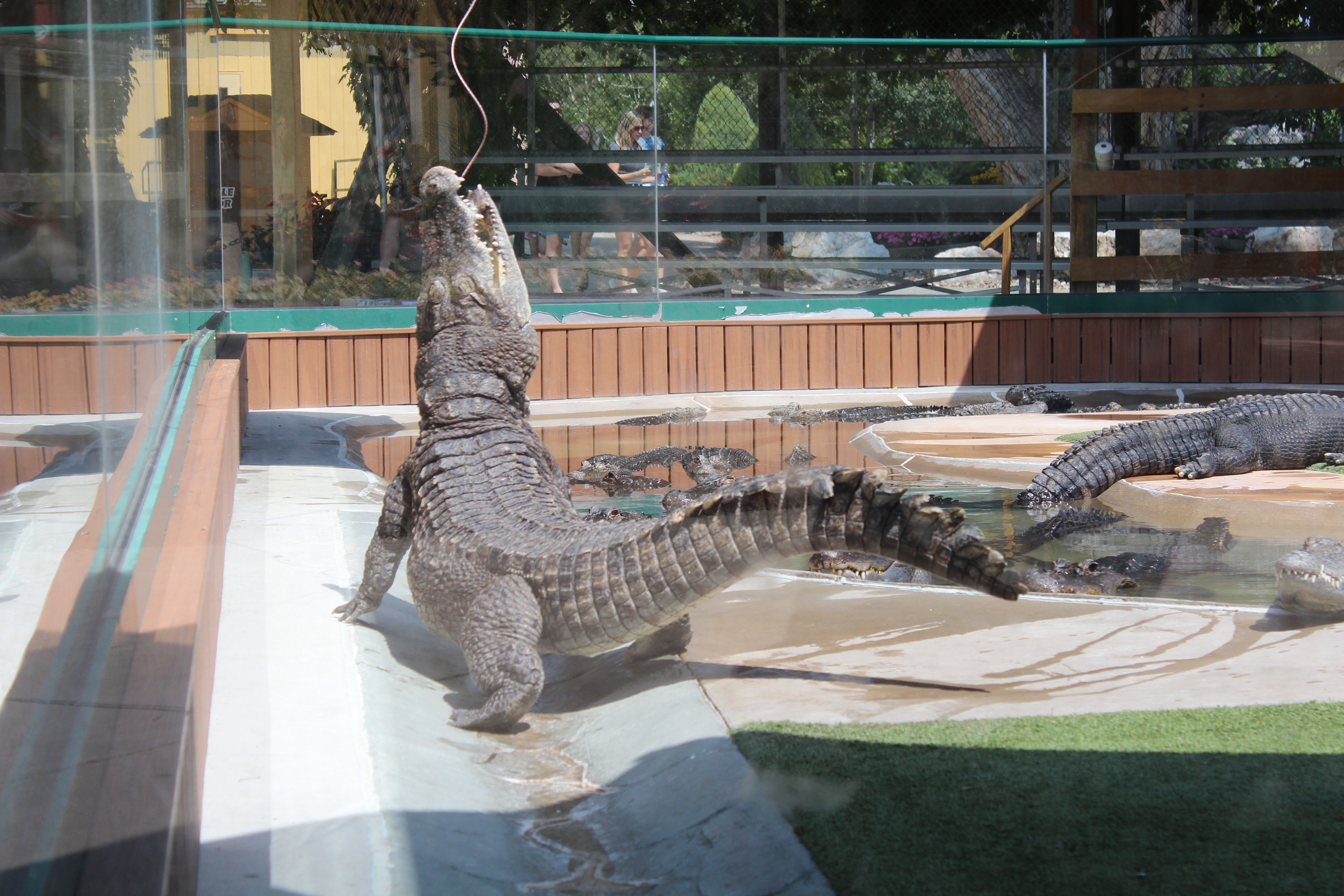
Then, of course, there are the alligators. Seeing those mighty beasts snap up a chunk of meat reminds me of the T-Rex in the Jurassic Park movies. I wasn’t the only one impressed by their strength and power judging by the excited squeals and shouts of the kids gathered around the habitat.
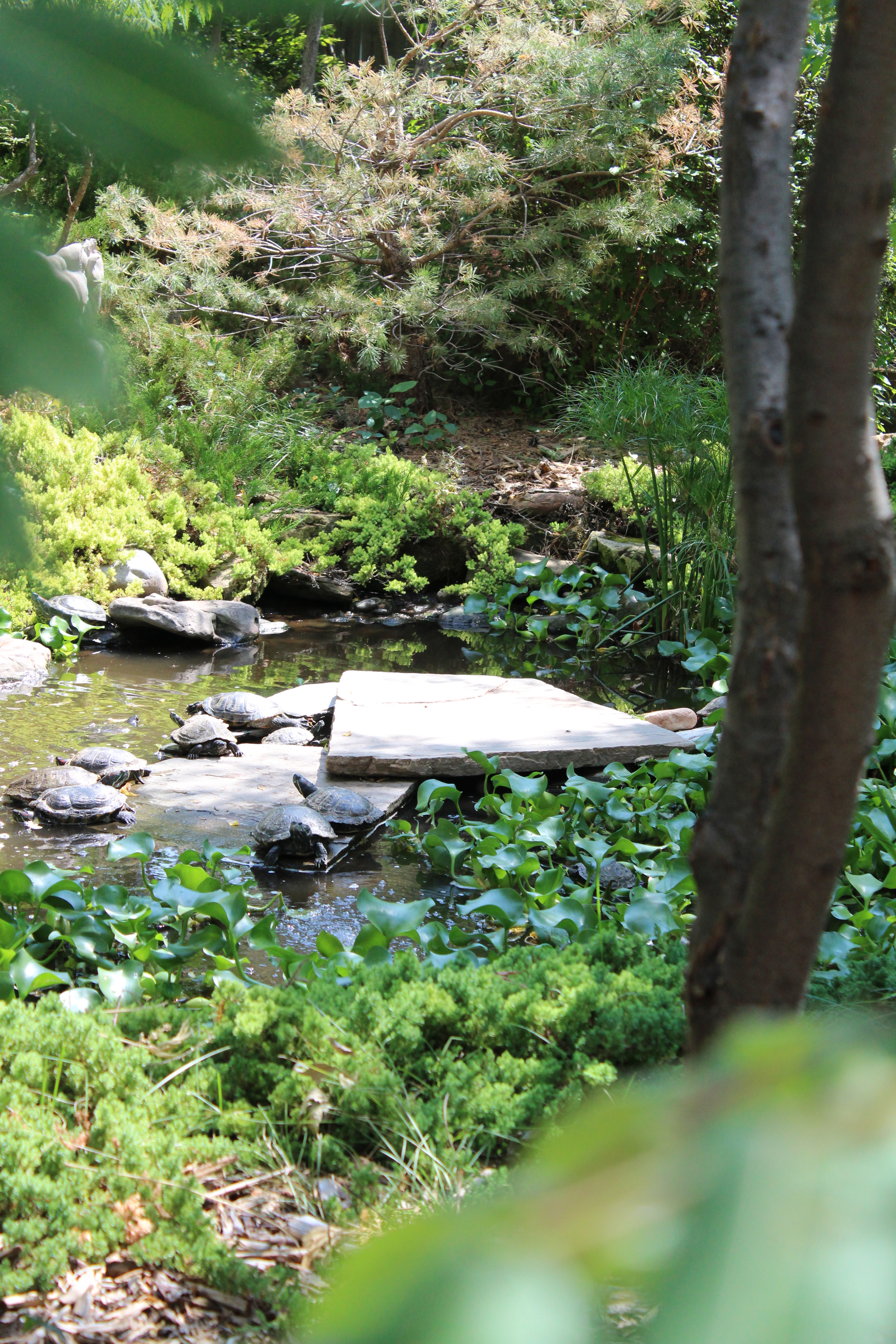
After we made our way around all the outside habitats, we entered the giant dome building. In the middle of the building is a tropical forest habitat filled with beautiful orchids and other gorgeous plants. Interspersed among the plants are tropical birds, small turtles and amphibians. I also spotted a boa constrictor lounging on an overhead branch, but I don’t think many people even noticed he was there. (Don’t worry, a handler was stationed nearby to keep an eye on Mr. Snake.)
The outer hallway encircling the tropical forest room is lined with hundreds of glass habitats containing snakes of every variety, lizards, frogs, toads, and more. It is a comprehensive collection.
I’m just going to say it: Reptile Gardens is a treasure. It is worth the stop, especially if you have kids. Summer admission is $20 per adult ages 16 and over, $18 for senior citizens, active military and military spouses, $16 for youth ages 11 to 15, $14 for children ages 4 to 10, and children ages 3 and younger are free. Off season admission is even more inexpensive.
So, if your kids (or your inner child) clamors to “See Reptile Gardens” as urged by a roadside billboard, do yourself a favor and go see it. It will be a fun adventure!
There is even more to see and experiencein the iconic dome building!It is worth the stop! My inner child is happy.
Copyright 2021 Destination Investigations/V. Lori Hedges
All Photos and videos are theproperty of V. Lori Hedges and may not be used without permission.
At the beginning of our road trip, I said there are three staples that you need for the journey: traveling music, snacks, and a flexible travel plan. I guess Day Six of our epic road trip was our day to exercise flexibility.
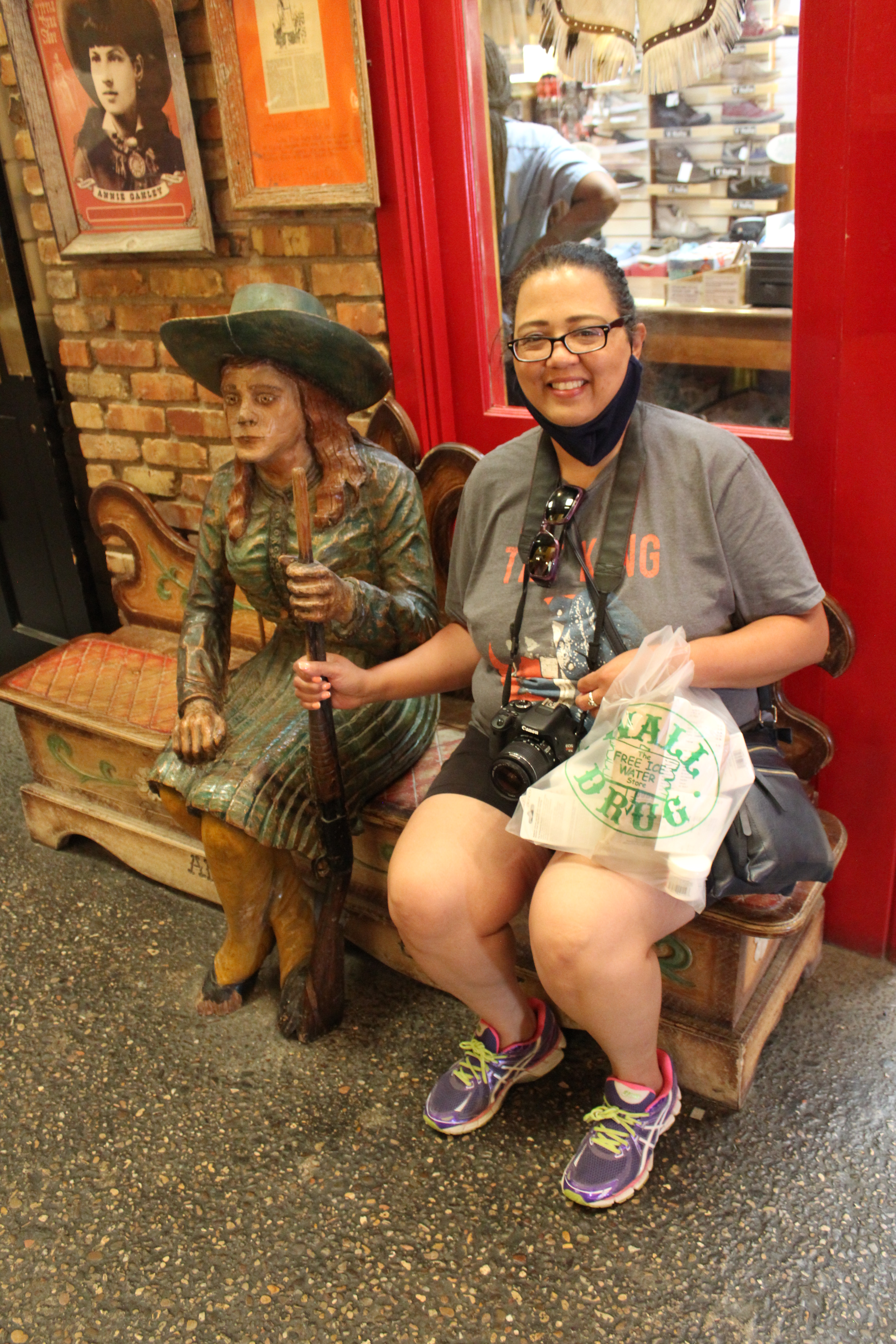
The day began with us driving the four blocks from our hotel to Wall Drug for breakfast. If you’ve never been to Wall Drug, I can only describe it as a touristy destination filled with old west memorabilia mixed with souvenir baubles to create a massive sensory overload, and yet it still manages to be a fun place to stop. Just to warn you though, Wall Drug can be an expensive visit. Our pretty standard breakfast fare ended up being the most expensive breakfast I’ve ever paid for anywhere.
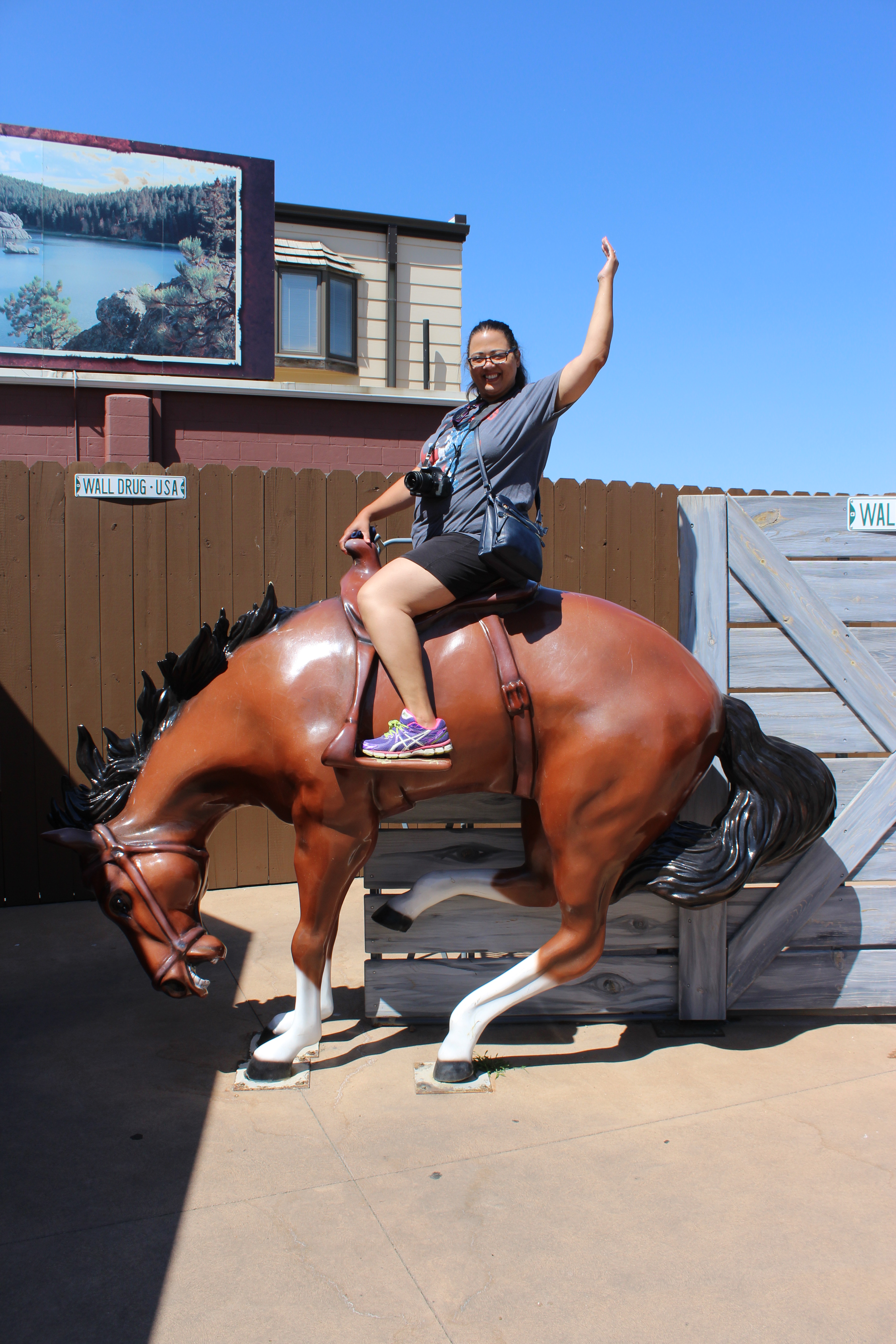
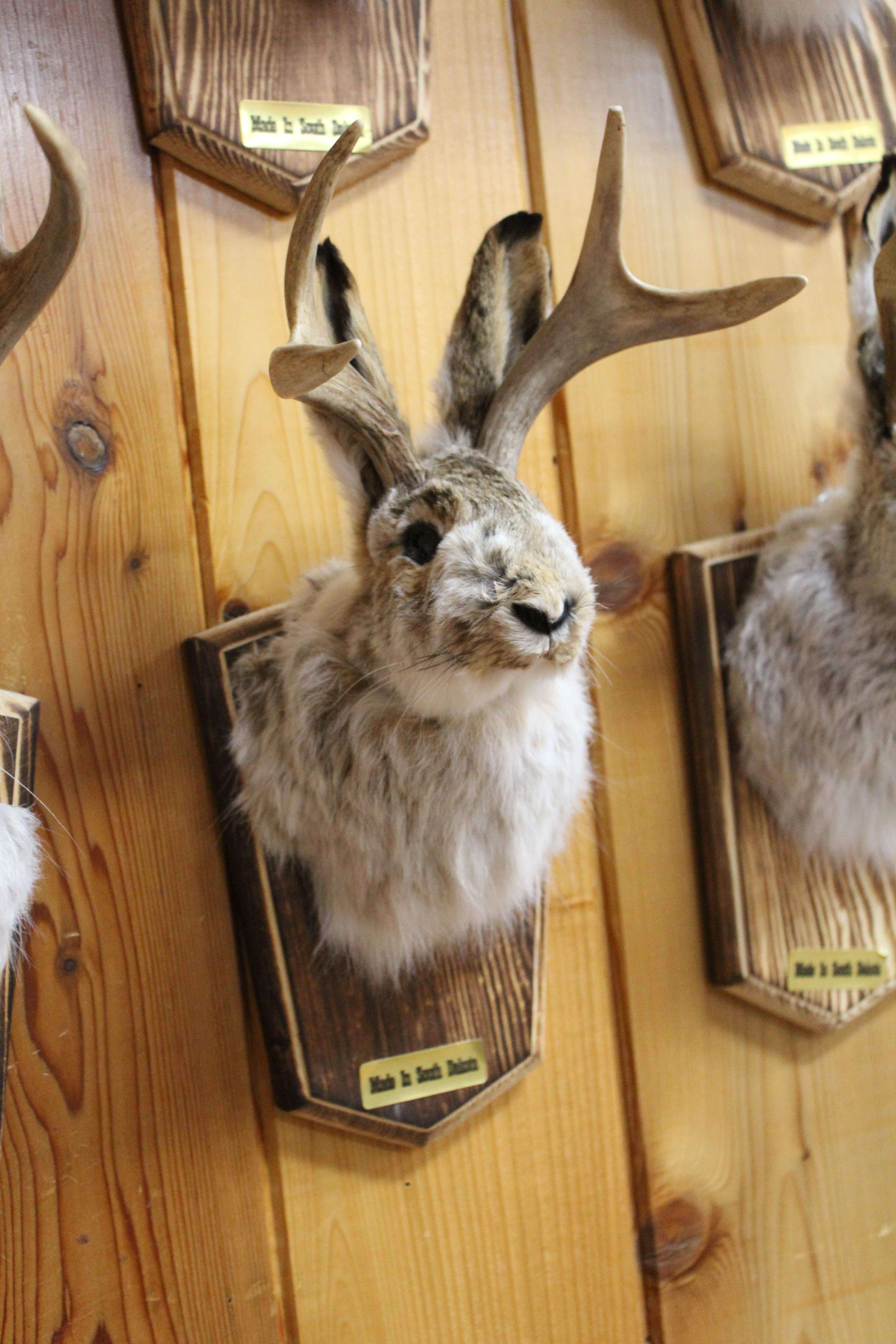
Despite that, after eating way too much, we perused the shops and exhibits, picking up a few new squished pennies to commemorate our visit. In one building we came face-to-face with a roaring animatronic T-rex, and in the “backyard” we took turns posing on various old-timey sets: a covered wagon, a jackalope, a miniature Mount Rushmore.
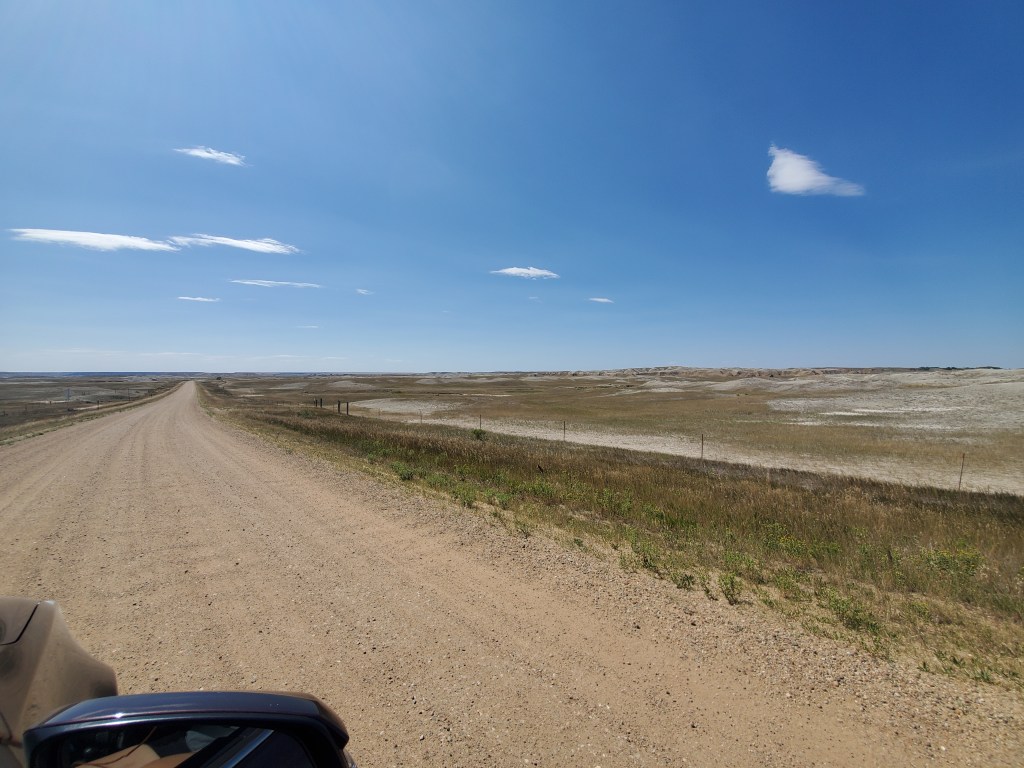
Then it was time to head out to our main destination for the day: Wounded Knee. With Google Maps leading the way, we set out on the hour and a half drive down a state highway. We hadn’t traveled too many miles when the highway suddenly turned into a gravel road. The farther we drove, the more remote it became, but what a beautiful drive!
For several miles the road was bordered by fields of sunflowers. In the distance we could see the Badlands while in the foreground prairie grass carpeted the fields. Every few miles we would pass a field full of prairie dog holes, with prairie dogs scampering around busily doing whatever it is that prairie dogs do. Periodically, we’d pass a sign that indicated we had entered or exited the Badlands National Park or the Badlands National Grasslands.
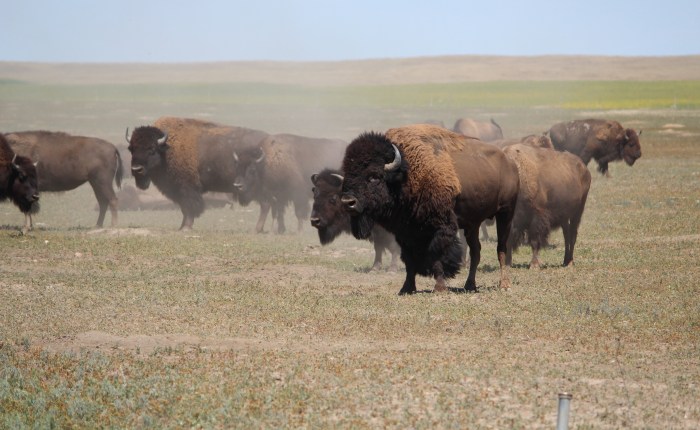
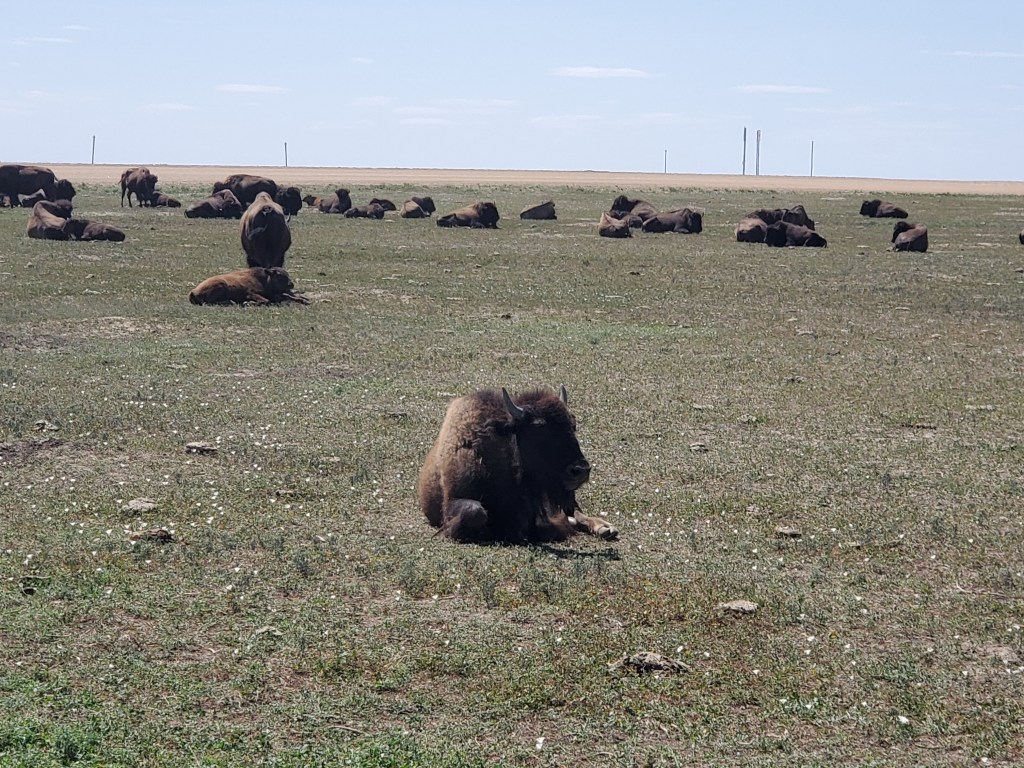
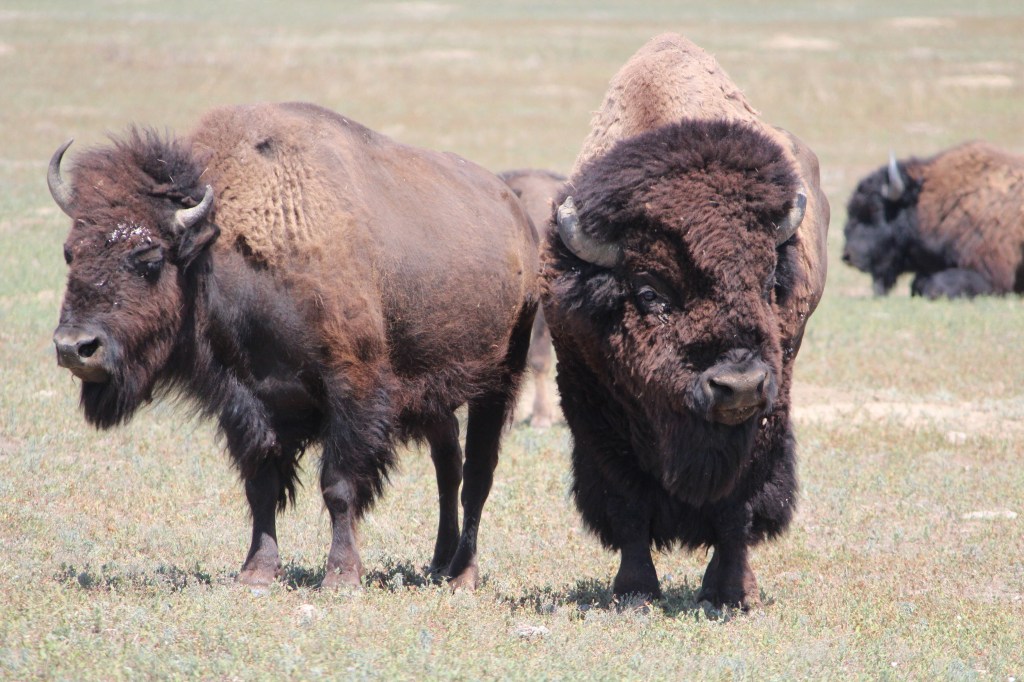
Suddenly we came over a rise and around a bend and in the fields and roadway in front of us was a large herd of bison roaming free. Those magnificent animals strolled back and forth across the road, unconcerned that they were holding up five or six cars who were waiting to pass through.
The paved highway soon turned into gravel and led us to meet these wonderful creatures.
It was an amazing sight to see. We pulled over and hurriedly snapped photos from the safety of our vehicle. We inched our way through gaps in the herd, all the while listening to their grunts and snorts. Some of the bison were napping in the nearby fields or taking dust baths as they rolled around in the dirt. Calves played with other calves or nursed from their mothers. Others continually meandered back and forth across the road as if they couldn’t decide which side was better. One old male seemed frustrated that some of the others were ignoring his directions and his snorts became increasingly louder. I imagined how the same scene would have looked hundreds of years ago when there were a hundred times that many bison grazing on the plains.
What a treat it was to see those animals roaming wild and free. It honestly was one of my favorite experiences of the trip. (Just a reminder though: If you ever find yourself face-to-face with a bison, STAY IN YOUR CAR! They are large and powerful creatures that can very easily end you. Every year people die trying to take a photo with these animals. They are wild and unpredictable, and they are fast. Use a telephoto lens and shoot from your vehicle.)
After easing our way through the crowd of bison, we continued on our way. The scenery in that area of the country is just breathtaking. Photos can’t do it justice. It must be seen in person. After about 35 minutes of driving, we came to the entry gate of the Pine Ridge Indian Reservation on which Wounded Knee is located.
We were stopped by a very courteous young Lakota man who informed us that we would be unable to enter the reservation that day because of Covid-19 protocols. I knew that some reservations had suffered large outbreaks of Covid and had received little help from the government, but I never thought about the fact that they would need to close off access to Wounded Knee. He explained that to limit Covid spread, only individuals that had official business on the reservation could enter. “I’m sorry,” the young guard said, “but I’m going to have to turn you around.”
We thanked him for his kindness and wished him well and then did a U-turn and started back toward Wall. It was disappointing not to be able to pay our respects to the hundreds of natives who died at Wounded Knee, but it was more respectful to help protect them from their current death threat. Besides, I told my sister, if we hadn’t made the trip, we would never have seen the magnificent herd of bison. As far as I was concerned, the day trip was a complete success!
T-Rex at Wall Drug.
More about Wall Drug.
Party of Bison: These big guys were totally unconcerned about us!
Copyright 2021 Destination Investigations/V. Lori Hedges
All Photos and videos are theproperty of V. Lori Hedges and may not be used without permission.
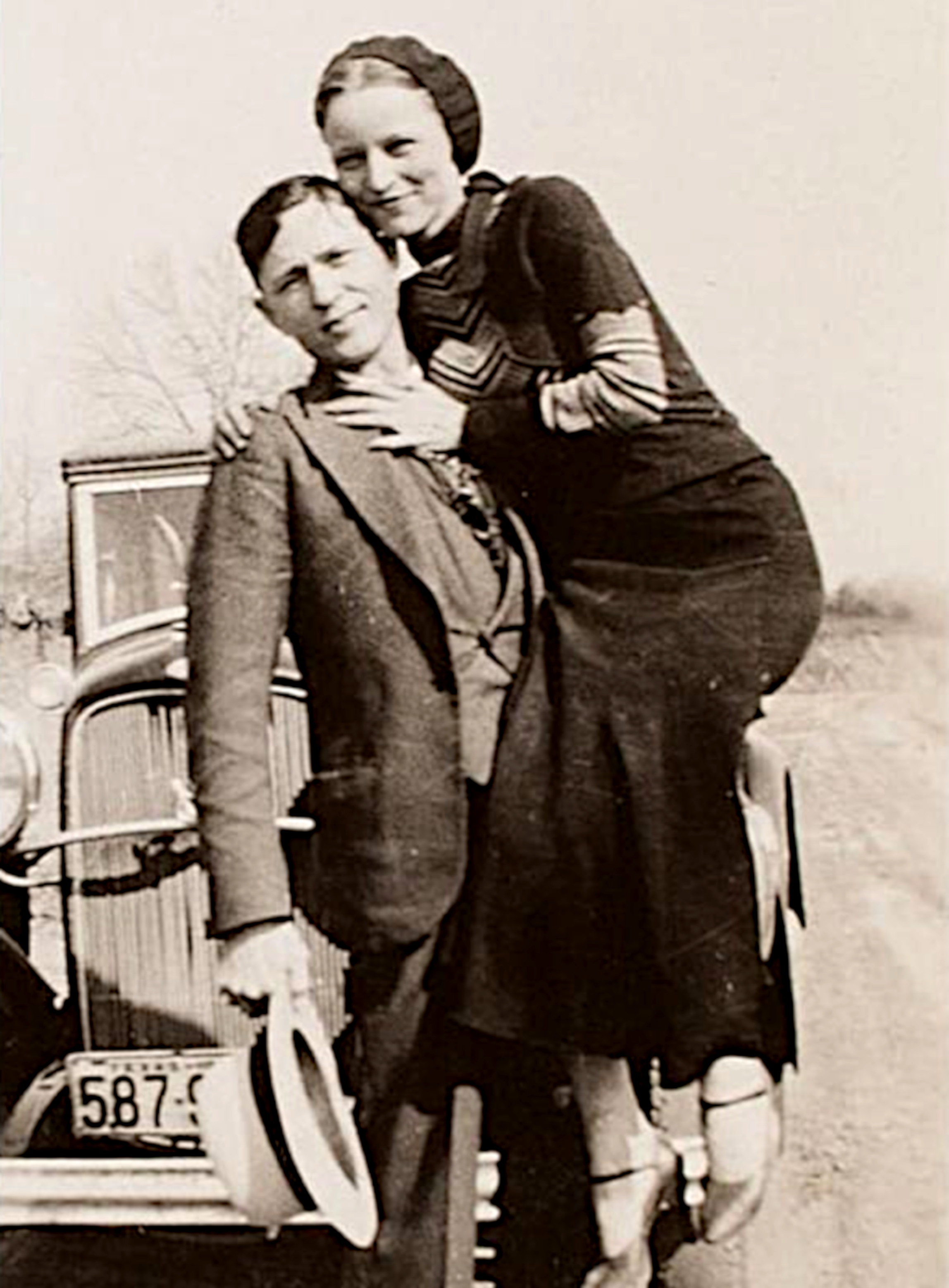
Have you ever wondered about the fascination people have with outlaws? People like Dillinger, Billy the kid, and Butch Cassidy not only are remembered long after their deaths, but they are admired, and in some locations, they are actually celebrated.
On this Destination Investigation Road Trip, we visited several sites that were all about remembering and celebrating the lives of some very famous outlaws and gunfighters: Bonnie and Clyde, Jesse James, Wild Bill Hickok, and Calamity Jane.
Bonnie Parker and Clyde Barrow
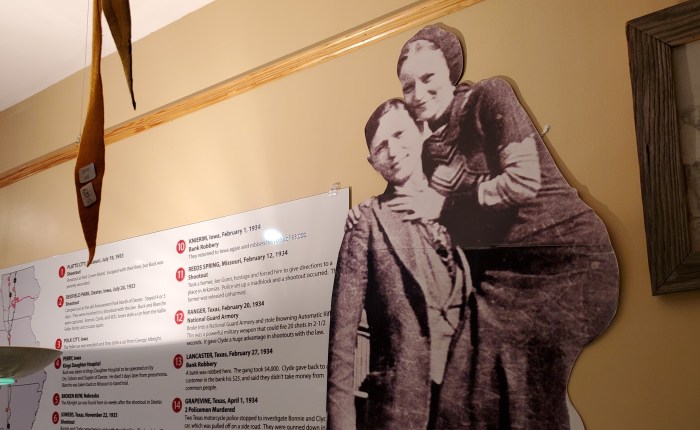
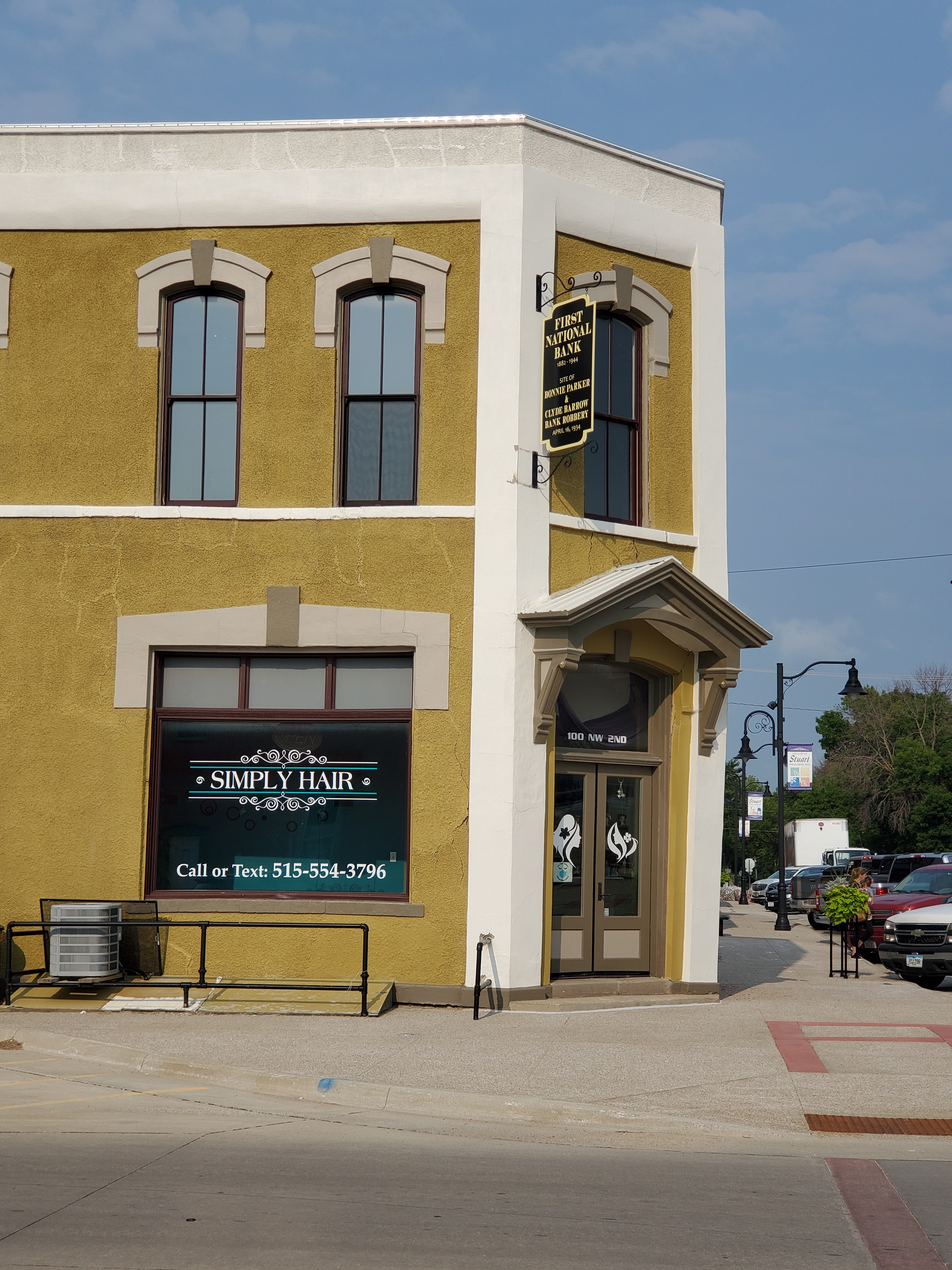
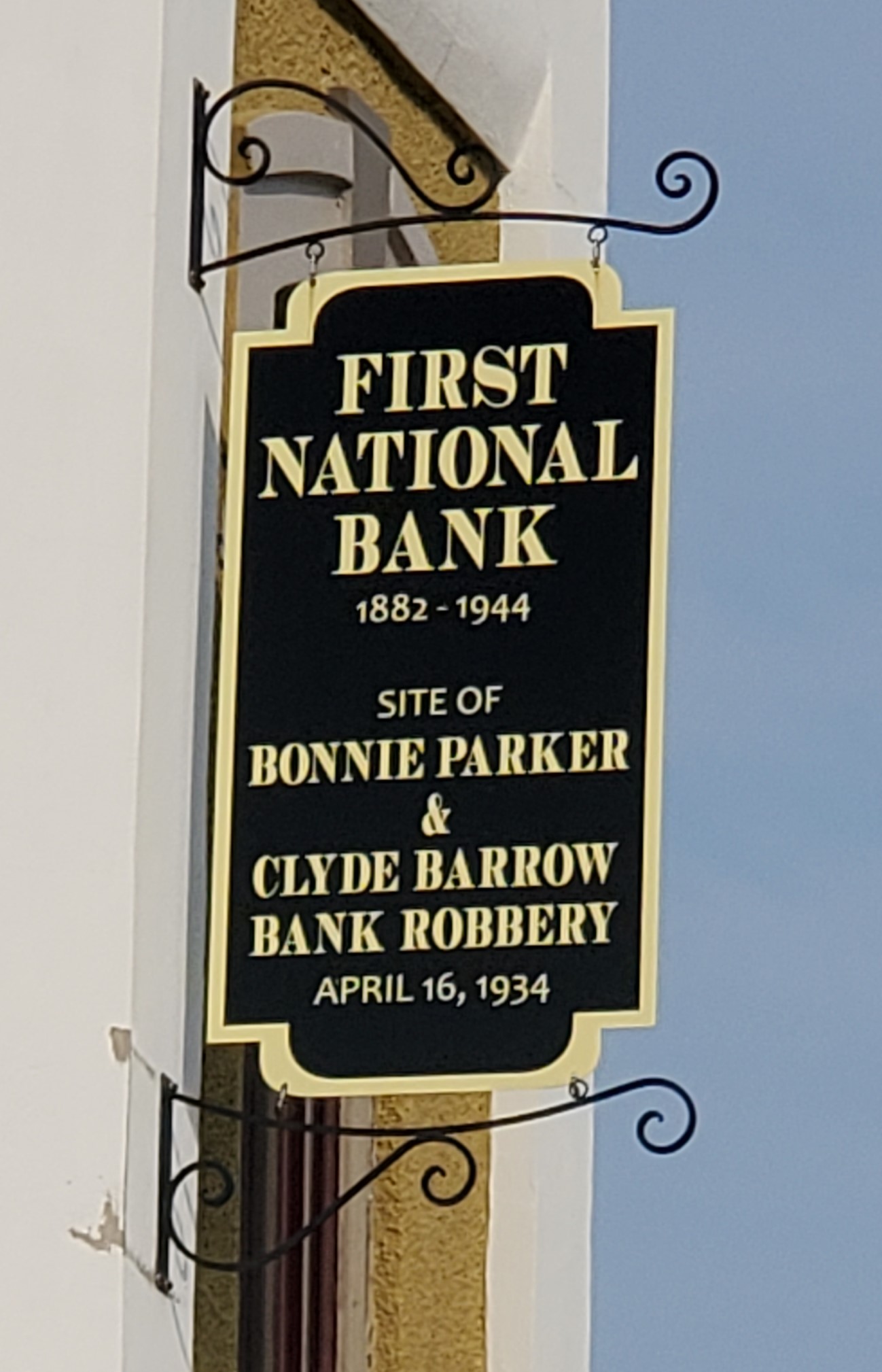
During our stay at a very nice Motel 6 in Stuart, Iowa, we found out that the town’s claim to fame is that Bonnie and Clyde’s last bank robbery happened just up the street. So, we went to check out the former bank that is now the home of a hair salon.
While we were there taking pictures, a woman stopped and welcomed us to her town. She then told us that not only did the Barrows rob the Stuart bank, back up the interstate about four miles in the town of Dexter is the site where the Barrow gang was ambushed by law enforcement.
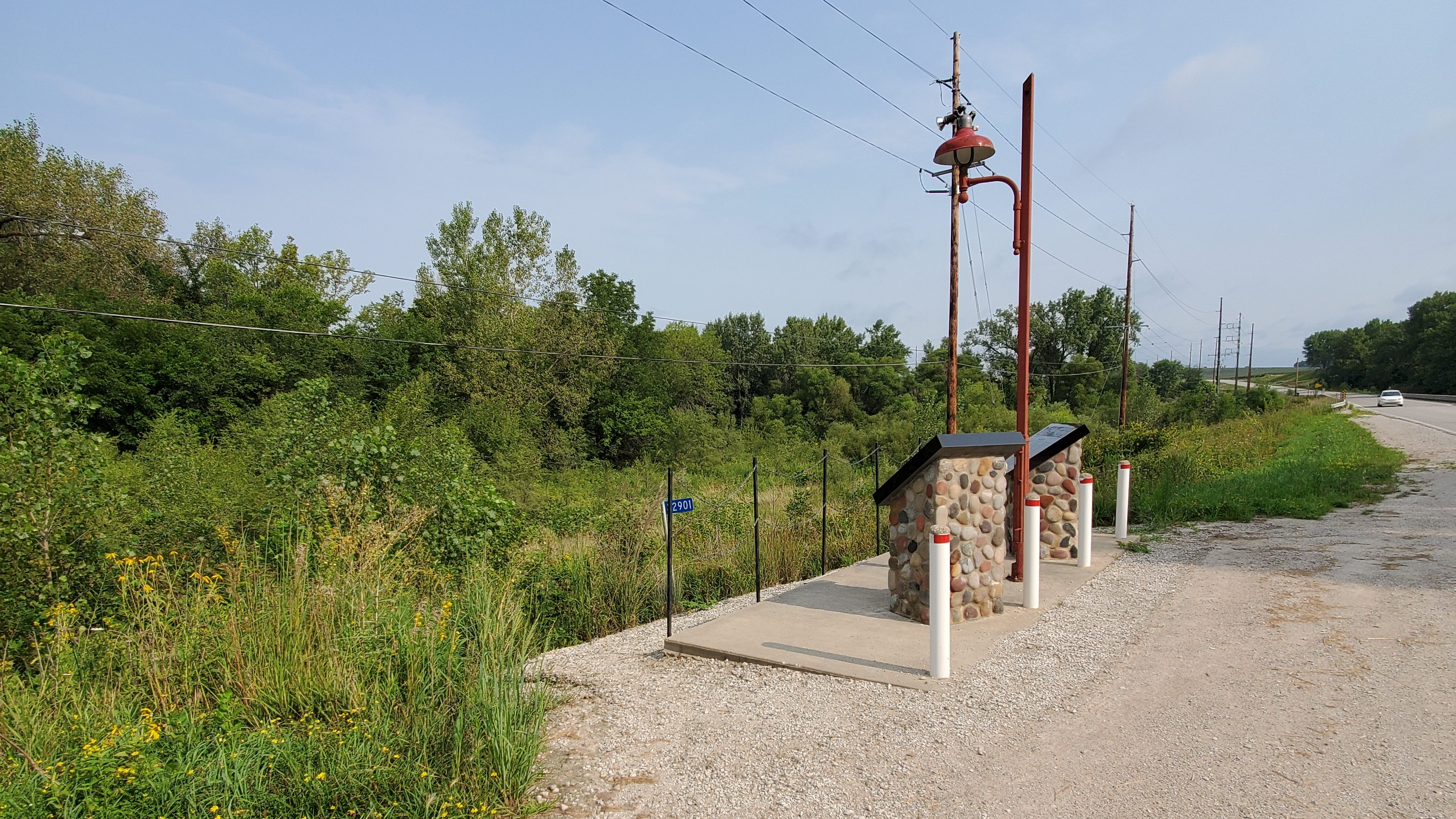
So, we backtracked to Dexter, where we drove out into the countryside to the location of the former Dexfield Park.
The former Dexfield Park, the site of the shootout with the Barrow Gang.
In the early 1900s, the park was a gathering place for a thriving community, and it even had an Olympic-sized swimming pool for use by the public. Today the area is grown up with only a roadside pull off and two granite markers to commemorate the park and the shootout.
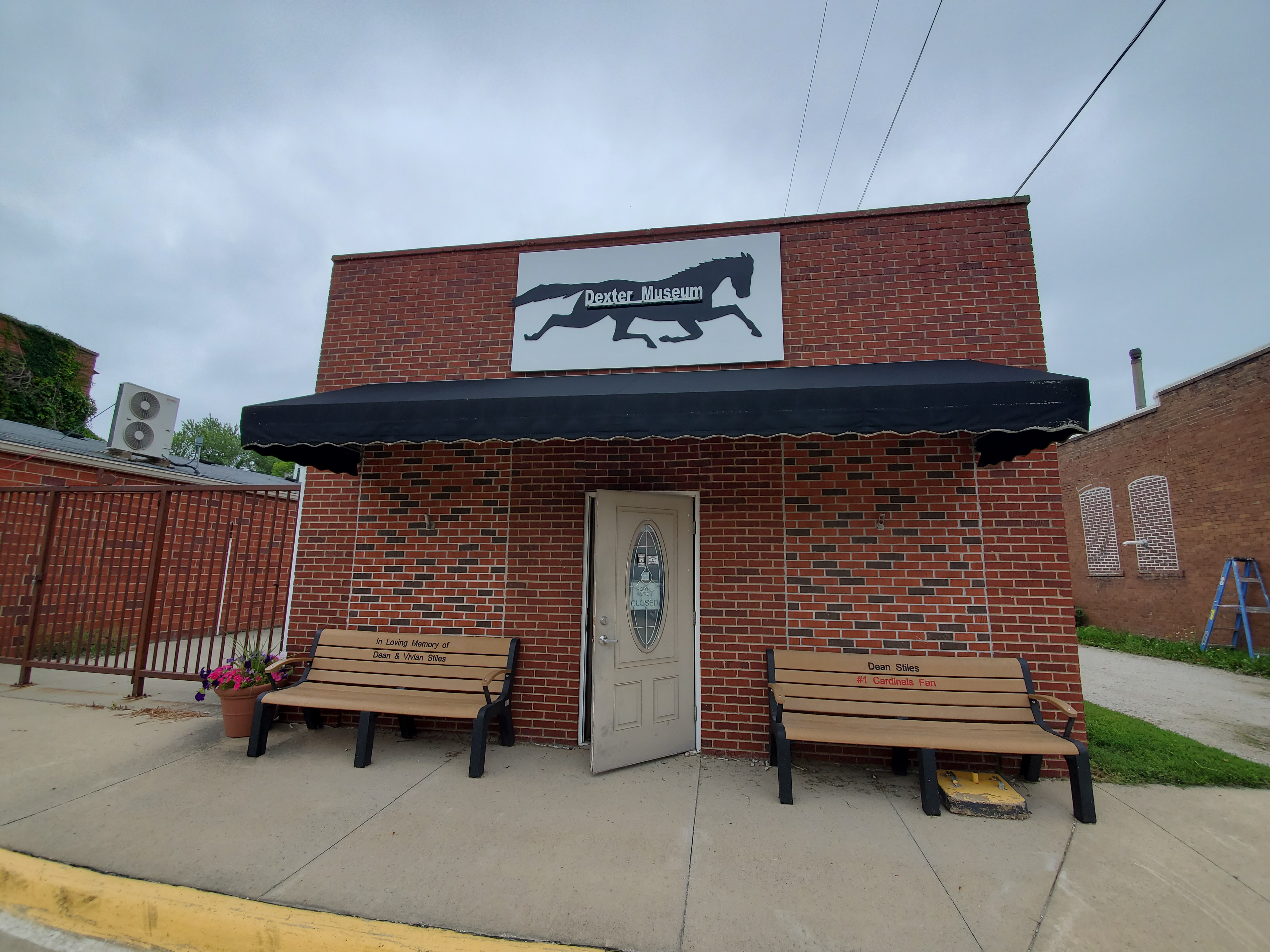
After stopping for a couple photos, we headed back into the little town of Dexter for breakfast at the Dexter Café. While there, we met fellow diners, Harold and Doris Feller, who invited us to the Dexter Museum next door.
If you want to know the history of Dexter and its brush with Bonnie and Clyde, this is the place to go, and the Fellers are the people to talk to.
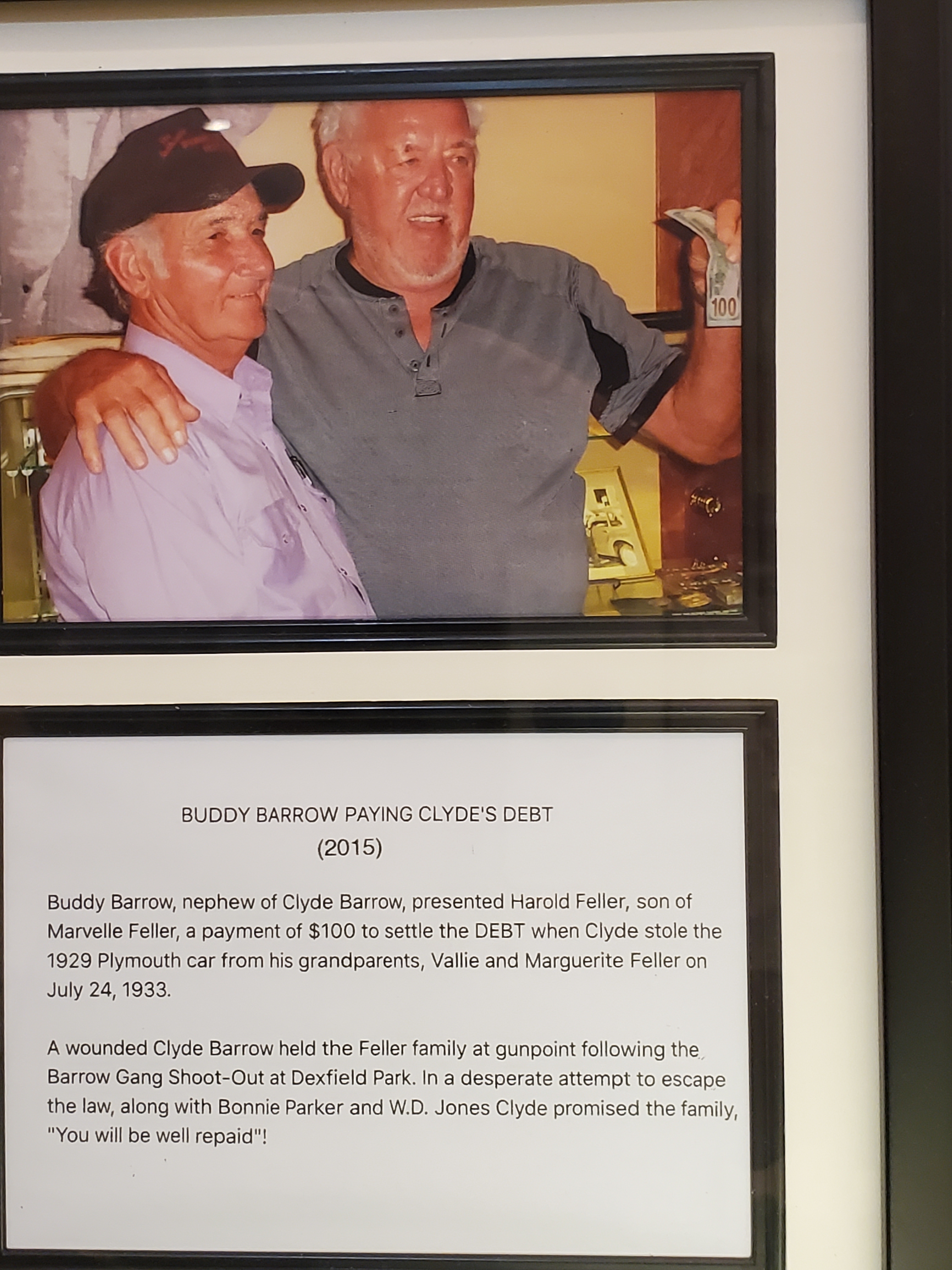
Harold’s family has a direct connection with the Barrows as it was his grandfather’s car that Clyde stole when they made their escape from the shootout. He said Clyde promised they would be reimbursed for their trouble, and in 2015, Clyde’s nephew, Buddy Barrow, came to Dexter. He made good on Clyde’s promise by presenting Harold with a $100 bill.
The museum is filled with photos, memorabilia, and newspaper clippings about the Barrows’ visits to the area and their crime spree across the country. Although the museum is very small, you could spend hours poring over the hundreds of items in the exhibits. However, the museum is not just about Bonnie and Clyde.
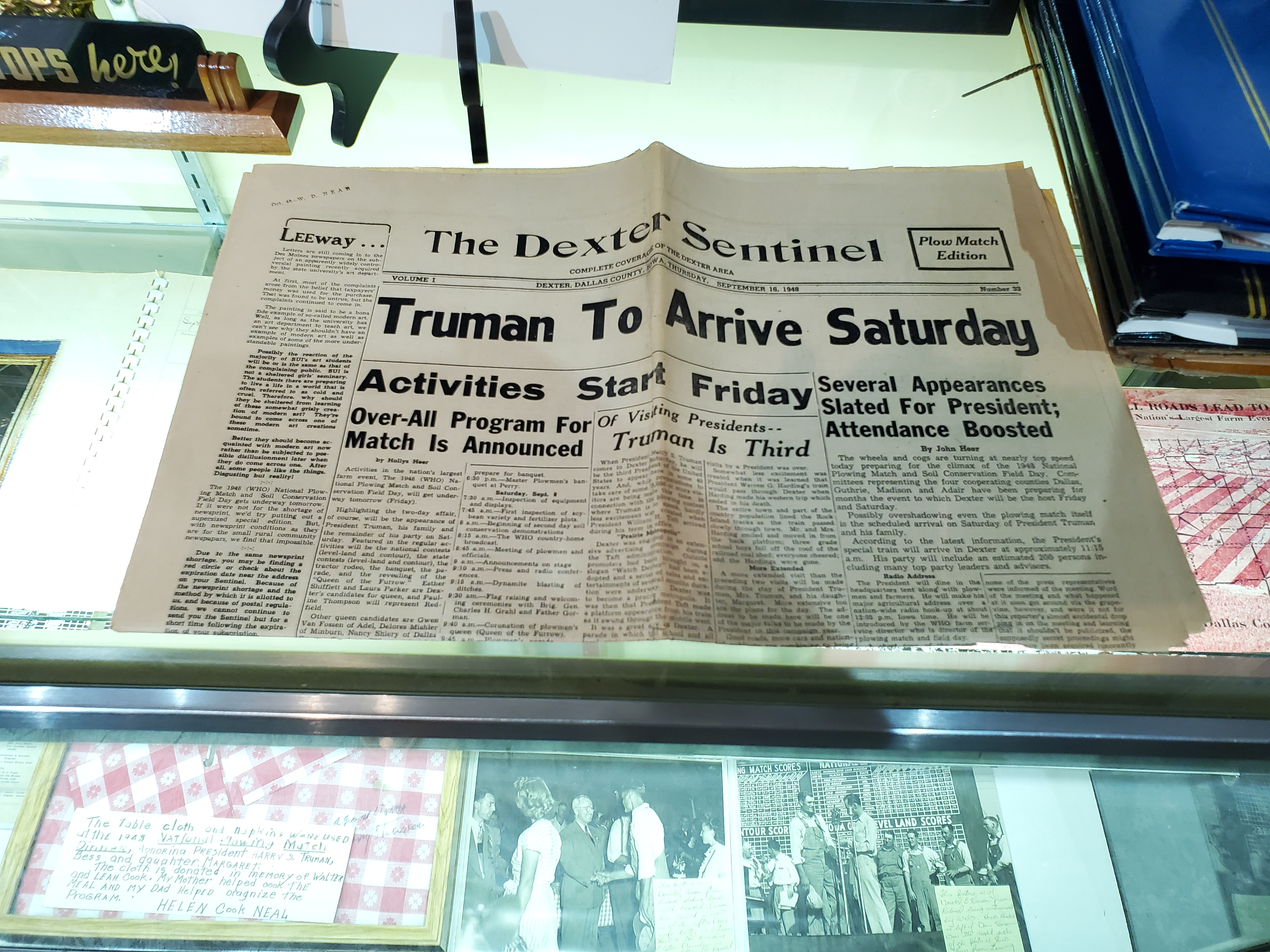
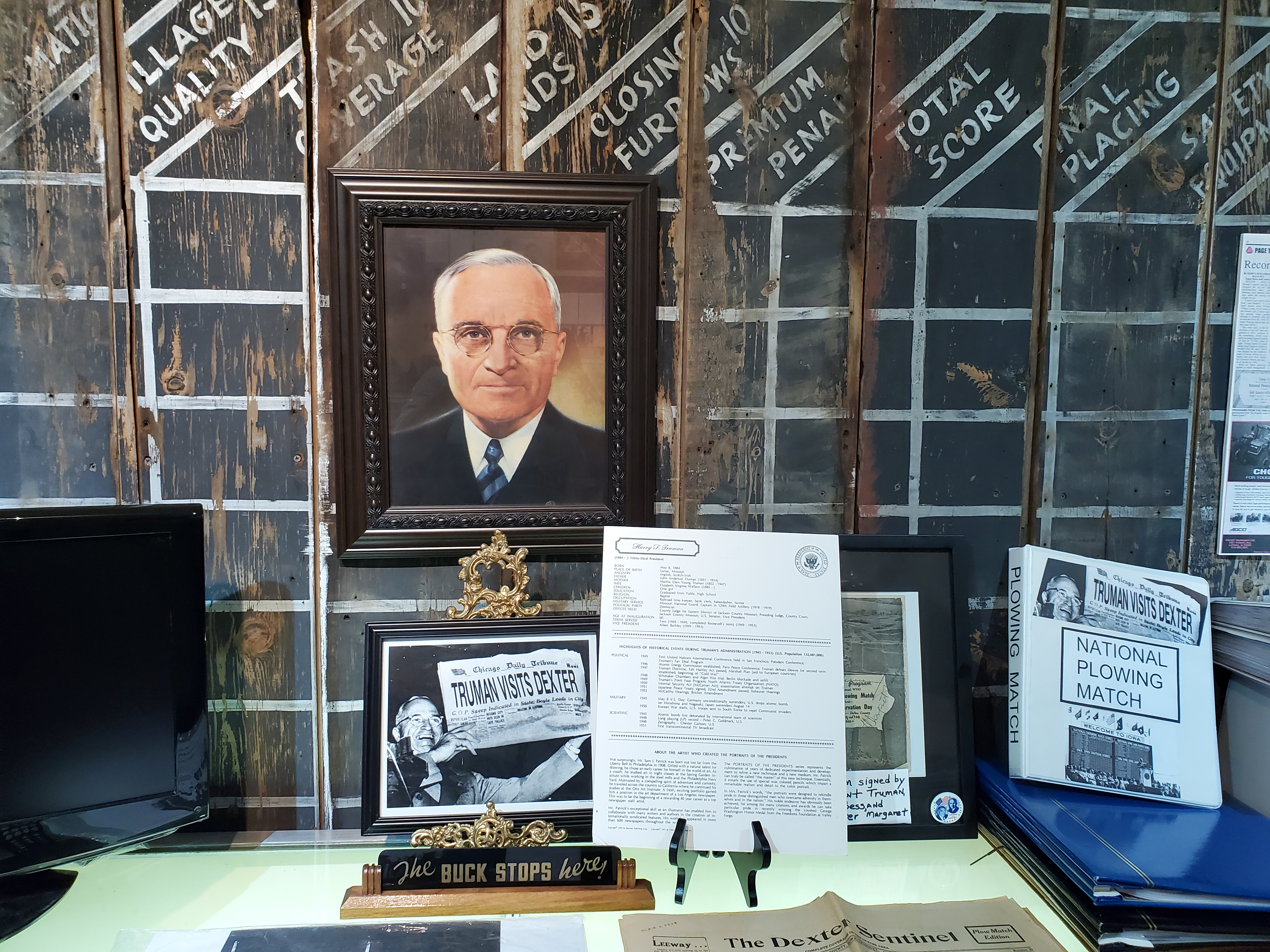
Dexter’s other claim to fame is President Harry S. Truman’s 1948 visit to the town. According to Doris, Truman arrived by train for the national plowing match. She said the women of the town cooked dinner for the presidential delegate.
“They made fried chicken and mashed potatoes and gravy,” Doris said, adding they also served fresh vegetables from local gardens.
In the showcase dedicated to the Truman visit is a tablecloth signed by the president and napkins used at the event.
Dexter and Stuart are both tiny Iowa towns, but they are worth a stop. The people are friendly and happy to share their communities’ history. If you want to know more about the Dexter Museum, check out its Facebook page: Memories of Dexter-The Original One-Horse Town.
Jesse James
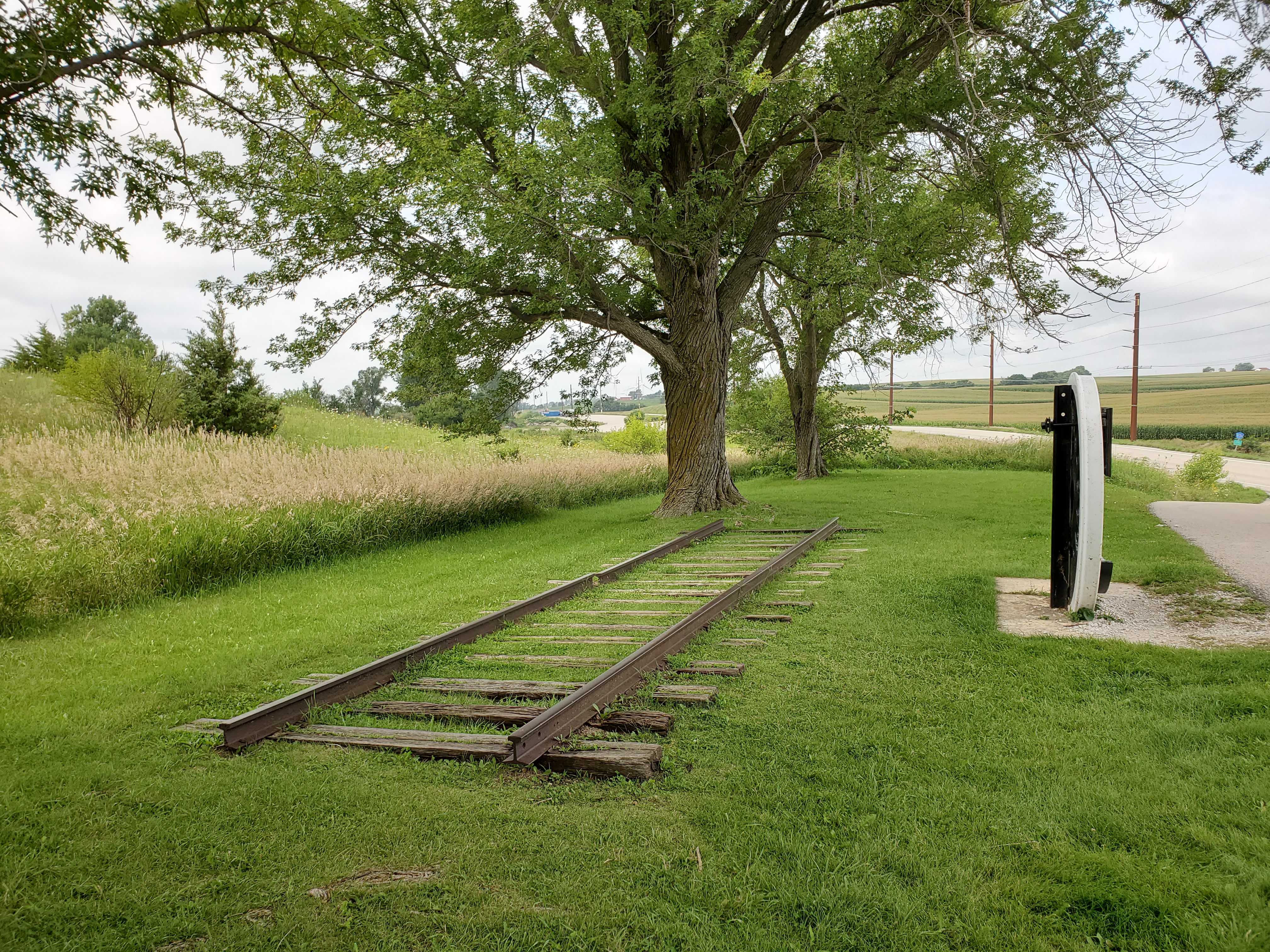
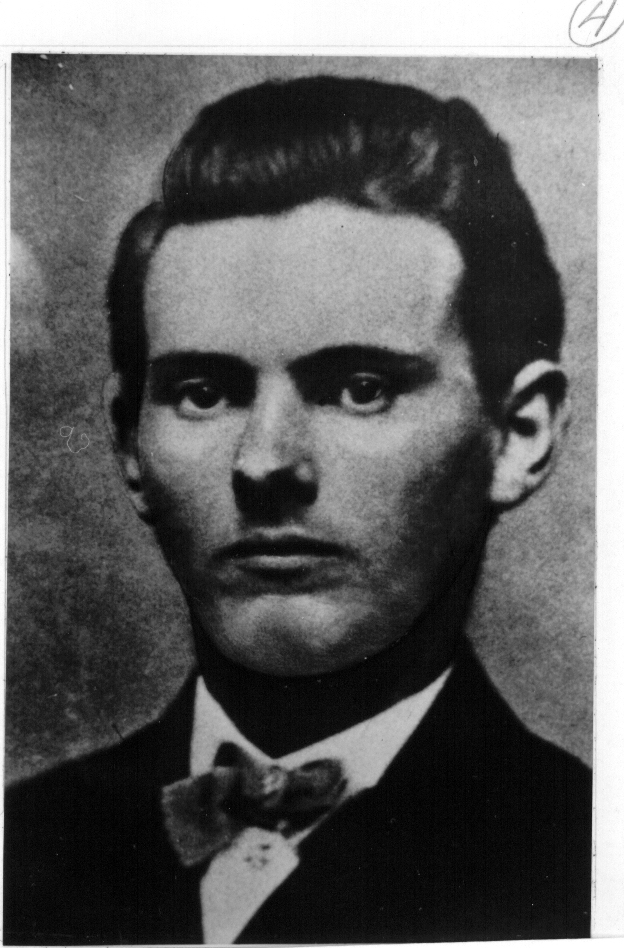
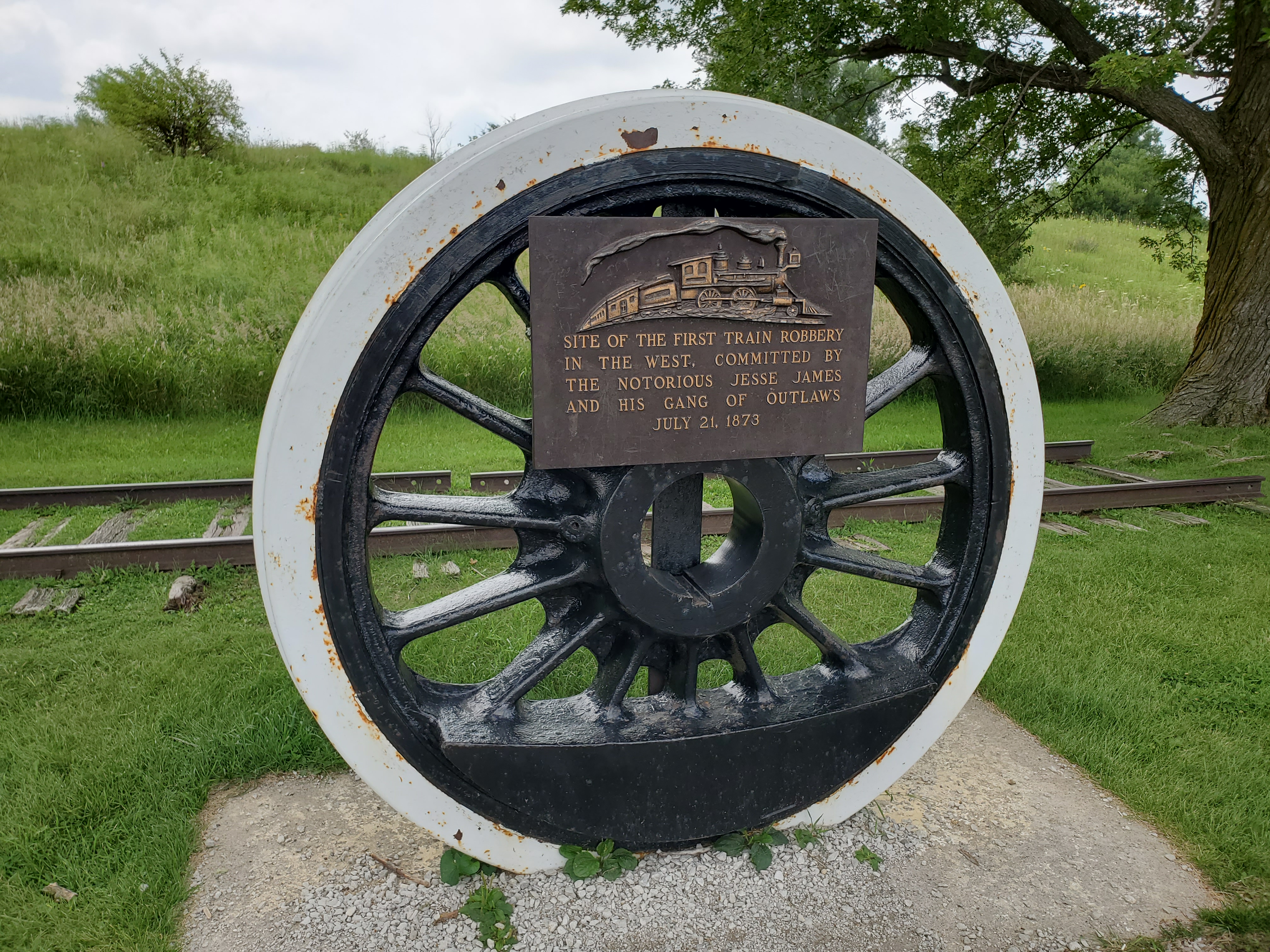
Before leaving Dexter, Harold told us if we were interested in outlaws, Jesse James made his presence known not far from Dexter. Not far up the interstate in Adair, Iowa, you can find a memorial commemorating the first train robbery in the west. Of course, we had to see that! Off we went on a short drive through the countryside to a little roadside display next to a piece of unconnected train rails.
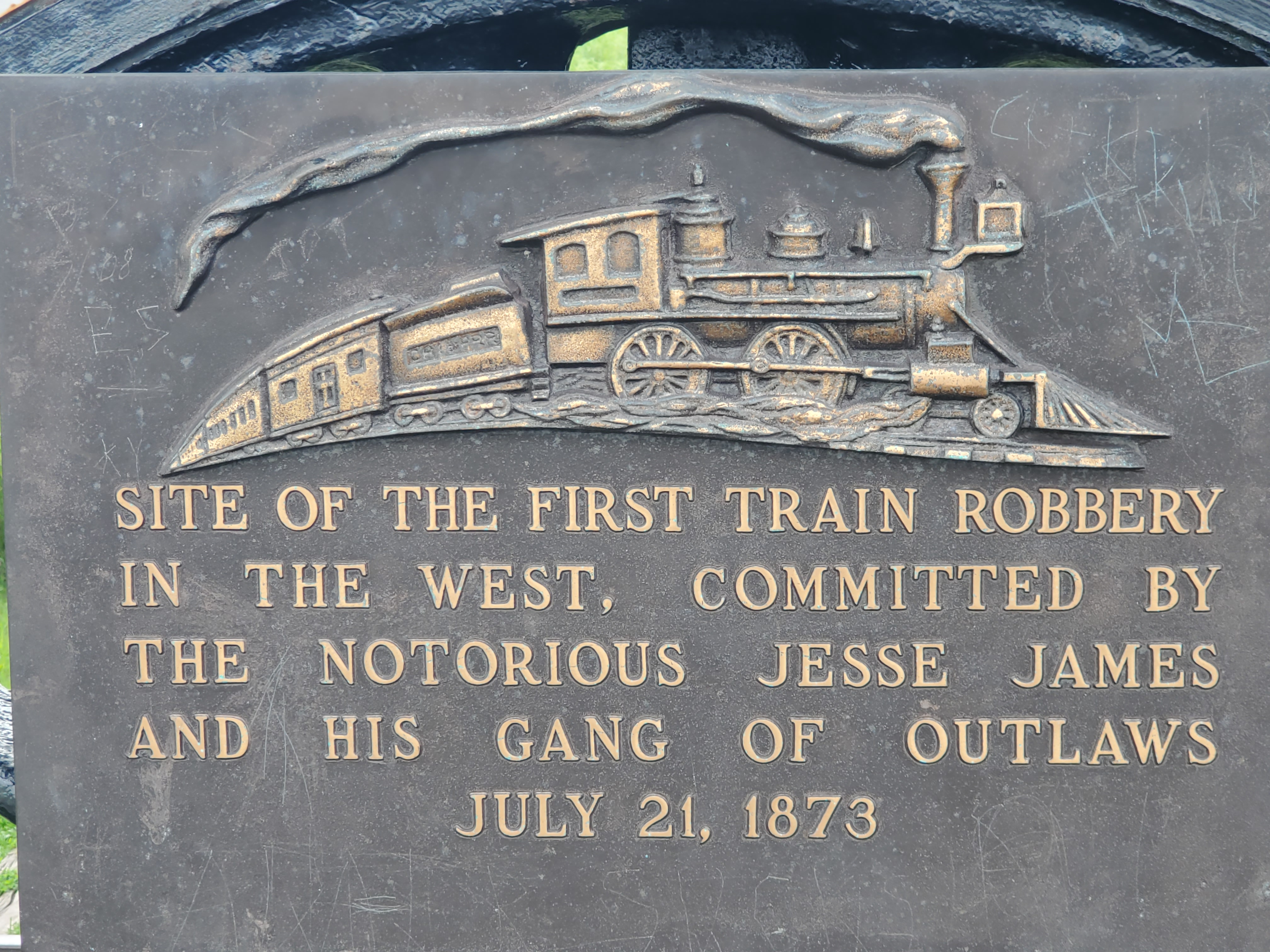
A plaque, erected by the Rock Island Railroad in 1954, designates it as the, “Site of the first train robbery in the West, committed by the notorious Jesse James and his gang of outlaws. July 21, 1873.” Another sign tells the whole story of the great train robbery.
According to the sign, the James gang was after a train shipment of $75,000 in gold that was being shipped east. To stop the train, the men disconnected two rails on a curve near Adair. When the train came through, it caused the track to jerk out of place, plunging the train engine into a ditch where it overturned, killing the engineer and fireman and injuring several passengers.
However, when the bandits forced the guard to open the train’s safe, they found only $2,000 in currency. After robbing the passengers to add to the haul, they only gained about $3,000 total.
After the train heist, the gang escaped to Missouri and split up. A $10,000 reward was offered by the governor of Missouri for the capture of Jesse James, dead or alive.
Wild Bill Hickok
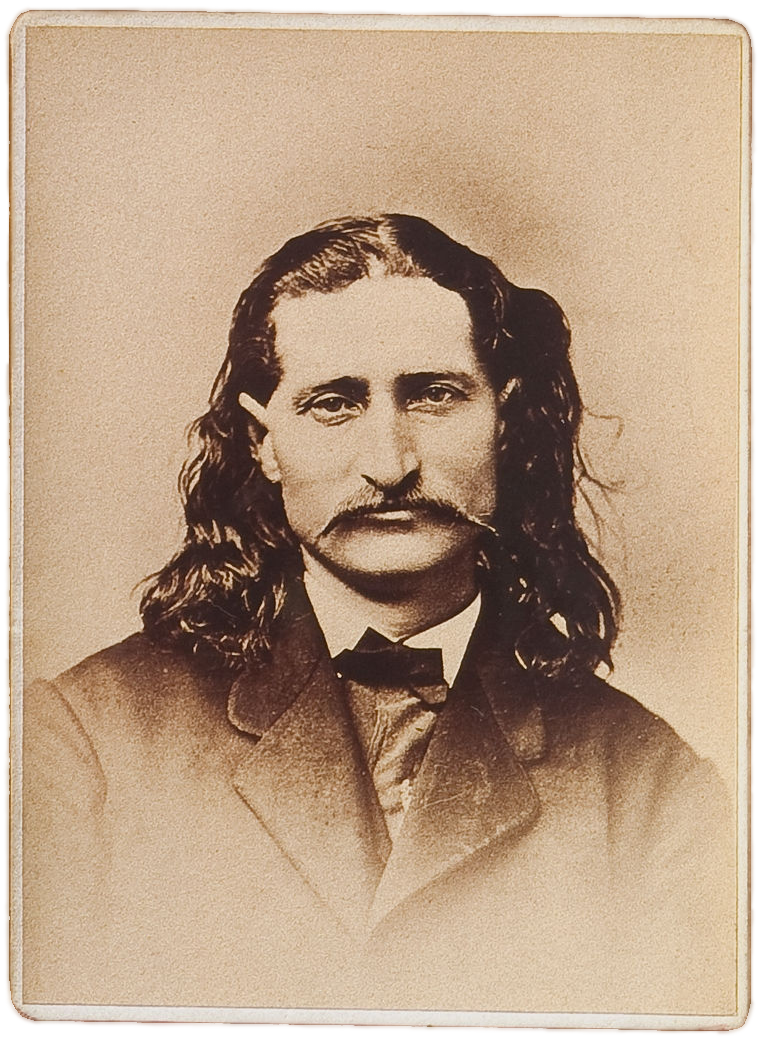
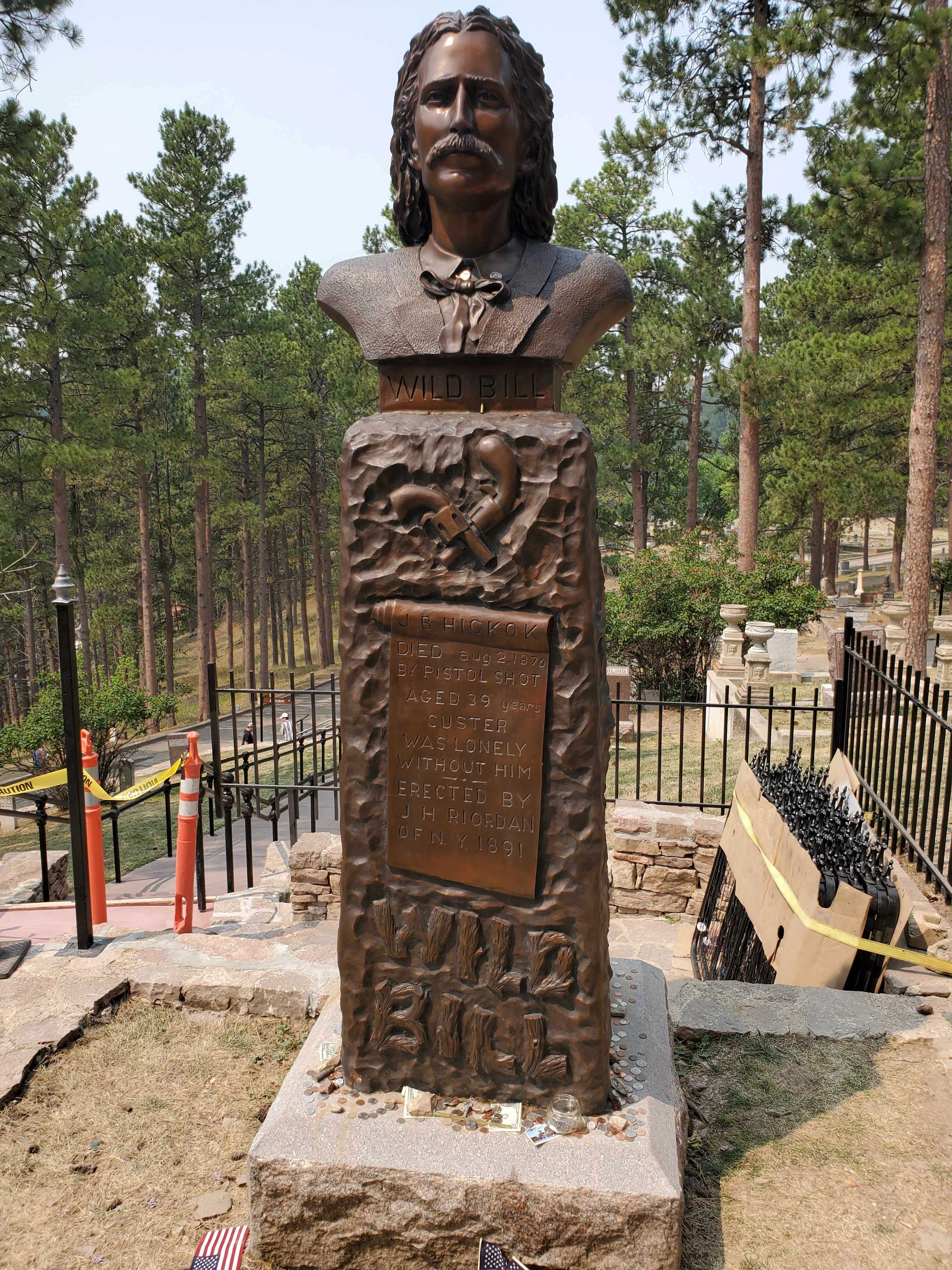
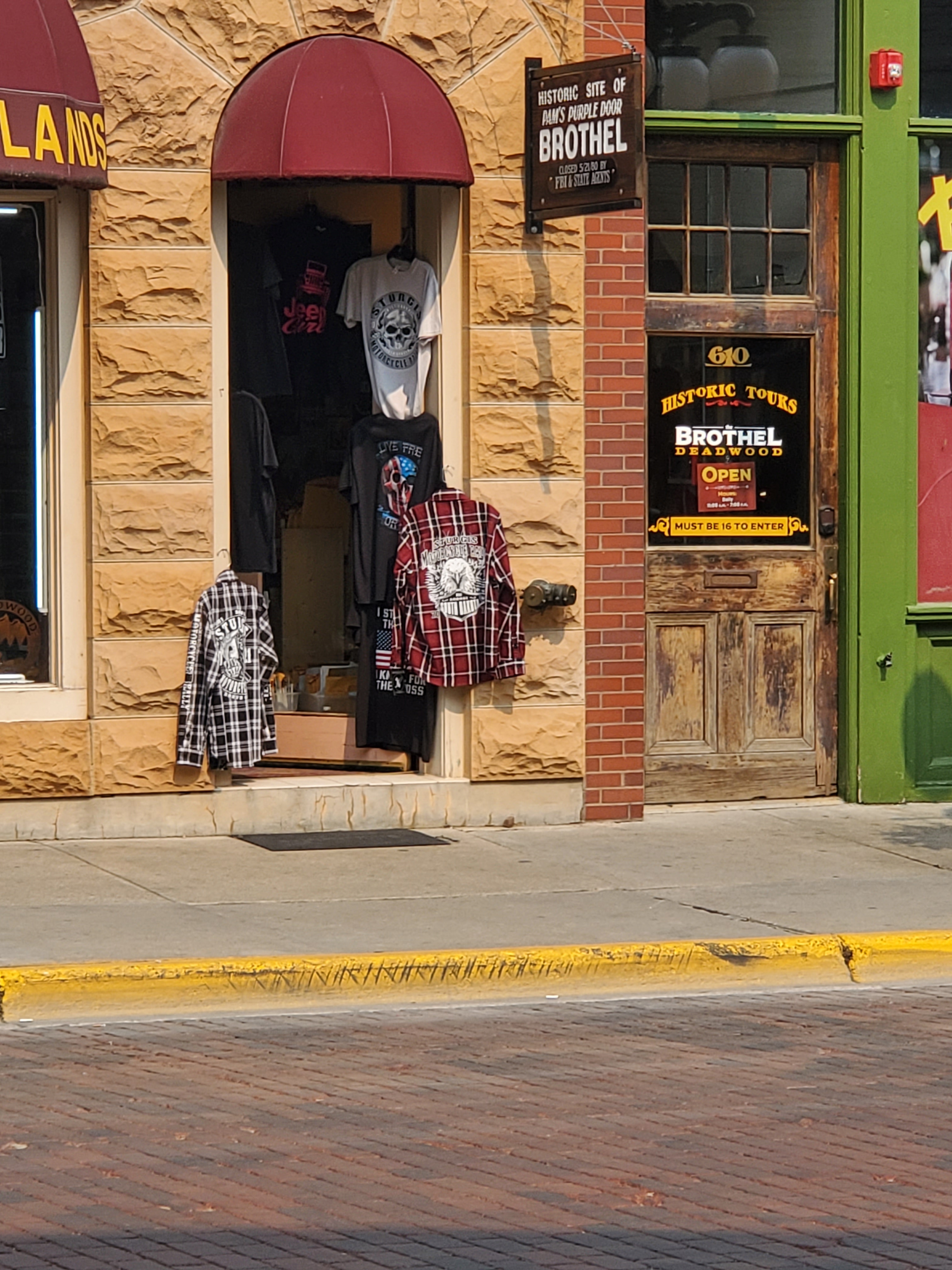
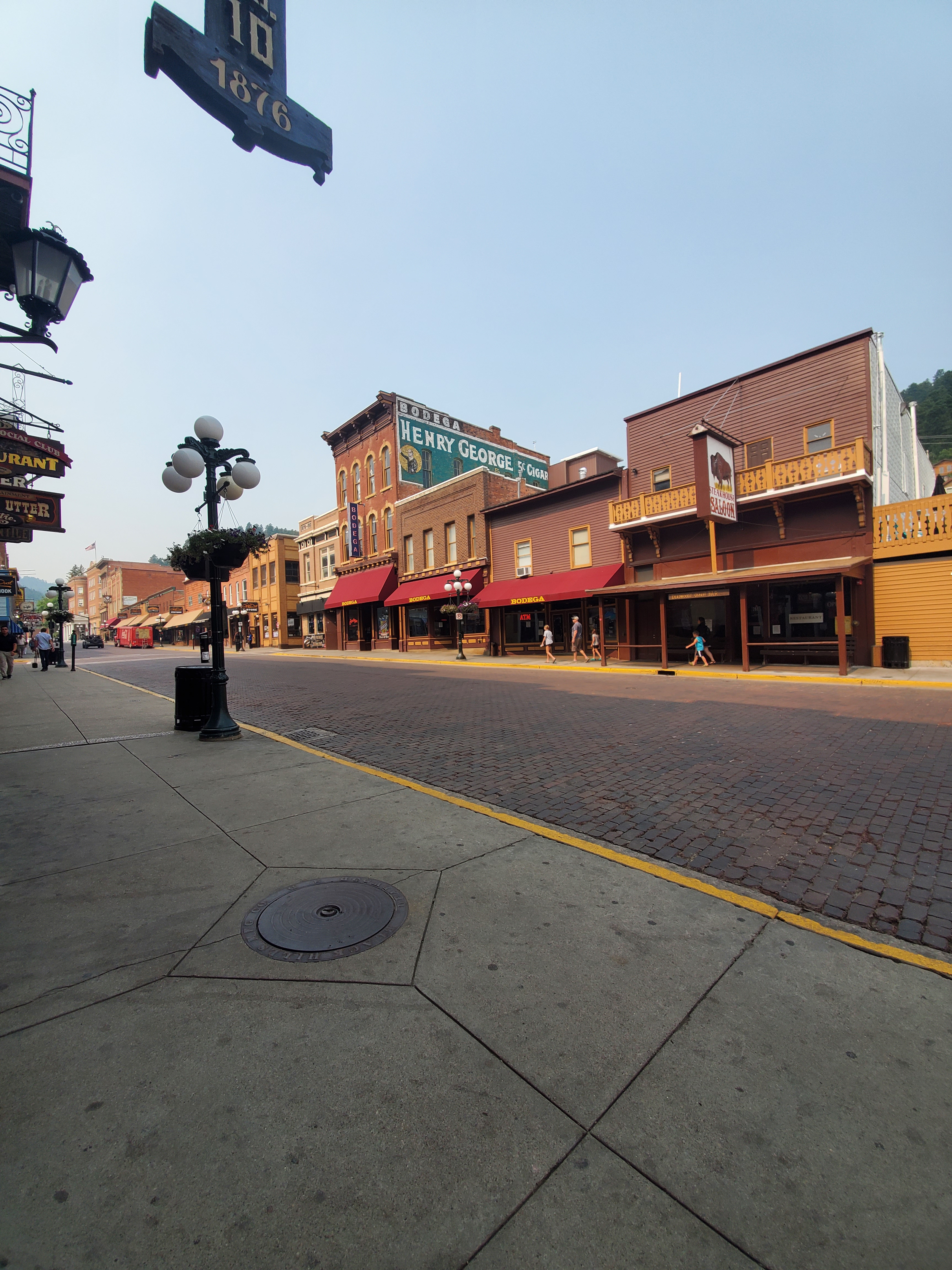
Toward the end of our westward journey, we pulled into the town of Deadwood, S.D., a town that has hosted more of its share of cowboys, prospectors, prostitutes, and gunslingers. The most famous of those was Wild Bill Hickok.
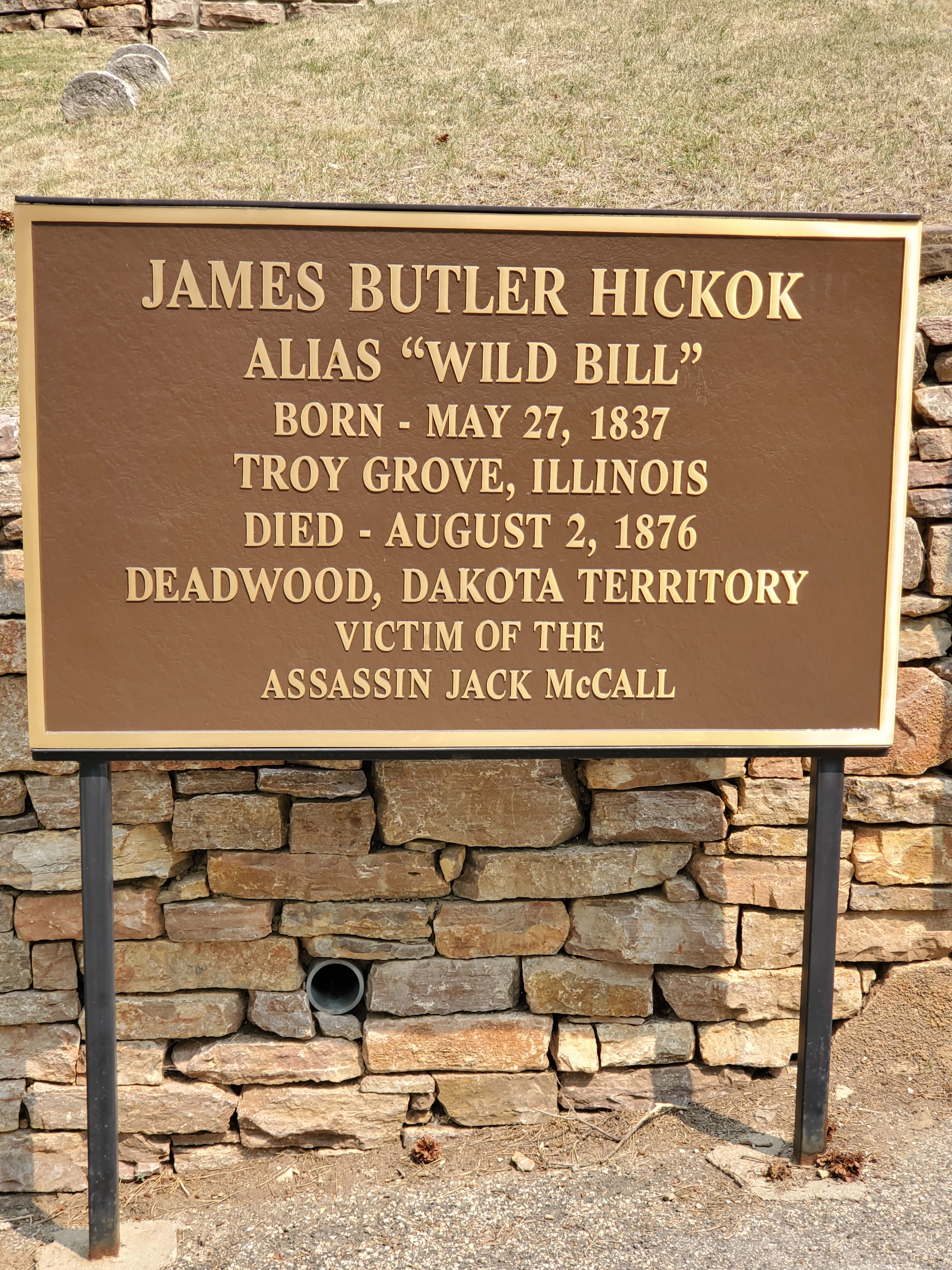
Born James Butler Hickok, Wild Bill was a master marksman. He was involved in several gunfights during his lifetime, and he served as sheriff of Hays City, Kansas, and marshal of Abilene, Kansas. Hickok was turned into a legendary gunslinger through accounts of his exploits being retold in the Harper’s New Monthly Magazine.
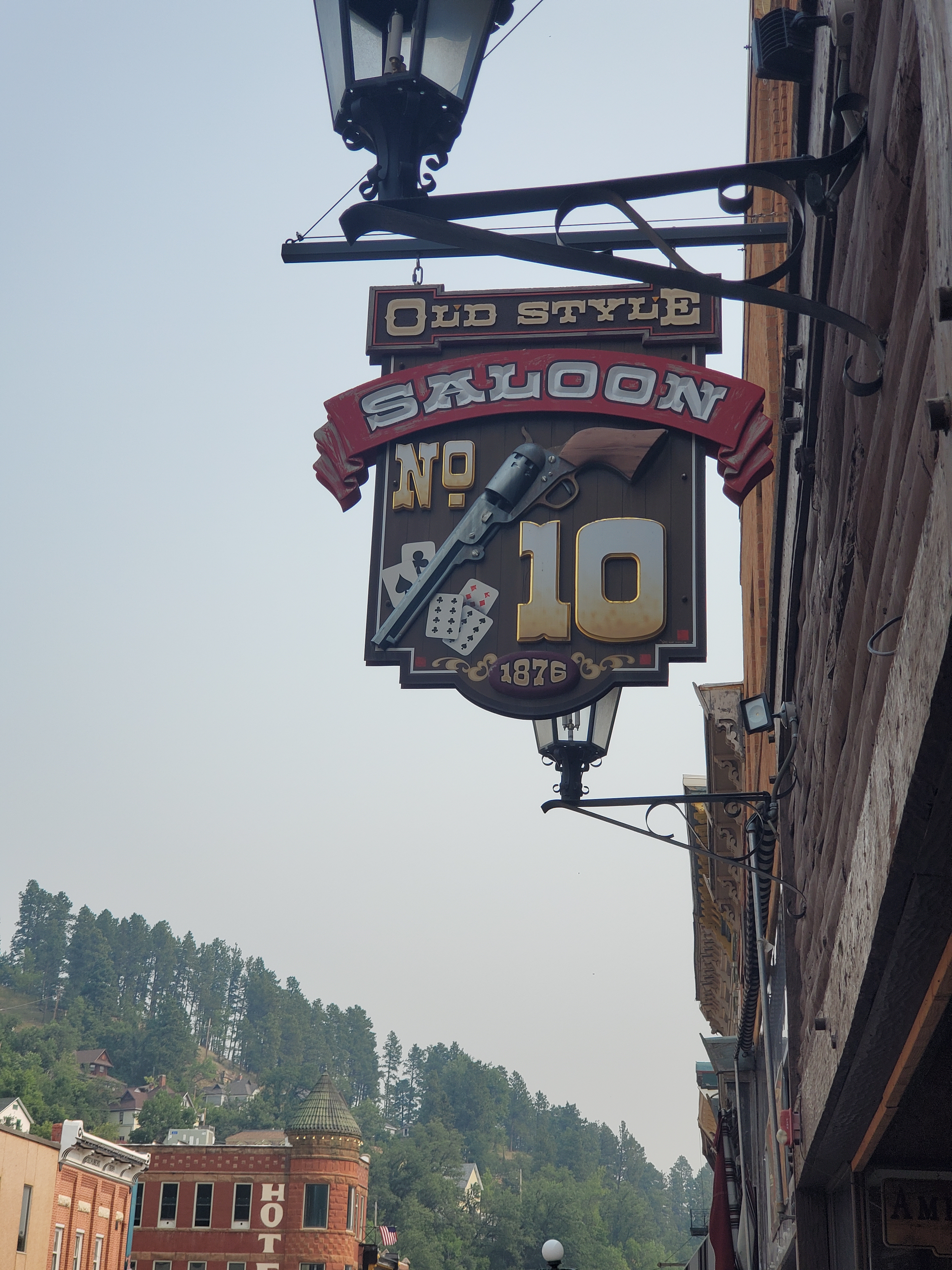
Besides being a skilled gunman, Hickok was also an avid poker player and became a regular at the tables at the Nuttal & Mann Saloon in Deadwood. On Aug. 1, 1876, Hickok won quite a bit of money from Jack McCall, who was a less skilled player. The next evening, Hickok was involved in another game when McCall walked up behind him and fatally shot him in the back of the head. The poker hand that Hickok was holding when he was killed – a pair of black eights and a pair of black aces – became known as “the dead man’s hand.”
The location of the Nuttal & Mann Saloon, 624 Lower Main St., Deadwood, is now known as Wild Bill’s Bar and Trading Post, original location of Saloon No. 10, although the original building was destroyed by fire. There is another bar called the Saloon No. 10, located at 657 Main St., Deadwood, that claims to have the chair that Hickok was sitting in when he was shot. The two businesses are not related.
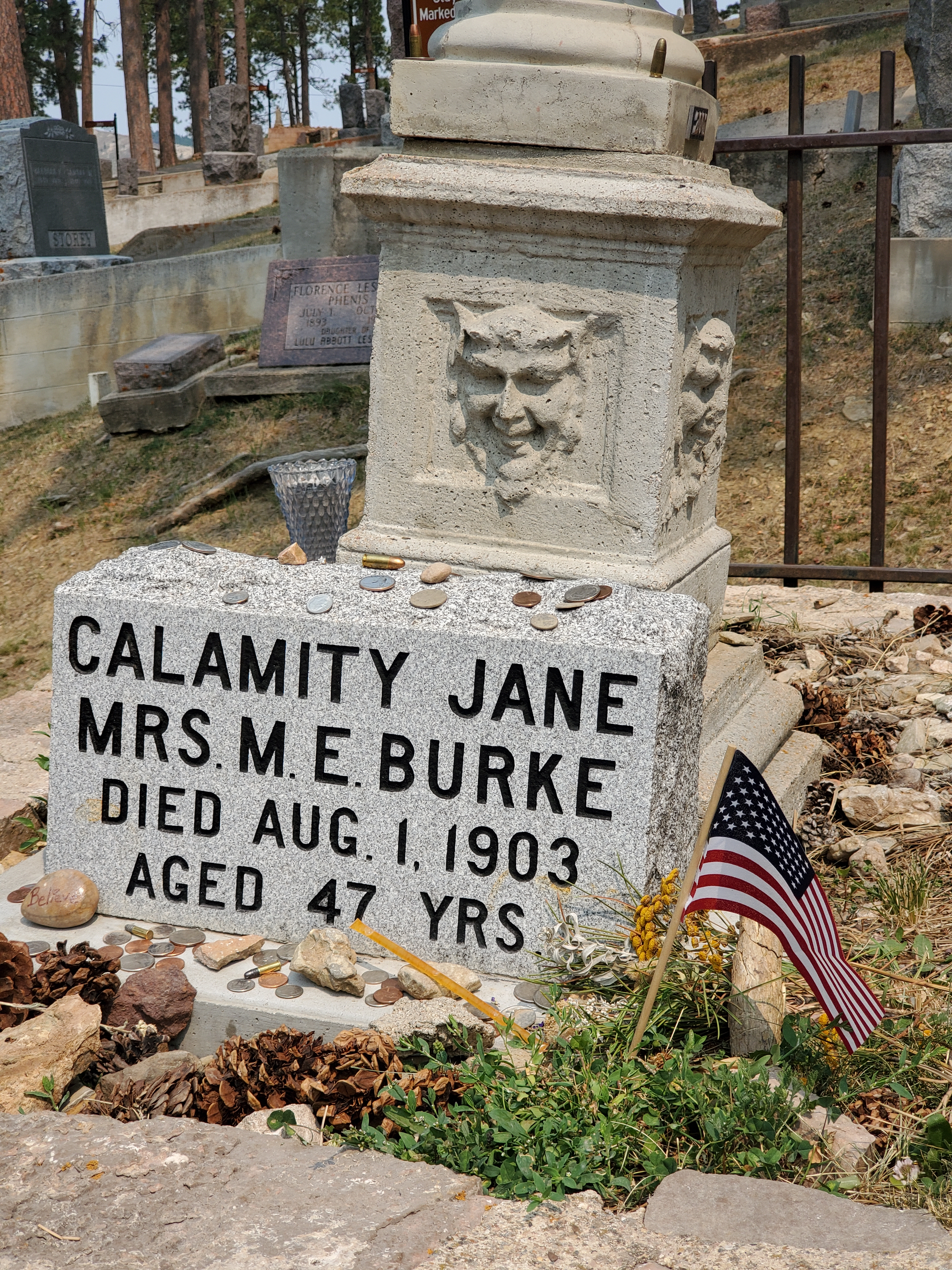
I have been interested in the stories of gunfighters and lawmen of the old west since my first trip into cowboy country at age 13. My sister is particularly interested in the stories about Wild Bill. Because of that, visiting Hickok’s grave was on the list of places to go. Hickok is buried in Mount Moriah Cemetery in Deadwood. Next to his grave is another notorious wild west figure: Calamity Jane.
Calamity Jane
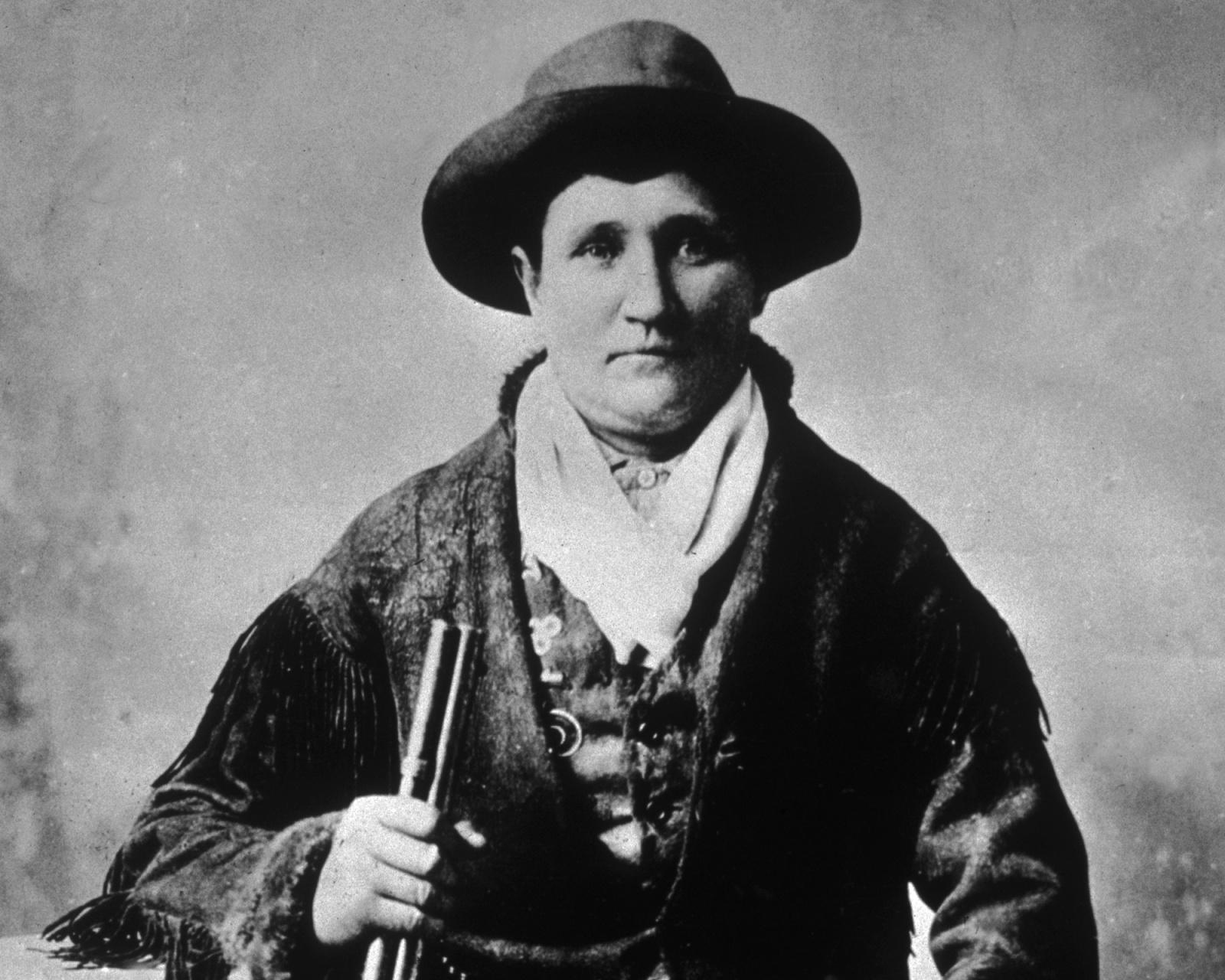
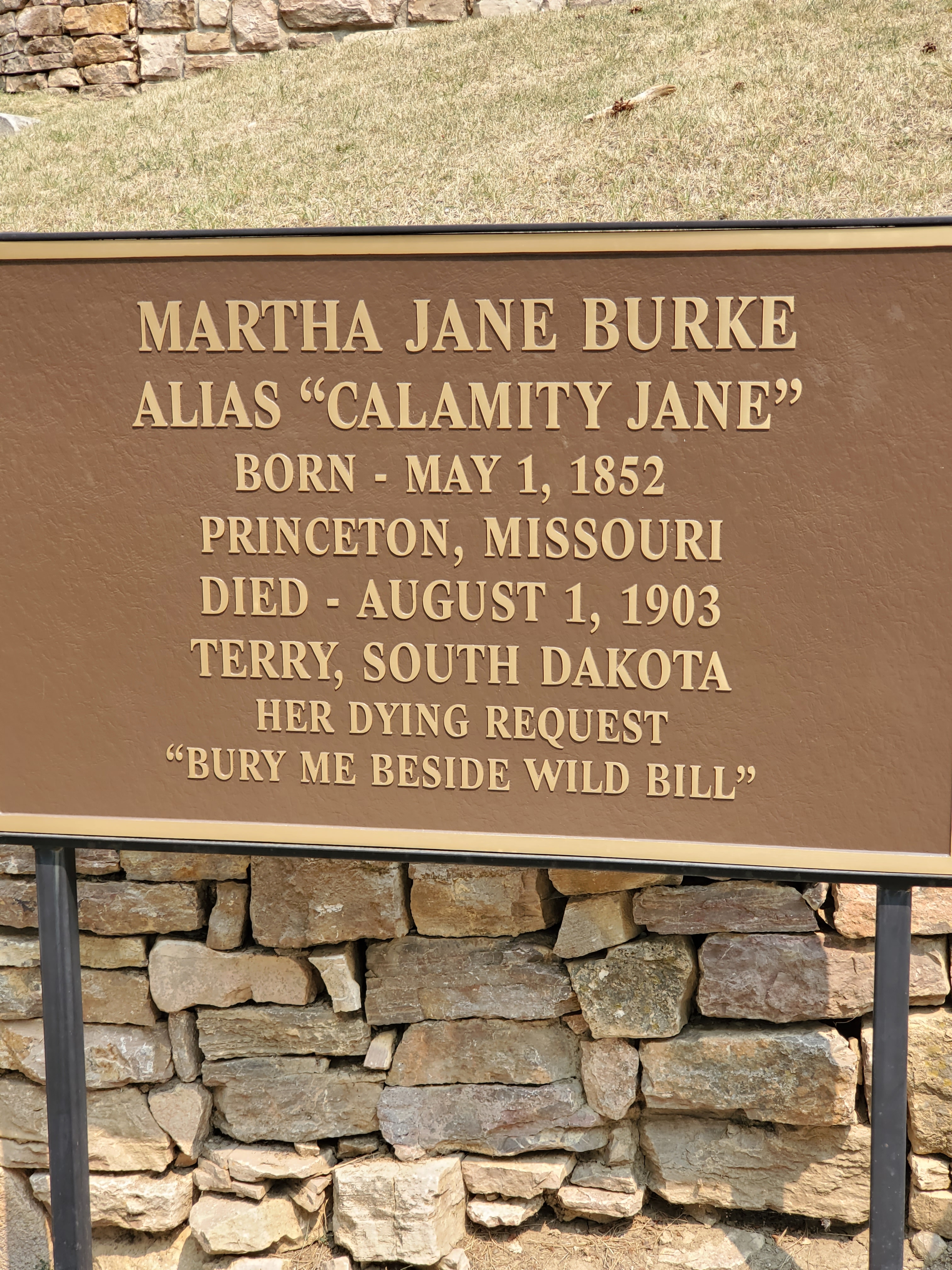
Born Martha Jane Cannary, Calamity Jane was a renowned sharpshooter and frontierswoman. Her life story is a mixture of fact and fiction, some of which will probably remain a mystery.
During her life, it has been reported that she served as an army scout and explorer but had also worked as a dance-hall girl and possibly was a prostitute for a short time. She was known to have preferred wearing men’s clothing and is most often pictured that way.
There have been some claims that Jane was involved with Wild Bill and may have actually married him and had a child with him, but there is no evidence to substantiate the claim.
There are also may stories of Jane’s heroic activities, including once saving a stagecoach from an Indian attack and another time, serving as a nurse during a smallpox epidemic.
Calamity Jane died Aug. 1, 1903, and was laid to rest next to Wild Bill. Some say she asked to be buried next to him, while others say she was buried there as a “posthumous joke” on Hickok.
***
Visiting Mount Moriah Cemetery and standing at the sites of the train heist and bank robbery really brings the stories from history to life. Somehow, it is easier to picture those navigating the hardships of the old west in the 1800s when you are walking the streets that they walked.
They were real people and not just characters in a magazine or in a movie. If you get the opportunity to travel near these sites, take the time to stop and take it all in. Let these sites make the ghosts from the past real again.
Video at Mount Moriah Cemetery in Deadwood, SD
Video at the location of Bonnie and Clyde’s last bank robbery.
At the Dexter Museum.
All video and photos, except the portraits of Jesse James, Bonnie and Clyde, Wild Bill, and Calamity Jane, are the property of V. Lori Hedges and may not be used without permission.
Our first real Destination Investigation of our road trip loomed ahead early on our second day on the road.
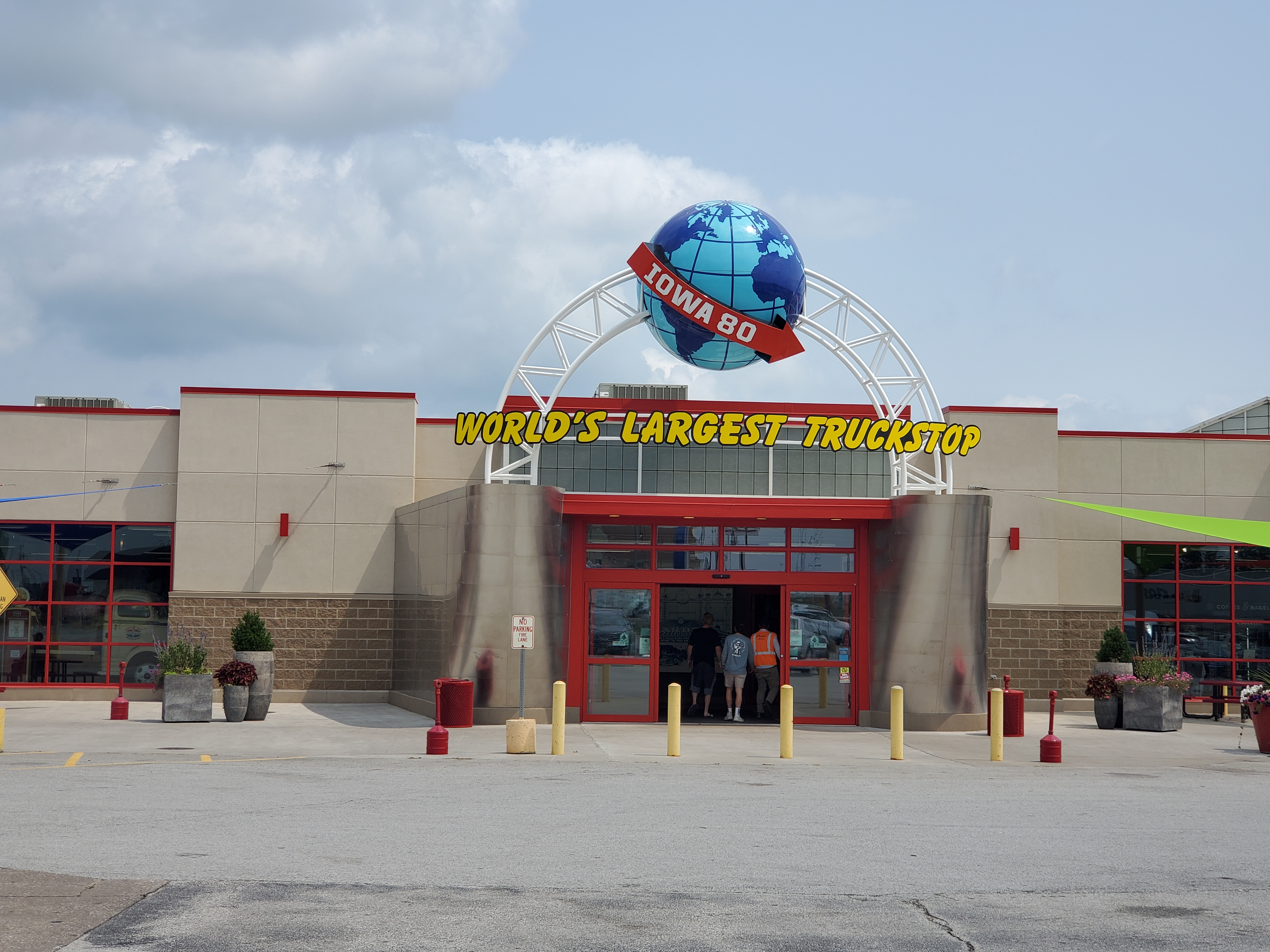
The World’s Largest Truck Stop? How big could it be? Should we stop and check it out? Each successive billboard promised us a great adventure if we just took the 284 Exit on I-80 West.
So off we went, and boy we were not disappointed. The sprawling facility that is the Iowa 80 Truck Stop has so many services offered that you could spend hours and possibly days there. It is simply massive.
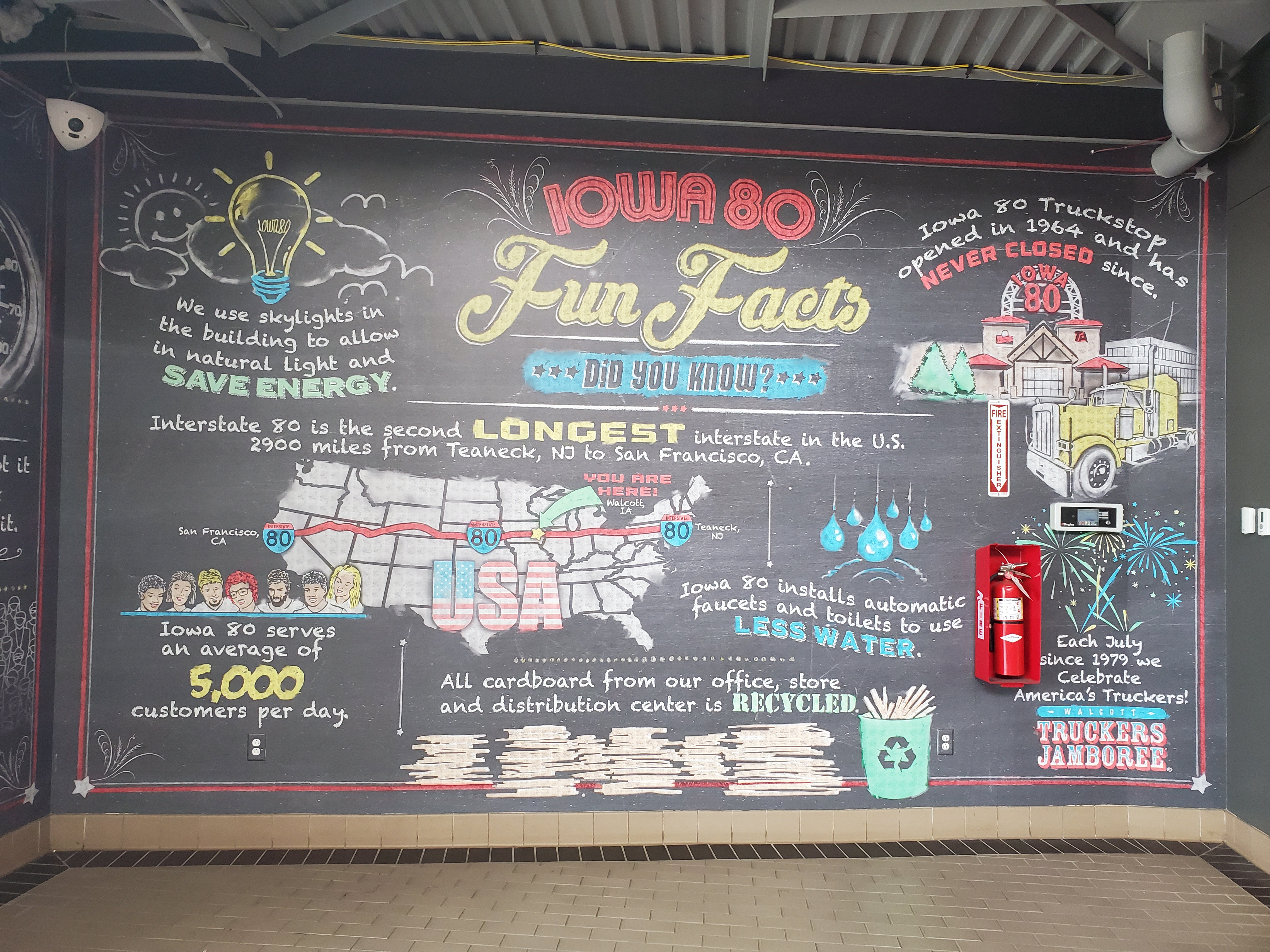
Established in 1964, the Iowa 80 Truck Stop is not just for truckers. Truckers, travelers, and locals can find just about anything they need somewhere on site. Of course, there is a gas station, but there is also a charging station for those who have electric vehicles. Need a haircut? No problem! There is a barber shop right in the building. Back hurting? Stop in to see the on-site chiropractor.
Then there is the convenience store, a gift shop, a dental office, a dog groomer, a laundry facility, a library, a movie theater, private showers, a truck service center, a truck parking lot, a super truck showroom, workout rooms and a driver’s den. Maybe you just want a bite to eat. Iowa 80 Truck Stop has you covered. There are nine restaurants, with two open 24 hours.
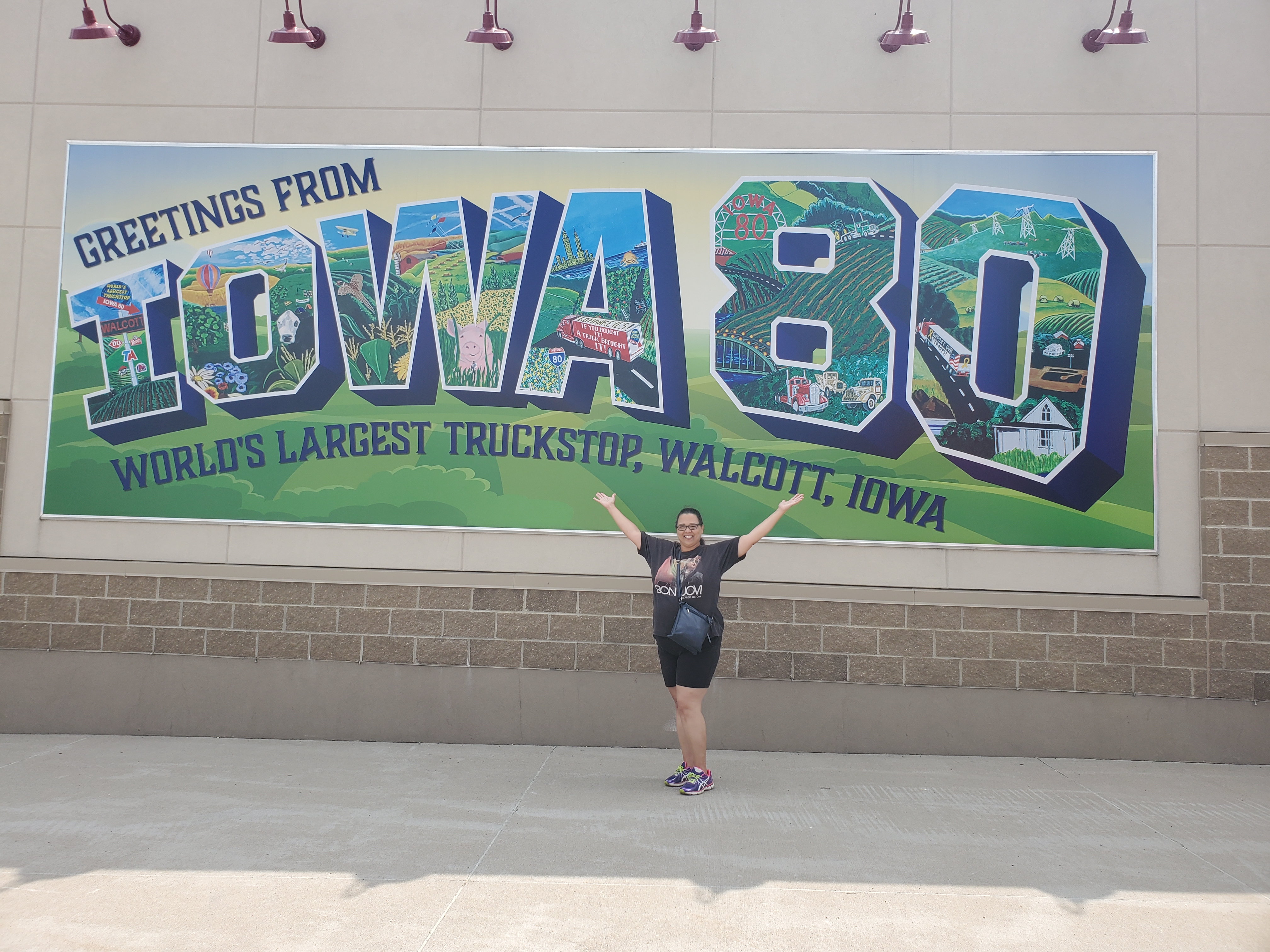
There are also dozens of fun touristy murals and exhibits with which to interact.
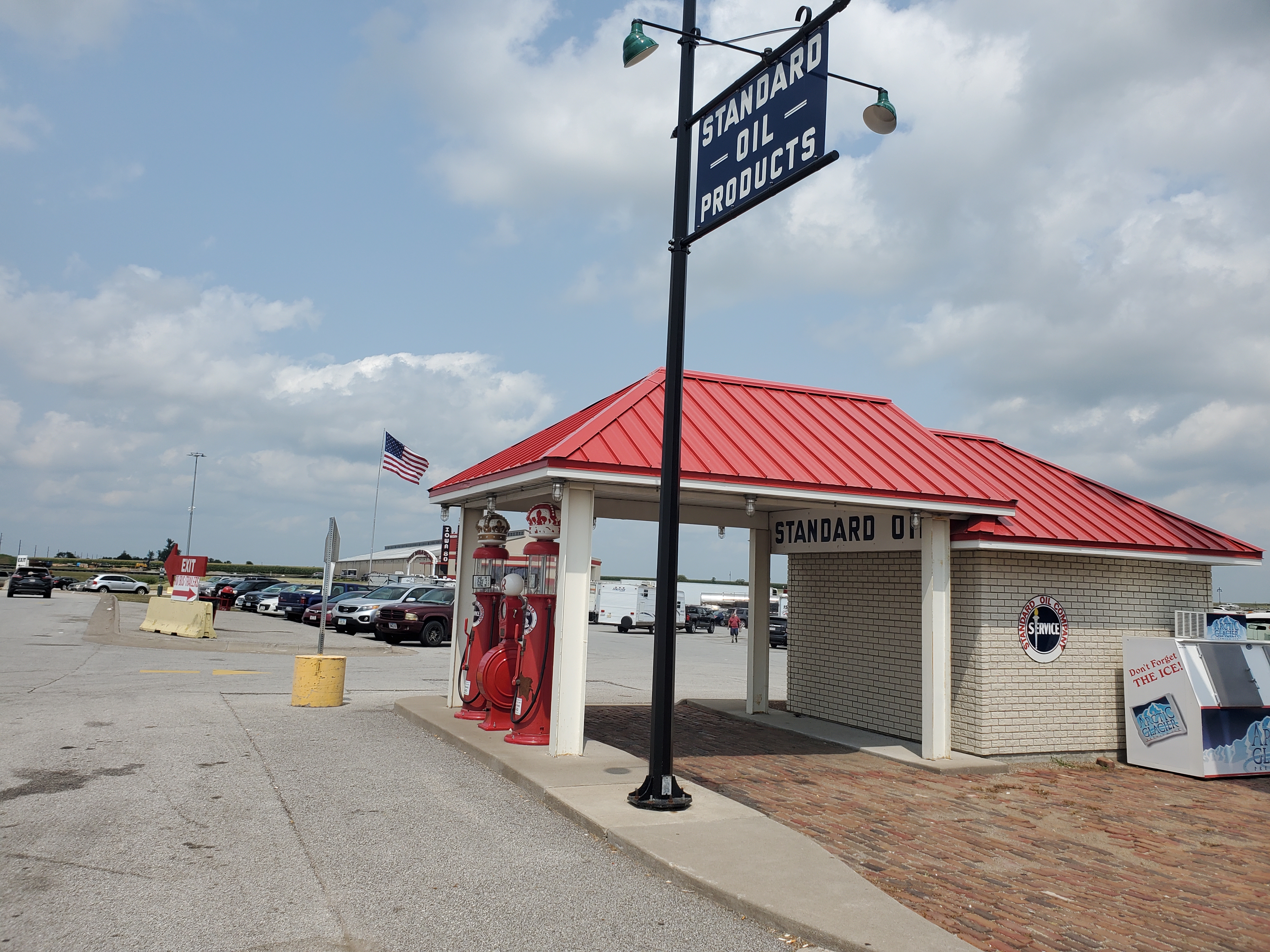
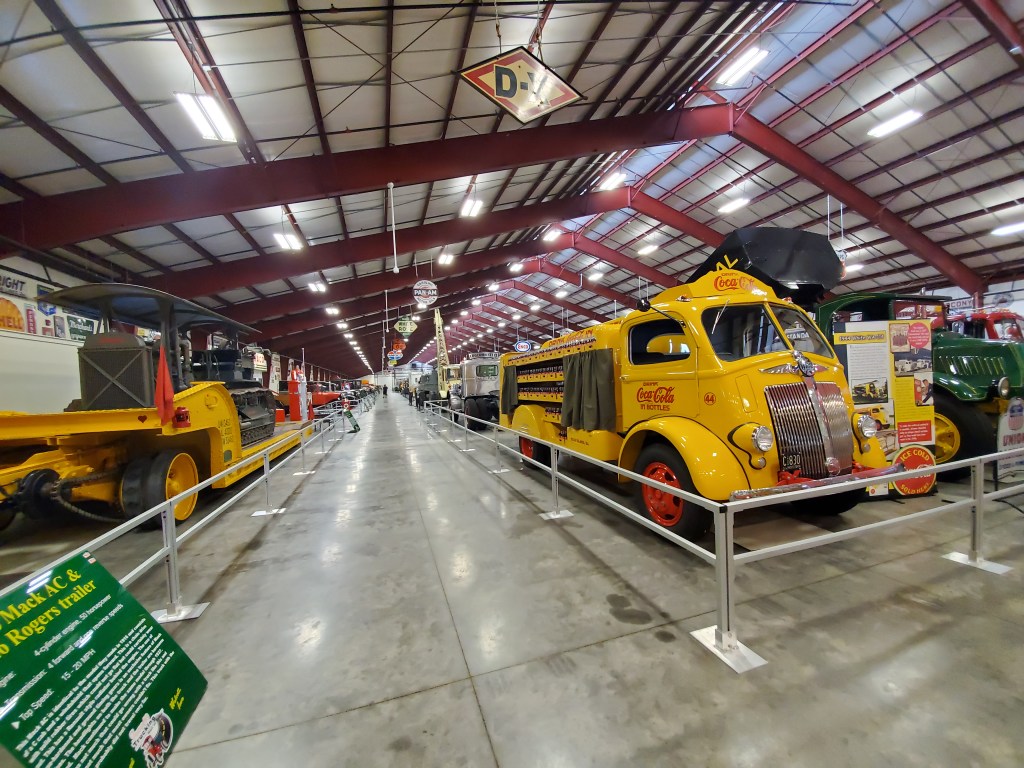
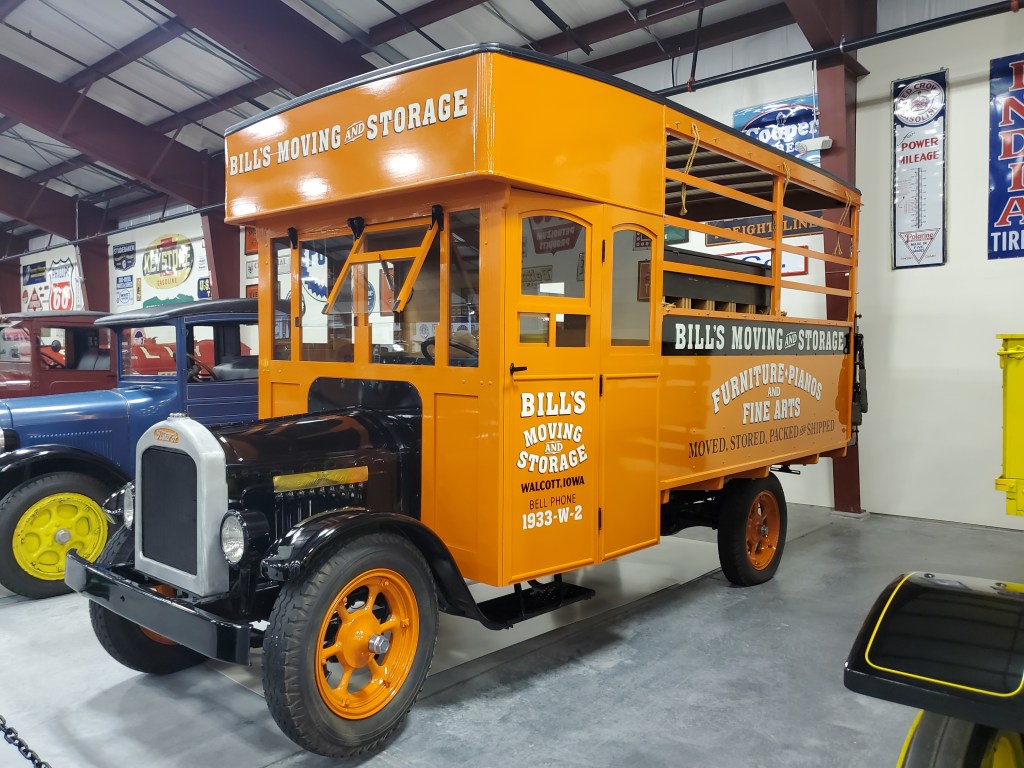
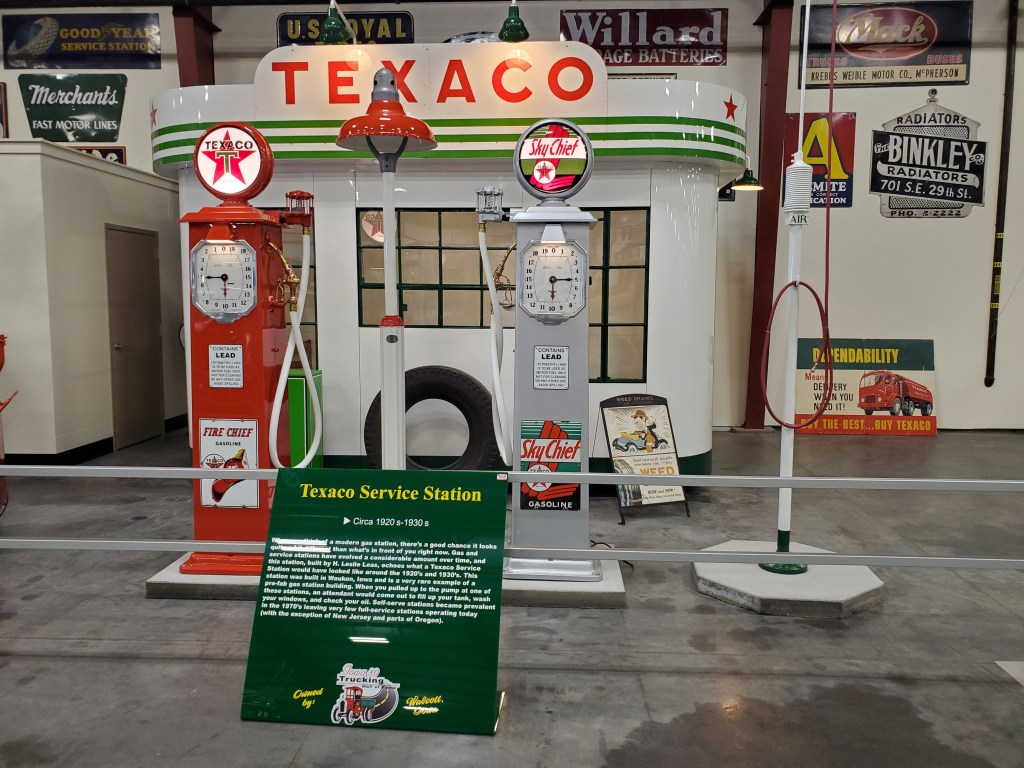
If that is not enough for you, right across the parking lot is the Iowa 80 Trucking Museum. Admission is free, but a donation is appreciated. The museum houses hundreds of antique trucks, vintage toys, and gas station memorabilia.
You will find everything imaginable having to do with trucking at the Iowa 80 Trucking Museum.
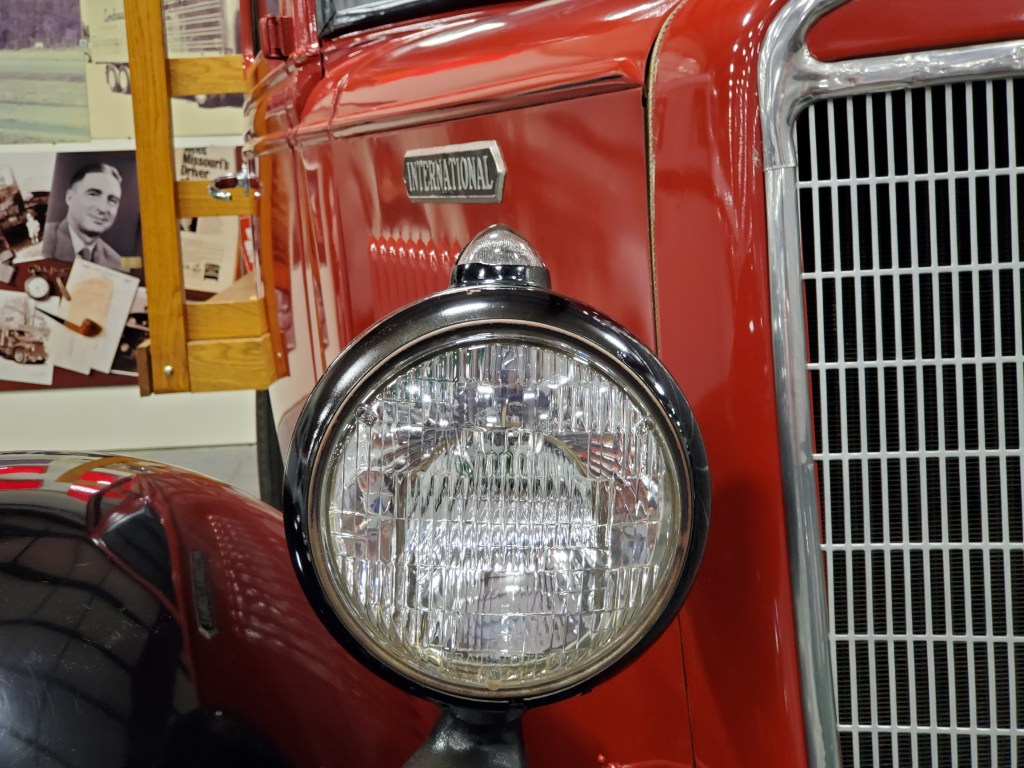
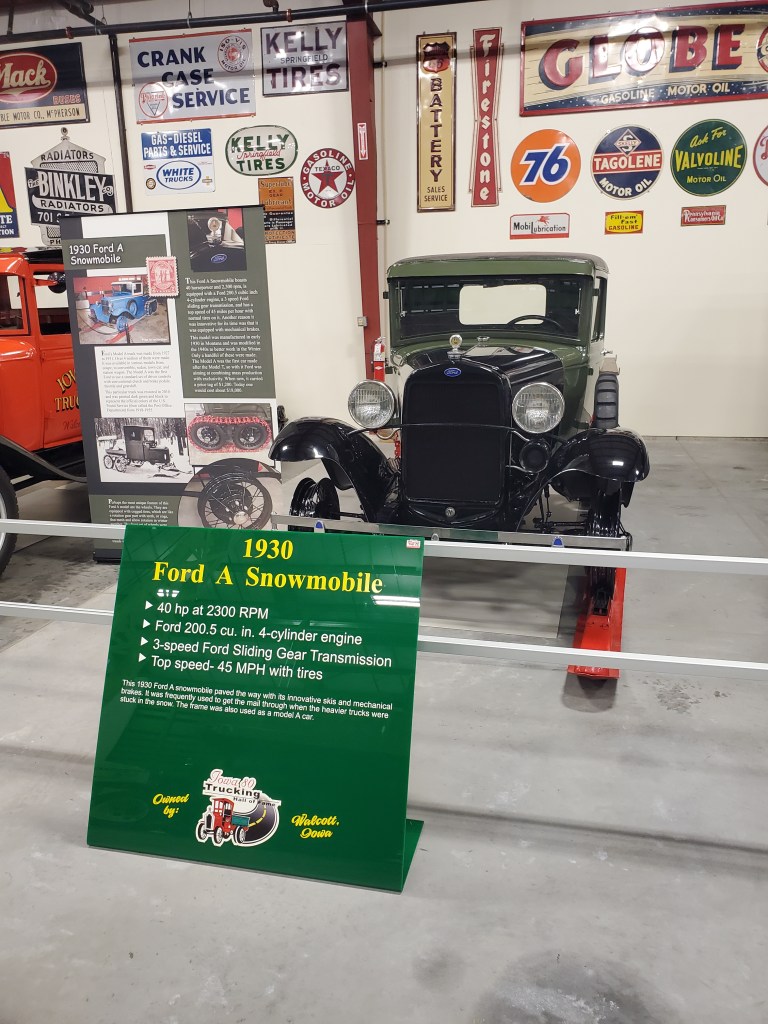
From some of the first delivery trucks to specialty vehicles, like the 1930 Ford A Snowmobile, the museum has hundreds of antique trucks. This place is just plain cool even if you are not a car or truck person.
If you’d like to learn more about the Iowa 80 Truck Stop or the Iowa 80 Trucking Museum, check out their websites, and stop by if you find yourself traveling down Interstate 80 near the 284 Exit.
An epic road trip should not be rushed. The journey is the destination. You need a few staples as you set out: traveling music – several playlists to act as the score for your unfolding story, snacks and drinks to tide you over between meals, and a very flexible game plan.
This summer my sister and I are embarking on a 10-day road trip that has been decades in the making. As kids, we traveled this route many times on our annual visit to our grandparents’ house. Each year our mother would take us west, and we would see and experience many historical and interesting places (many times the same places multiple times over the years).
But there were always roadside attractions that called out to our young interests. Mom, however, did not share our enthusiasm for some of the touristy places we wanted to see, so they were passed by year after year.
Not this time though. Our farthest planned point west is Devil’s Tower, Wyoming. Between home and there anything is game.
A sign advertising “the world’s largest (fill in the blank)” – if it sounds fun, we’re stopping! And we’re taking you with us!
So, join us as we share our adventures in our Destination Investigation Road Trip!
To continue, click on Road Trip Investigation The World’s Largest Truck Stop.
Two years ago, my family and I enjoyed a short trip to Savannah and Tybee Island, Georgia. Both areas were so beautiful and rich in history that we vowed to return as soon as we could. This summer we made good on that vow. This time, however, we had seven glorious days to spend enjoying this beautiful place, with lots of time for exploring or for doing nothing at all.
Fort Pulaski, located on Cockspur Island within sight of Tybee Island, was one place we couldn’t fit into our tight schedule last time, so we moved it to the top of our list of places to visit. My sister and I took advantage of a couple of sunny hours (before a rain storm moved in) to head over to the fort to expand our knowledge of southern history.
My family and I are very into history and visiting historical sites. But, despite the fact we have visited many historic sites, I was unprepared for how this place made me feel. Built in the early 1800s, the garrison’s 7-1/2-foot walls are constructed of giant slabs of stone and around 25 million bricks. According to park literature, most of the structure was built by slaves borrowed from nearby rice plantations. Although it happened almost 200 years ago, I felt pity for the laborers who had to work and sweat in the oppressive heat to build those massive walls.
The fort was originally built as a part of a campaign to secure the U.S. coastline from foreign threats. However, when neighboring South Carolina seceded from the United States and the union army was able to secure Fort Sumter in Charlestown, Georgia’s governor ordered the state’s militia to seize Fort Pulaski for the state. Later when Georgia seceded, it became a Confederate strong hold. What happened a year later is still recorded by the cannon projectiles imbedded in the outside walls.
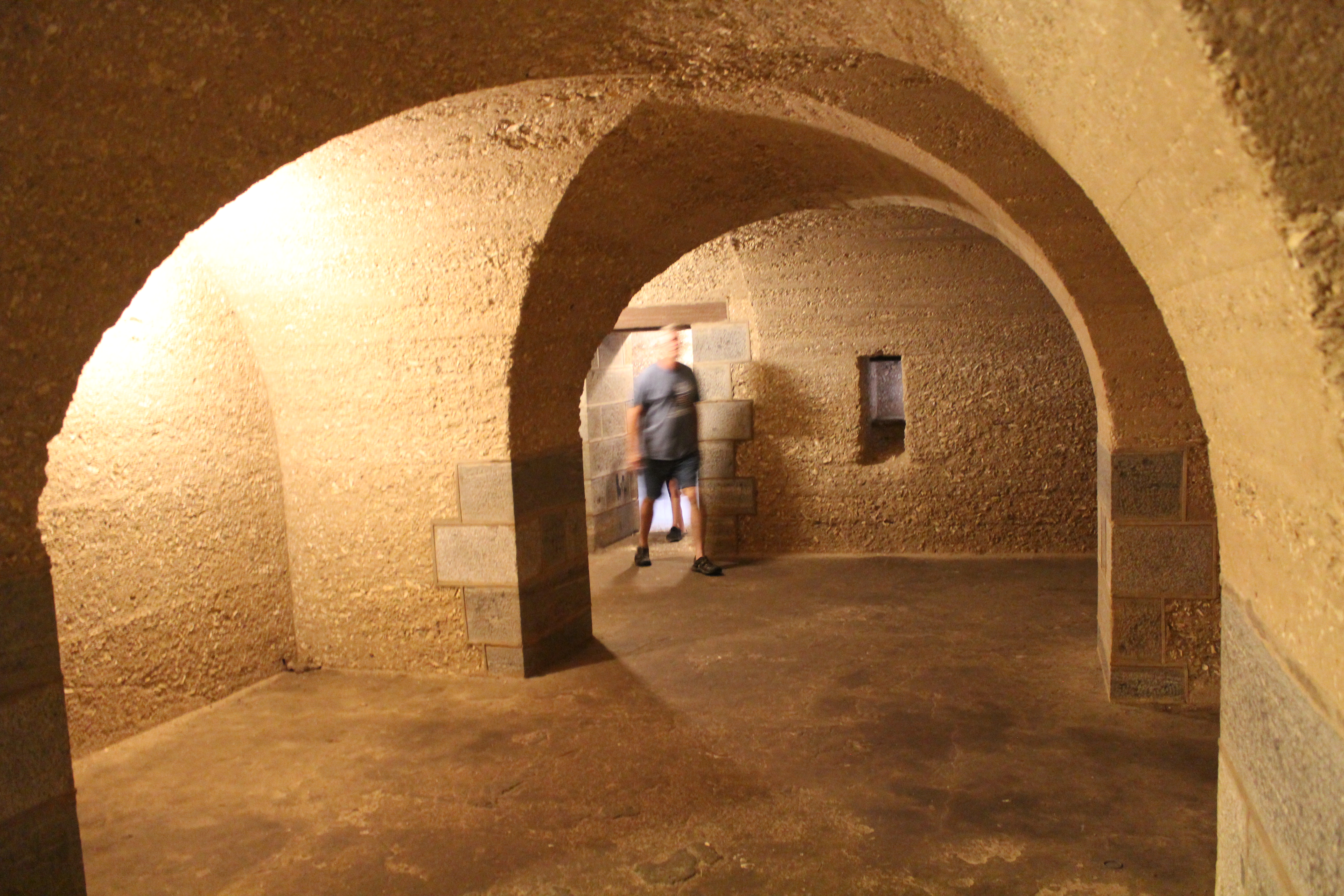
Visitors tour the underground chambers located inside and under the walls of Fort Pulaski.
Under the cover of night, the Union Army positioned rifled cannons in strategic locations across the water on Tybee Island. Because they didn’t know the Union was equipped with this new cannon technology, the Confederate soldiers thought they were safe and secure from the Union threat. Surely cannon couldn’t reach the walls from that far away, they thought, musing that if a cannon ball did happen to hit the fort, it would do little damage.
The battle lasted 30 short hours. The mighty garrison was no match for the rifled cannons and their capability to fire from far greater distances than traditional cannons. With massive holes blown in its side, Fort Pulaski was forced to surrender to the Union Army. For the rest of the Civil War, Fort Pulaski was a Union strong hold that allowed the United States to control the shipment of goods up the Savannah River. It also served as a prison for captured Confederate soldiers where many died of disease and starvation.
The prison where many Confederate soldiers lived and died.
Today Fort Pulaski stands proudly as one of our National Historic Monuments – a portal to the past – allowing visitors a chance to learn about what life was like on Cockspur Island in the 1800s.
As we meandered around within the walls of the fort, I could almost see the military personnel keeping watch along the upper walls while others tended to the massive cannons and other tasks around the interior. On Saturday’s, costumed reenactors populate the fort to give visitors an even more authentic experience as they go through the ceremony of firing several of the cannons on the garrison wall.
But even if you visit on a weekday, you just might meet a soldier in uniform. Since dozens of southern soldiers who were imprisoned there also died there, it is not surprising that people claim to see and hear their ghosts throughout the fort – even in the middle of the day.
Besides the fort itself, there are trails surrounding the garrison which allow visitors to explore the island’s plants and wildlife. And, although you can’t cross to it, there is a trail that takes you to a great vantage point to view the Cockspur Island lighthouse. Unfortunately, we didn’t get to take advantage of those offerings as about the time we finished our tour of the fort, the downpour arrived.
There is so much to learn here. The national park service has provided dozens of detailed plaques explaining how each area was used. There is also a wonderful short film in the welcome center about the battle between the Confederate and Union armies. As I walked around the fort, I couldn’t help but feel that the walls themselves were saturated with deep emotions: hope, deep despair, happiness, fear, pride, weariness … So much has happened here.
Fort Pulaski is such an interesting place. If you’re traveling near Tybee Island, I recommend you set aside a couple hours to wander around this historical gem. Admission is very inexpensive: $7 per adult. If you’re on vacation, this will probably be one of the least expensive, but most enriching experiences of your trip. I hope you find it to be as engaging as we did.
All photos are the property of V. Lori Hedges, and may not be used without permission.
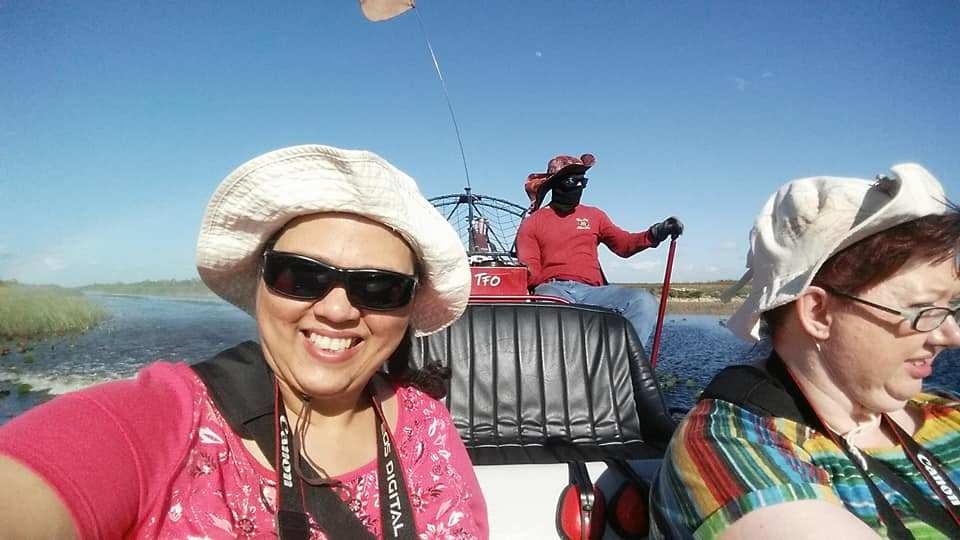
Cue the scream! Cue the music! For 11 seasons I had watched Horatio Caine (played by David Caruso) speed across the grassy river in the opening shots of CSI Miami, so before we even stepped aboard the boat, I was giddy with excitement. I was finally getting the chance to take my own airboat ride through the Florida Everglades.
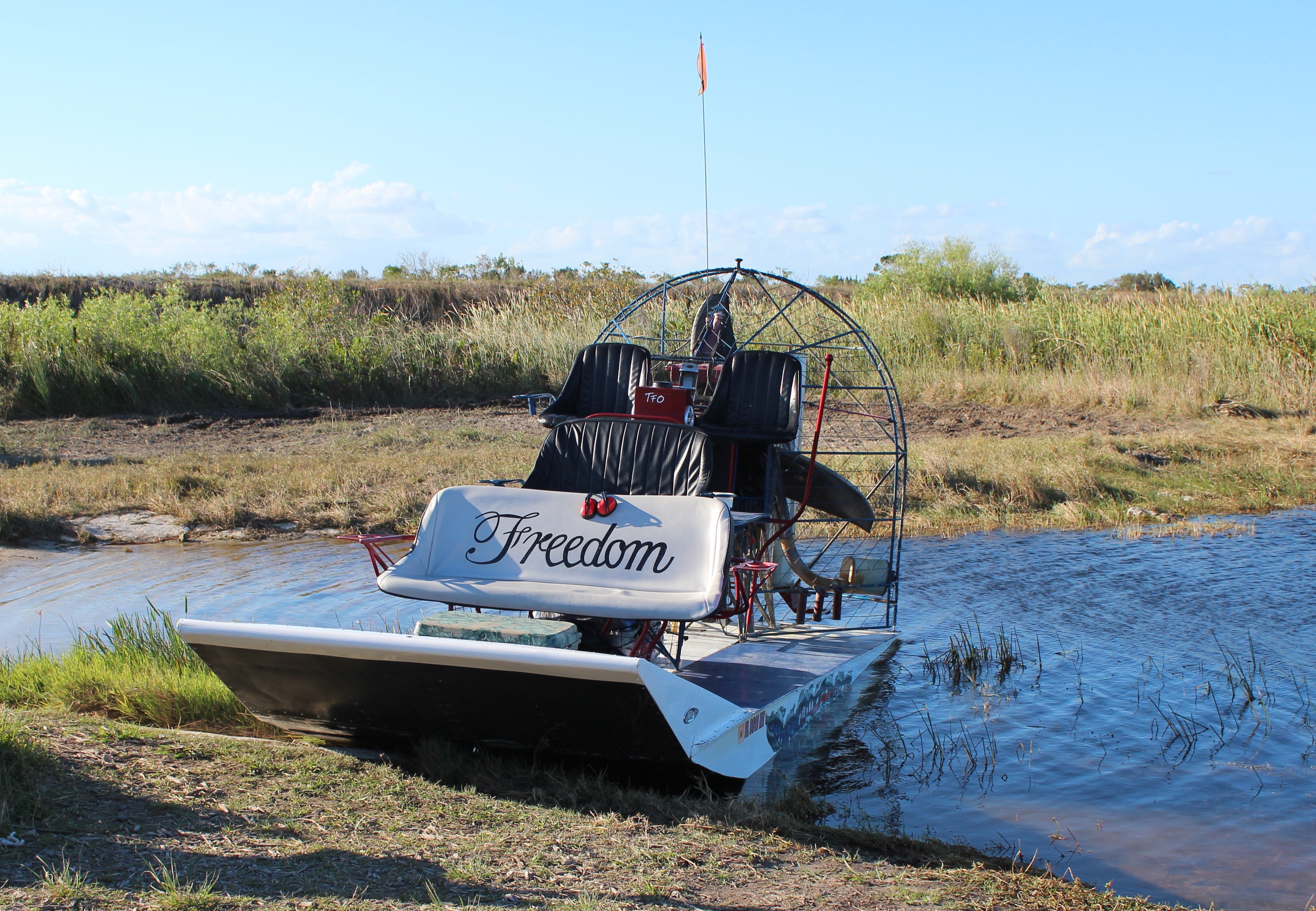
Our boat arrived, and as we were waiting for it to be refueled, I noticed that it was named appropriately, the Freedom.
Our guide and pilot-extraordinaire, Lorenzo, of the Everglades Nature Tours, welcomed my sister and I aboard and helped us get settled before he revved up the engine, and off we flew.
As the flat-bottomed boat skimmed over the grasses and water, I couldn’t keep the grin off my face. What a rush!
Flying along with the wind whipping through your hair, you get the sensation that the pilot only slightly has control over the boat – kind of like when you do donuts on an icy parking lot in the winter – a little scary, but whole lot of fun. Of course, that free-wheeling sensation was only an illusion as Lorenzo had perfect control the whole time.
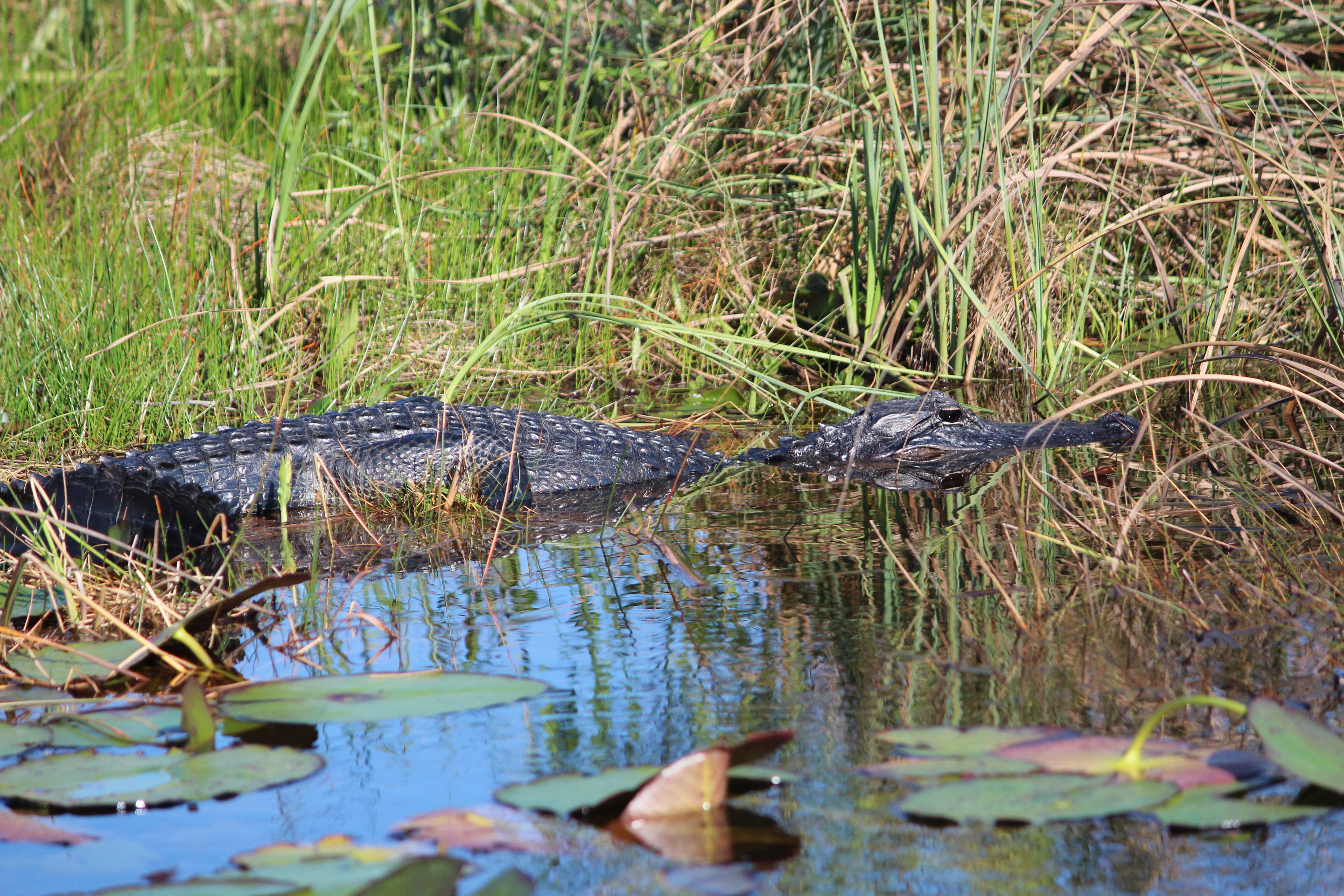
When you go to the Everglades, of course you want to see some alligators, and Lorenzo knew exactly where to find one. As we came up on the juvenile reptile, he slowed the boat to a crawl so we could ease up without spooking him. Even though we were quiet as we snapped dozens of photos, Mr. Gator seemed to glare at us as if to say, “Go away! I’m trying to nap here!”
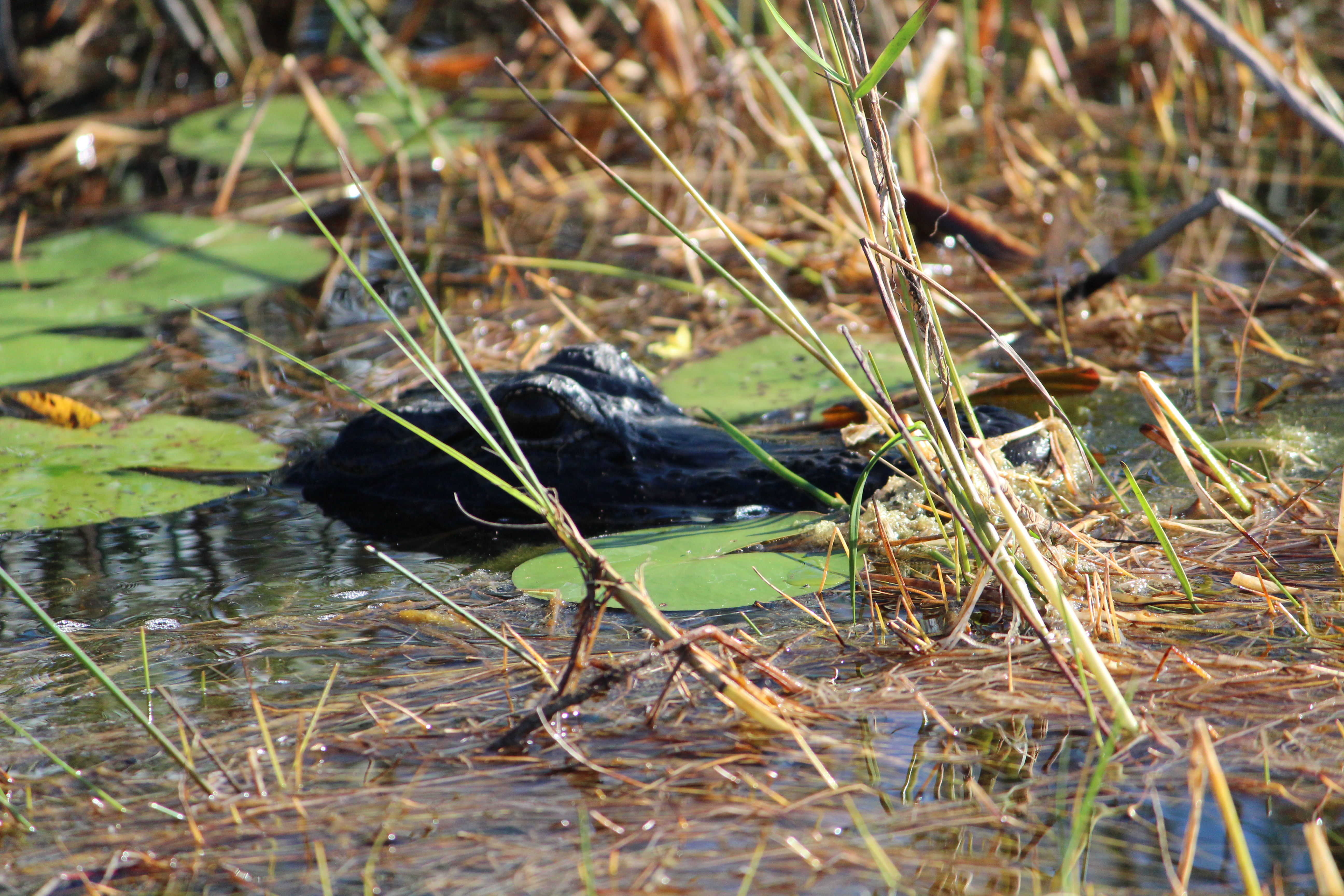
A second alligator, found further out into the Everglades, was not so patient with us, and immediately dived to avoid our cameras. A few moments later we caught him peeking at us while all but part of his head remained submerged.
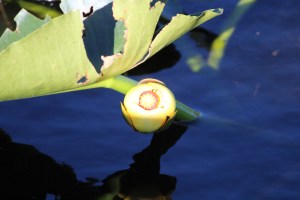
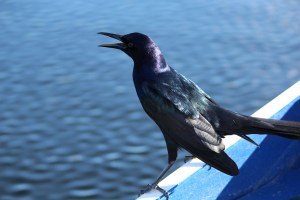
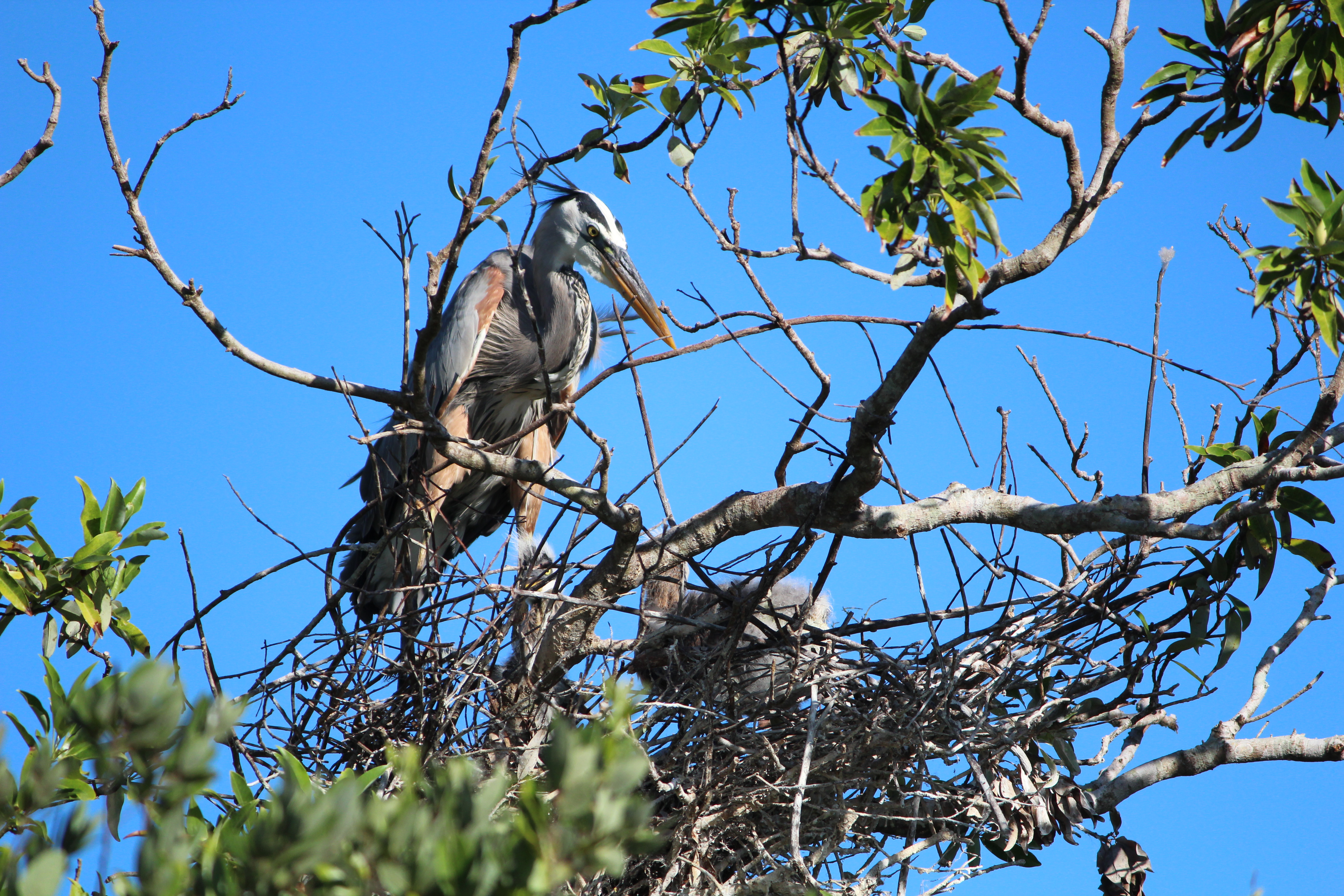
Around every bend there was a new discovery to be found. Lorenzo pointed out birds and plants and explained the practical or medicinal uses of several different kinds of grasses and flowers we found along the way. We watched a gigantic Blue Heron swallow a whole fish as she prepared to feed her chicks.
Before we knew it, an hour had passed, and we were coasting back into the docking area. What an hour it had been though! When you are out in the Everglades, the river of grass seems to go on forever until it meets at the horizon and joins with a sky that looks so vibrant and blue and big, it appears almost surreal.
It is an experience that should not be missed. If you find yourself near or in Miami, look up the guys at Everglades Nature Tours, and they will take you on a magnificent tour of a lifetime.
As far as I’m concerned, there is never a bad day to go to the beach. I would go every day if it were up to me. There is nothing more therapeutic than the sound of waves crashing on the shore. But since I live in southern Indiana, the only shoreline near my home is bordering the Ohio River. While our riverfront is beautiful and relaxing, it’s just not the same as the beach.
If my beach fix was limited to trips to the Atlantic, Pacific or Gulf Coast, I’d be in trouble. Luckily, there are miles of sandy, beautiful beaches just four hours to the north! From the Indiana Dunes National Park to the multitude of other beaches, Lake Michigan has sandy shoreline as far as the eye can see.
Recently I had the pleasure of visiting Michigan City, Indiana – a town that is a perfect getaway destination. My husband was there on business, and I got to tag along, and we turned the down times into a two-day getaway vacation. Michigan City has historic sites, a Casino, theater, music venues, great restaurants and bars, parks, and (of course) beaches.
Since it was such a quick trip, we didn’t get to go everywhere on our list. (I guess that just means we’ll have to go back again soon!) However, we had the opportunity to visit several amazing places, including Michigan City’s Washington Park Beach.
One of the things I love about beaches on the Great Lakes is you have the sensation of being at the Ocean without all the wildlife risks, meaning there are no sharks, jellyfish or stingrays to worry about! Like the ocean, however, you do have to pay attention to the water conditions. Big water is big water, and like the ocean, waves can get rough, and riptides form on a regular basis. So, use caution when swimming, and pay attention to the flags posted at the beach.
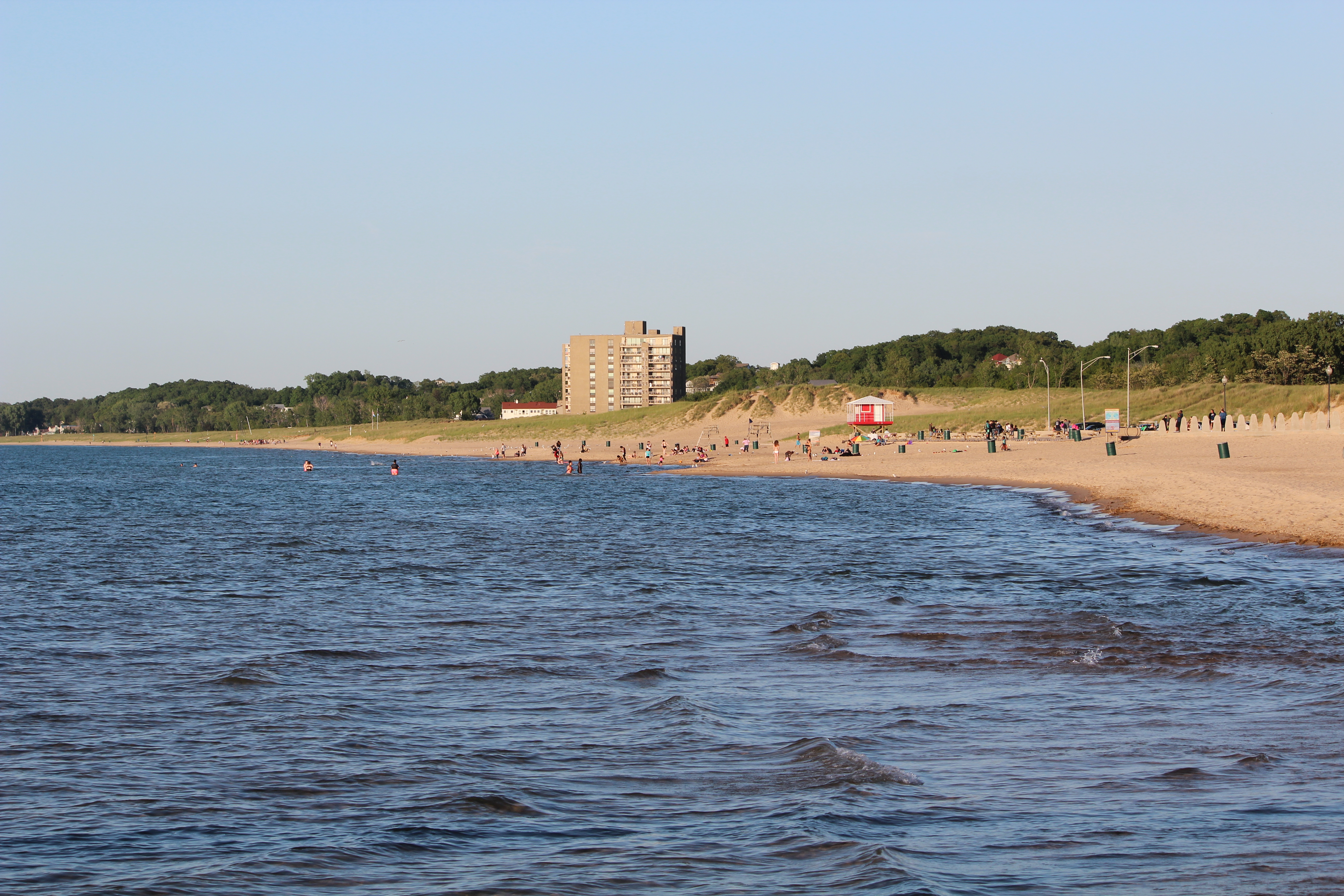
Washington Park Beach has life guards on duty during the day, which makes it the perfect place to take your family. The beach is beautiful and clean, with restrooms and concessions on the beach. It’s the perfect place to swim, wade and look for shells and sea glass.
Michigan City has lots to do!
Just a short walk down the shore is the Old Lighthouse Museum, located at 100 Heisman Harbor Road, in Washington Park where you can learn about Great Lakes history and the role lighthouses had in that history. The museum is open from 1 p.m. to 4 p.m. Tuesday through Sunday from April to October. Admission is $5 for person age 14 and older, $2 for persons younger than 14, and free from preschool age and younger.
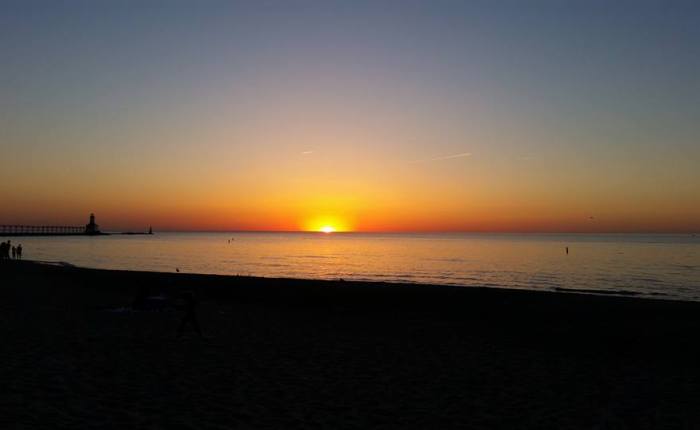
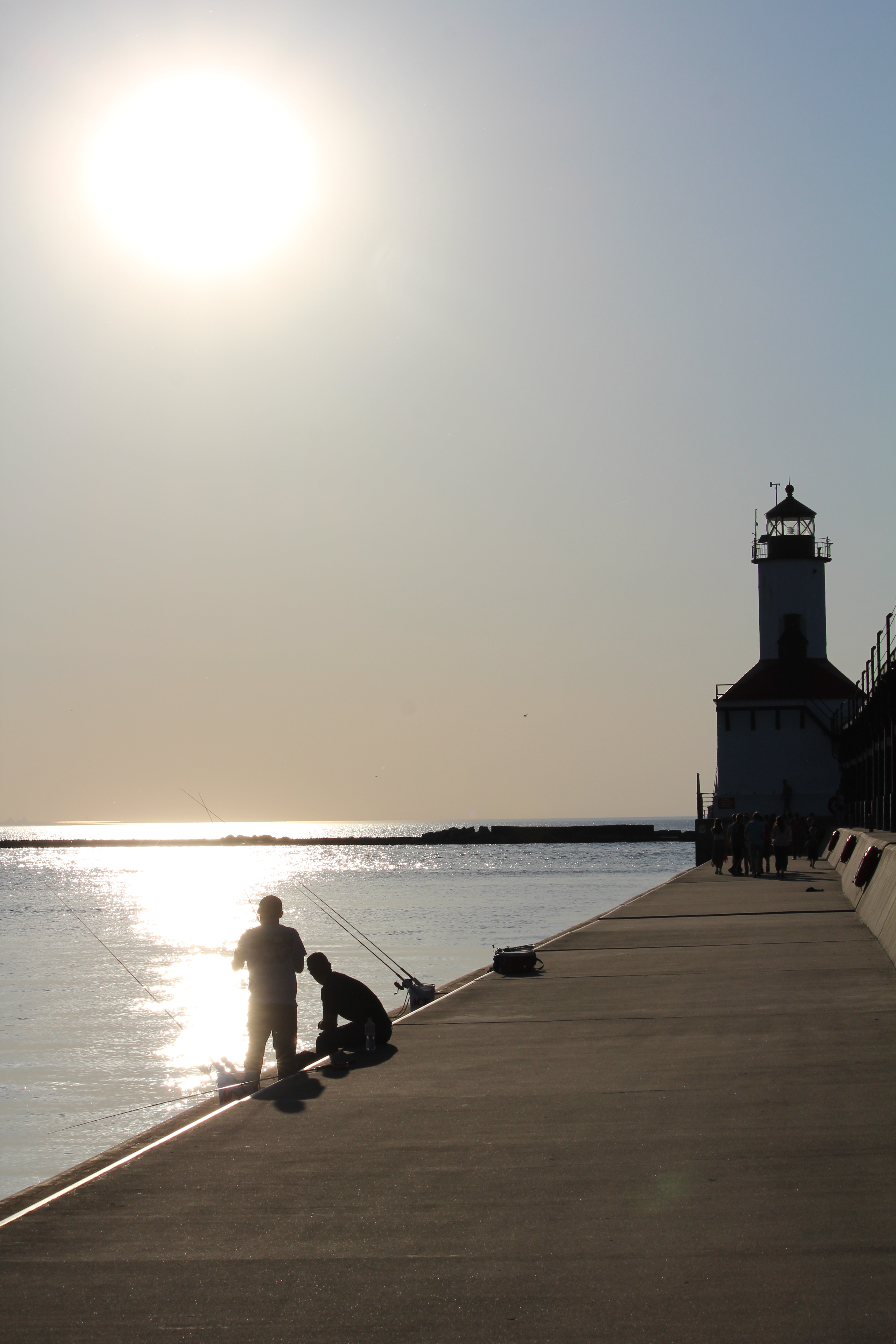
If you want to see a working lighthouse, just follow the walkway along the shoreline to the Michigan City Lighthouse. The walkway is a great place from which to throw out a fishing line or kick back and watch the sunset – or do both at the same time!
If you need even more stuff to do, Washington Park also offers a zoo, a senior center, a splash park, picnic shelters, a boat launch, a marina, public fishing areas, a fish cleaning station, public art, and a restaurant. Also, if Washington Park’s beach isn’t enough for you, the Indiana Dunes National Lakeshore is just west of Michigan City and offers many miles of beautiful beaches.
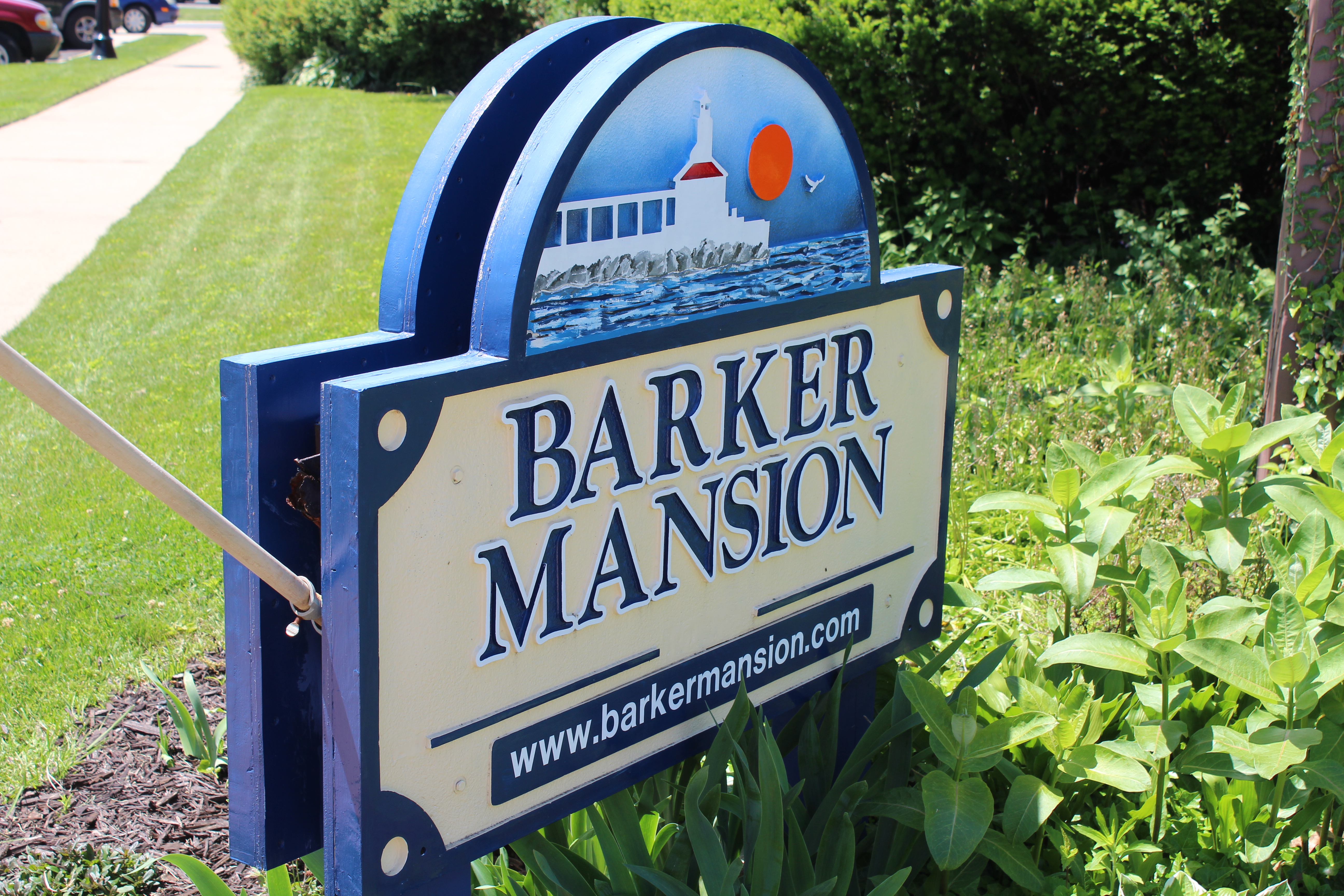
However, if your family is like mine, just going to the beach is not enough to keep active offspring happy. Michigan City has tons of things to do and see. There are several museums, including the Historic Barker Mansion, a beautifully preserved Victorian-era home built in the 1800s by one of Michigan City’s most important citizens, or the Hesston Steam Museum or the Hoosier Valley Railroad Museum.
If art and theater is your thing, you’re in luck. Michigan City has a variety of art galleries, and the Canterbury Theatre offers a full season of plays, musical theater, and concerts. Need more excitement? The BlueChip Casino has a blackjack table or slot machine waiting just for you! (Just remember to play responsibly.)
Finding a tasty meal
After a full day of beach lounging, museum tours, and whatever else you manage to crowd into your day, a good meal is more than necessary. During our stay in Michigan City, we ate at several restaurants. A couple really stood out from the rest.
First, let me suggest Galveston Steak House. A family-owned restaurant, located at 10 Commerce Square, Galveston believes in great food, big portions, and friendly service. Eating there was a great way to end a wonderful day.
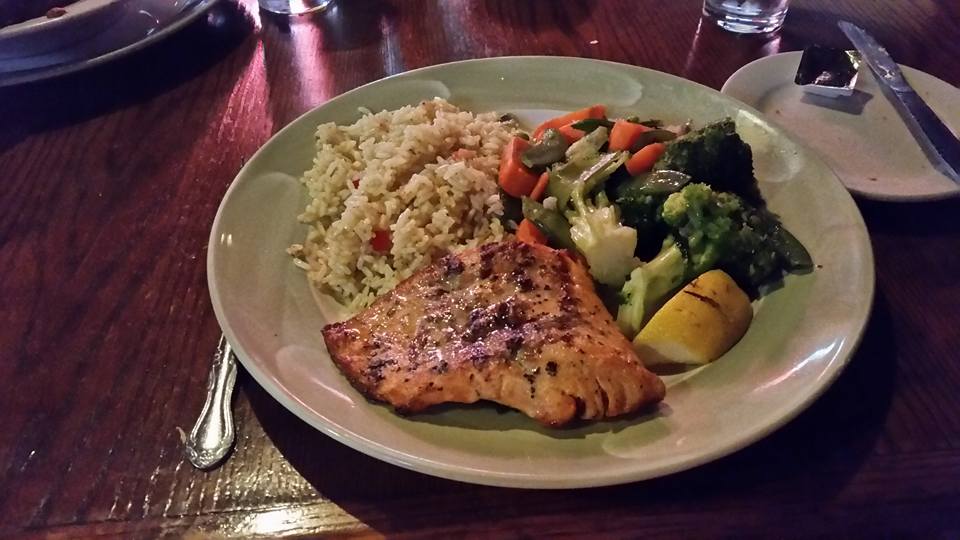
I also had the opportunity to pop into Ryan’s Irish Pub and Restaurant, located at 401 Franklin Street. I was just looking for a snack and something to drink, but boy did I get more than I bargained for! I had skipped lunch so I asked for an order of deep-fried cauliflower, thinking it would be a little something to get me through until dinner. What came to my table was a huge heaping bowl of deliciousness! Stop in for a snack, but you may want to bring someone with you to help eat it!
Staying in Michigan City
Accommodations in Michigan City run from one extreme to the other. We stayed at the BlueChip Casino in a room which I consider to be a typical no-frills hotel room. I recommend you check out the other accommodations offered in the town as the walls at the BlueChip are thin, making for a noisy abode. If you’re visiting on a budget, there are campgrounds and RV parks available, with some offering cabins. On the other end of the spectrum, there are several hotels, including the BlueChip, that offer luxury suites. The city also has a variety of beautiful B&Bs, or you can opt to rent a beach house through a site like HomeStay.
Regardless of where you decide to stay, your visit to Michigan City is sure to be a highlight of your summer. I know my family is excited to spend a couple days this summer enjoying the beaches near Michigan City.
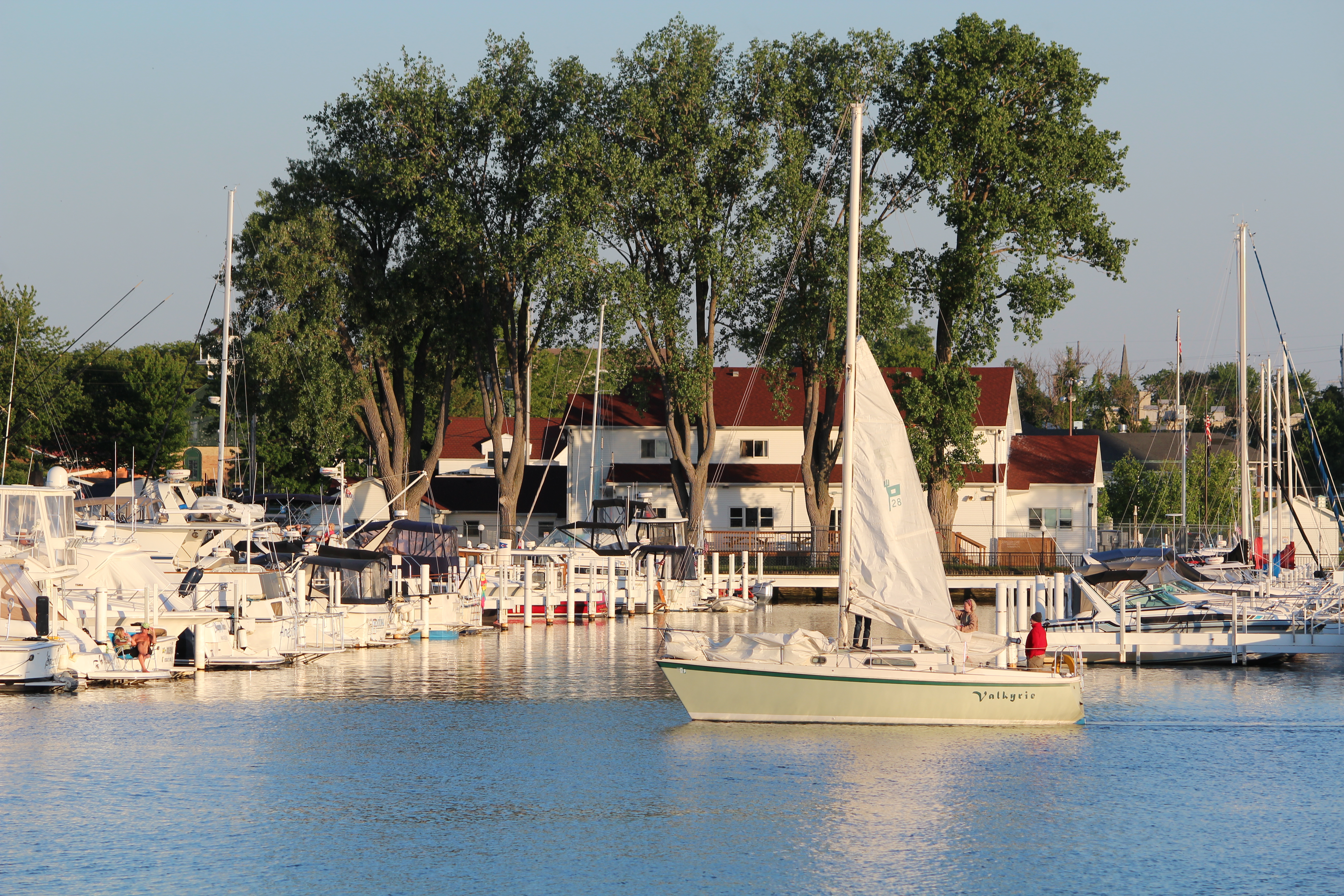
It’s fun watching boats sail in and out of the marina at Washington Park.
All photos are the property of V. Lori Hedges, and may not be used without permission.
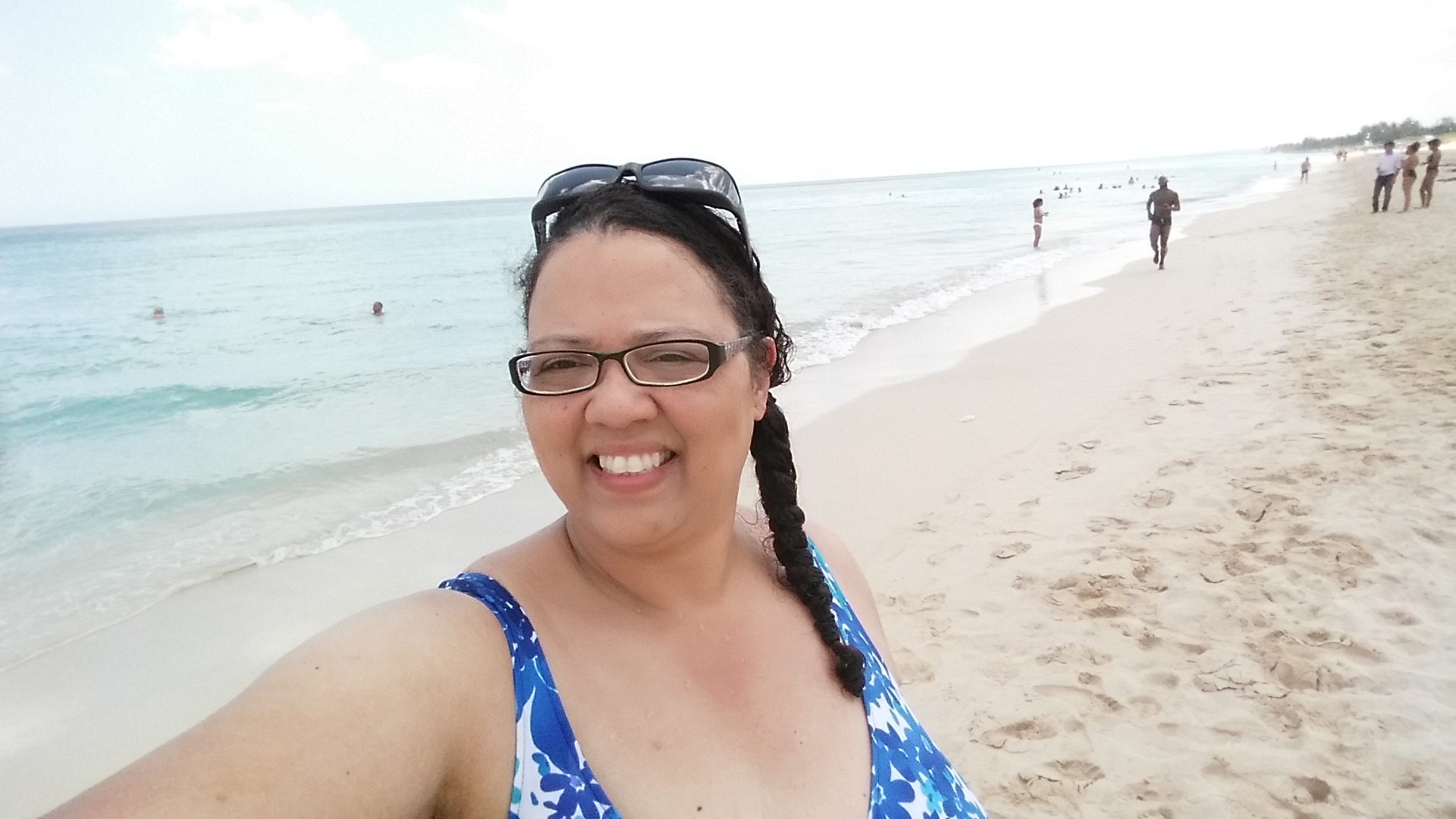
I knew before we left for our trip, that Tyler and I had to reserve at least one day to visit a beach in Cuba. After all, you can’t go island and not go to the beach!
Months before I had watched an episode of Anthony Bourdain’s Parts Unknown which highlighted Santa Maria Beach in one of his story segments. “That’s where we are going,” I told Tyler. So, toward the end of our trip, we called up our friend, Pedro, and asked him to take us to Santa Maria Beach for the afternoon.
We were not disappointed! Although it was a hot day, the water was perfect. And because it was in the middle of the week, it was not at all crowded. According to Pedro, most Cubans go to the beach during the late afternoons on the weekends.
I really think it is the most beautiful beach I’ve ever visited. You could see straight to the sandy bottom; the water is that clear. The day we were there, the water was very calm with minimal undertow – a perfect place to take young children for a dip in the ocean.
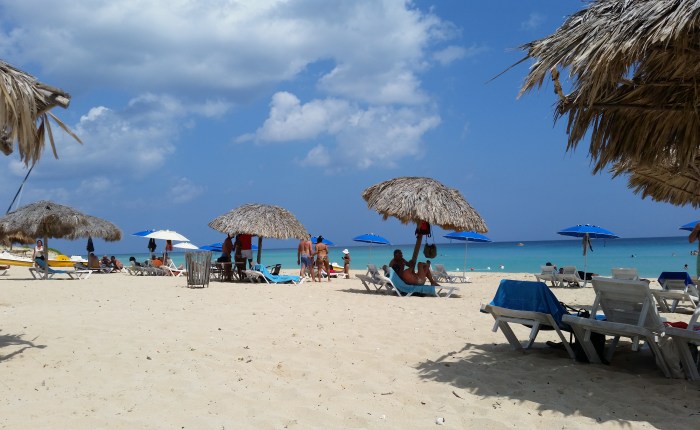
Large portable beach umbrellas and chairs are available for rent or you can just claim a spot under one of the fixed palm-leaf umbrellas dotting the shoreline. We chose to do the later and spread out a blanket on the sand underneath it.
At the beach entrance is a bar and restaurant where you can purchase everything from sandwiches and soft drinks to cocktails and beer. The bar’s restroom is also conveniently available for changing into your swimsuit.
We swam, lounged, and people watched (most of our fellow beach goers were European and Canadian tourists) for more than four hours. After the hustle and bustle of Havana, Santa Maria Beach was a soothing balm to the soul.
For sure, this beach tops my list of favorite oceanside places! If you make it to Havana, make sure you set aside some serious time to check out this jewel of a beach!
Last thought
As I sit and reflect on my 10 days in Havana, there are a few thoughts I’d like to leave with you before I go onto my next adventure. To begin with, I just want to say that the people of Havana are wonderful, friendly people. They welcome you with open arms.
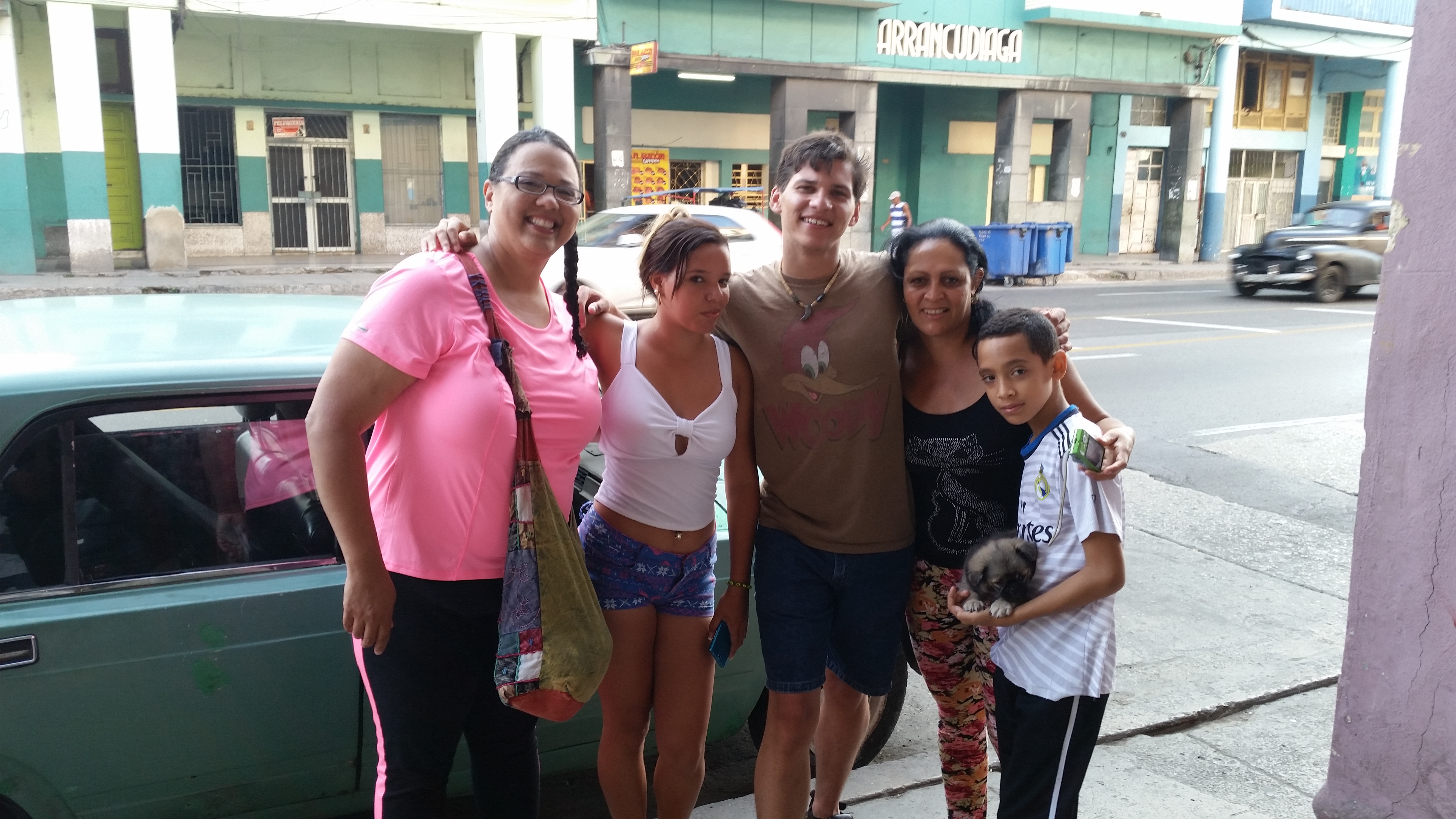
With our host family (from left) – Lori, Yanara, Tyler, Yeny, Anibal, and Maluma (the puppy).
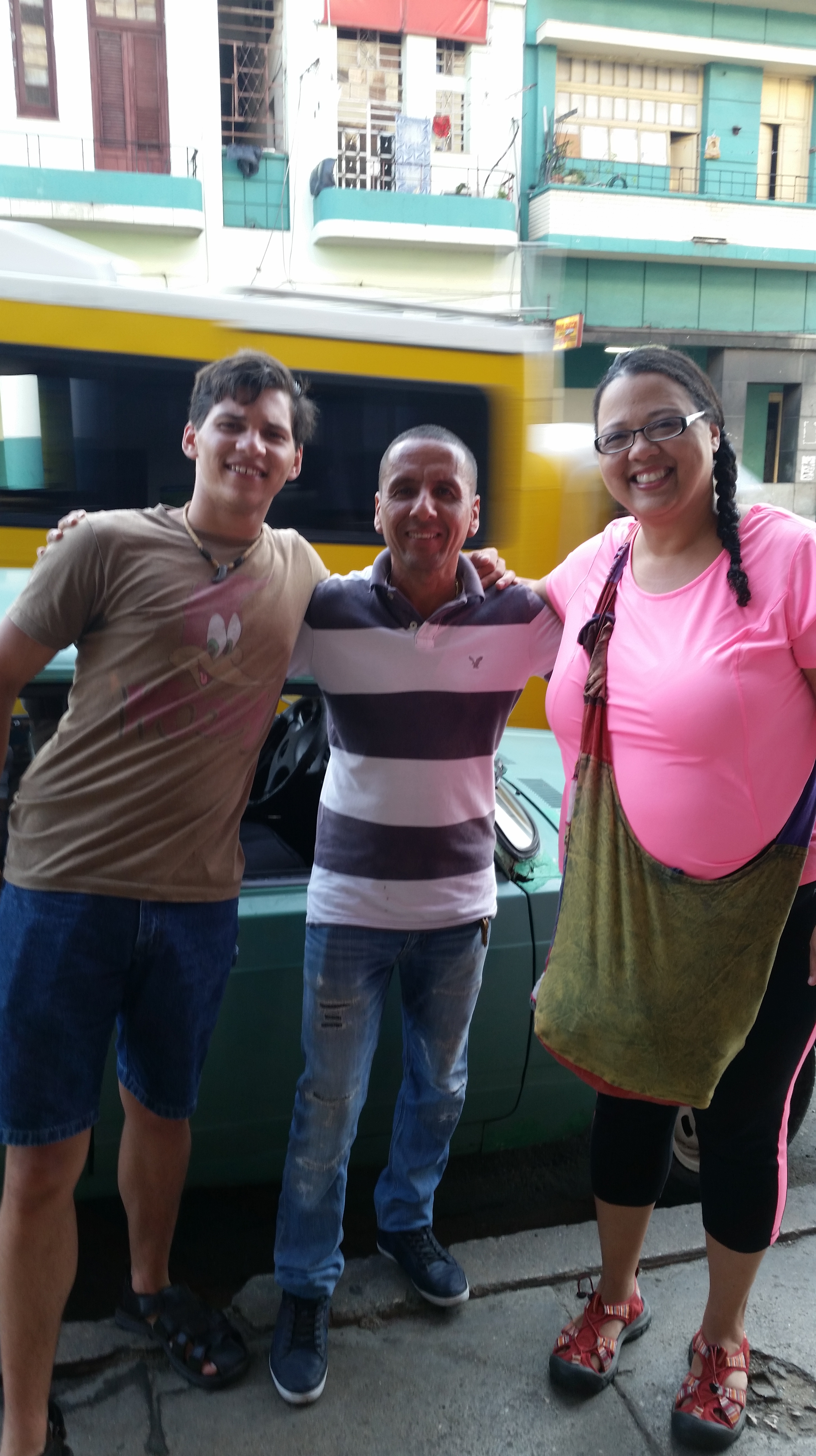
Our host family, Yeny, Anibal, and Yanara feel like family, and we miss them like crazy. Our new and wonderful friends, Julio and Tomasa, opened their home and lives to us, and we so cherish them. Pedro is so much more than a taxi driver to us, and we loved our conversations together as he took us from place to place. There are so many others that we were just barely getting to know – Sylvia, Sisi, Leo, and Felix – we can’t wait to come back and get to know you all better.
Tyler and me with our friend, Pedro.
I’ve never traveled to a place where I’ve gained so many friendships so quickly. I didn’t expect to feel so connected to this city, but it has become a part of me, and I am glad.
Havana is a major metropolitan city – yes, it’s literally crumbling in many places, but it’s also beautiful. There are signs of revitalization going on in just about every neighborhood as displaced Cubans are returning to invest in their country.
My only hope is that as Cuban nationals gain more and more access to modern amenities, they won’t forget that new is not always better. I hope they will never discard their neighborhood butchers, bakers, and produce stands that provide them with wonderful fresh foods and instead replace them with American-style supermarkets that specialized mainly in heavily processed foods with ridiculously long shelf lives.
I hope they will continue to repair and maintain the wonderful 1950s cars that are so famously Havana when new car dealerships begin springing up around the island. I also hope they will remain true to the historical aspect of architecture as renovations and new construction projects become more common around the city.
Havana, and the rest of Cuba, is going to experience growing pains as money and opportunities begin to flow into the country from the United States and elsewhere. This country that has struggled for more than 60 years is full of extremely resourceful and artistic people. They know how to “not just manage,” but to thrive with less, and they do it with an amazing zest-for-life attitude. I hope that as they experience gain, they won’t lose their strong character traits in the process.
Havana, even as large as it is, has a kind of “Mayberry” feel to it in that people still have a front-porch society. Everywhere you go, people are sitting in their doorways or on their balconies watching the activities around them. It is common to hear greetings shouted from the sidewalk, and neighbors spend time visiting each other daily. Families go to the neighborhood parks regularly to spend recreational time together and to meet with friends. They talk face to face. People there are connected, and not just on Facebook. I hope they never lose that.
Gracias, Havana. We will be back.
All photos and video are the property of V. Lori Hedges, and may not be used without permission.
The blue-gray glow seeping through the cracks around the shutters and the increase in honking horns and roaring engines on the street below signals that a new day has begun in Havana. I open my balcony doors and do what the locals do – step out and lean on the railing to watch the show taking place around me.
Taxi drivers are already out in full force, piloting their world-famous vintage autos as they troll for customers eager to part with 7 to 10 CUCs to avoid walking to their destination. The neighbors across the street are busy hanging laundry on the balcony clothes lines – a perpetual sight in Cuba.
Right now, the air is a pleasant 70 degrees with a cool ocean-fueled breeze. However, as the sun continues to climb the sky, you know that within the hour the air will change to hot and sticky. Even in April, shorts and lightweight shirts with sandals are favored attire.
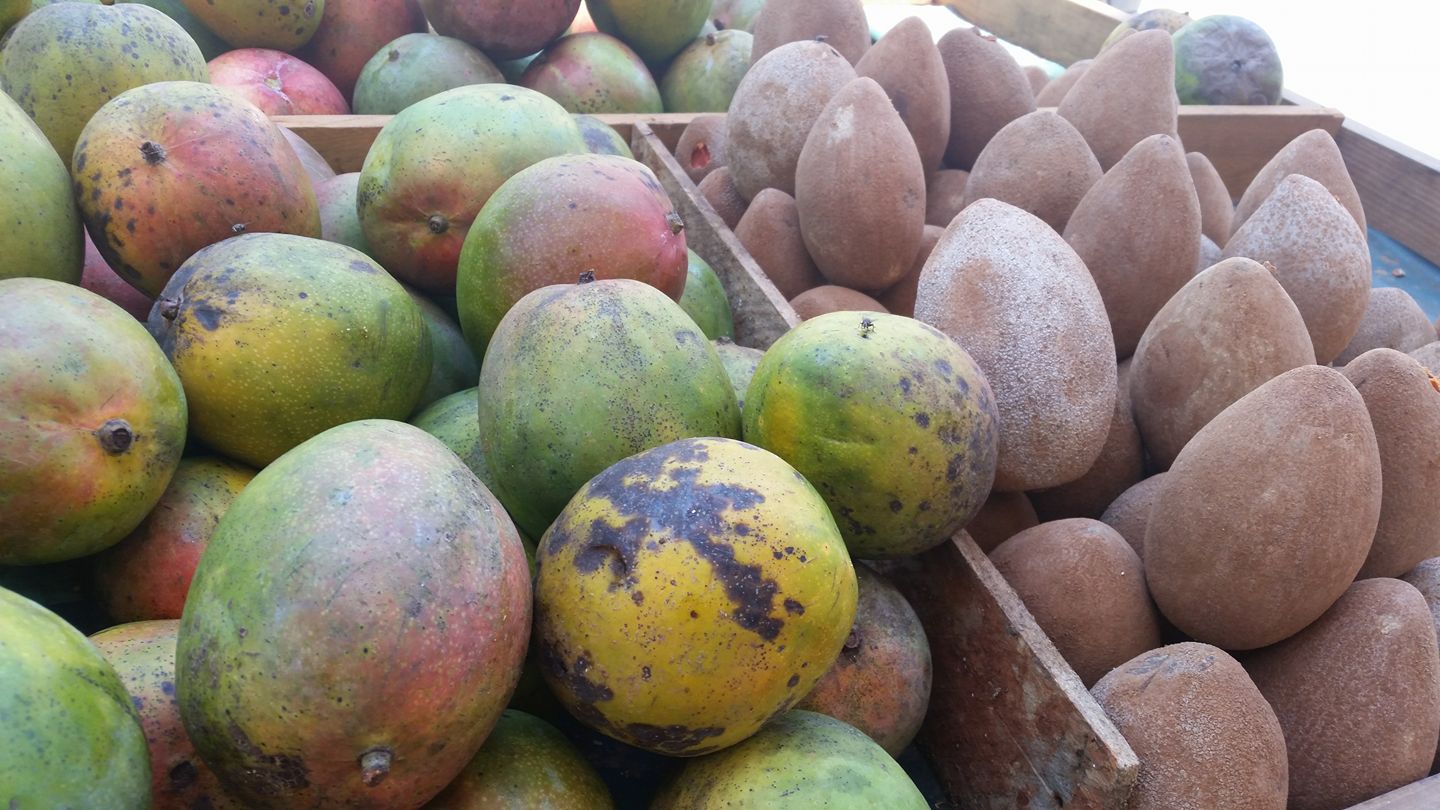
From the next room, I hear the call to breakfast from my hostess extraordinaire, Yeny. She has set out a literal feast: three plates of fresh fruit – pineapple, mango and bananas – and a pitcher of freshly squeezed juice – usually pineapple or mango. At each place setting a dinner-plate-sized omelet waits to be savored. A secondary plate holds a ham and cheese sandwich on a freshly-baked roll from the bakery down the street. The meal is topped off with strong Cuban coffee served with hot milk.
My son, Tyler, and I relish the fruit which was picked ripe and bought from the neighborhood produce stand. (We squirrel away the ham and cheese sandwich for our midday meal.)
By the time we finish our breakfast and get ready for our day, temperatures have soared into the mid-80s. It’s time to hit the streets in search of musicians to interview for our documentary.
The first full day in Havana, we weren’t sure where we wanted to begin our search for people to video and interview. The night before Tyler had gone for a walk and had gotten lost – a happy accident really since he now had a bit of an idea about the lay of the land. “There is a really beautiful church down the street that you should see, he said. So off we went in the direction of the church.
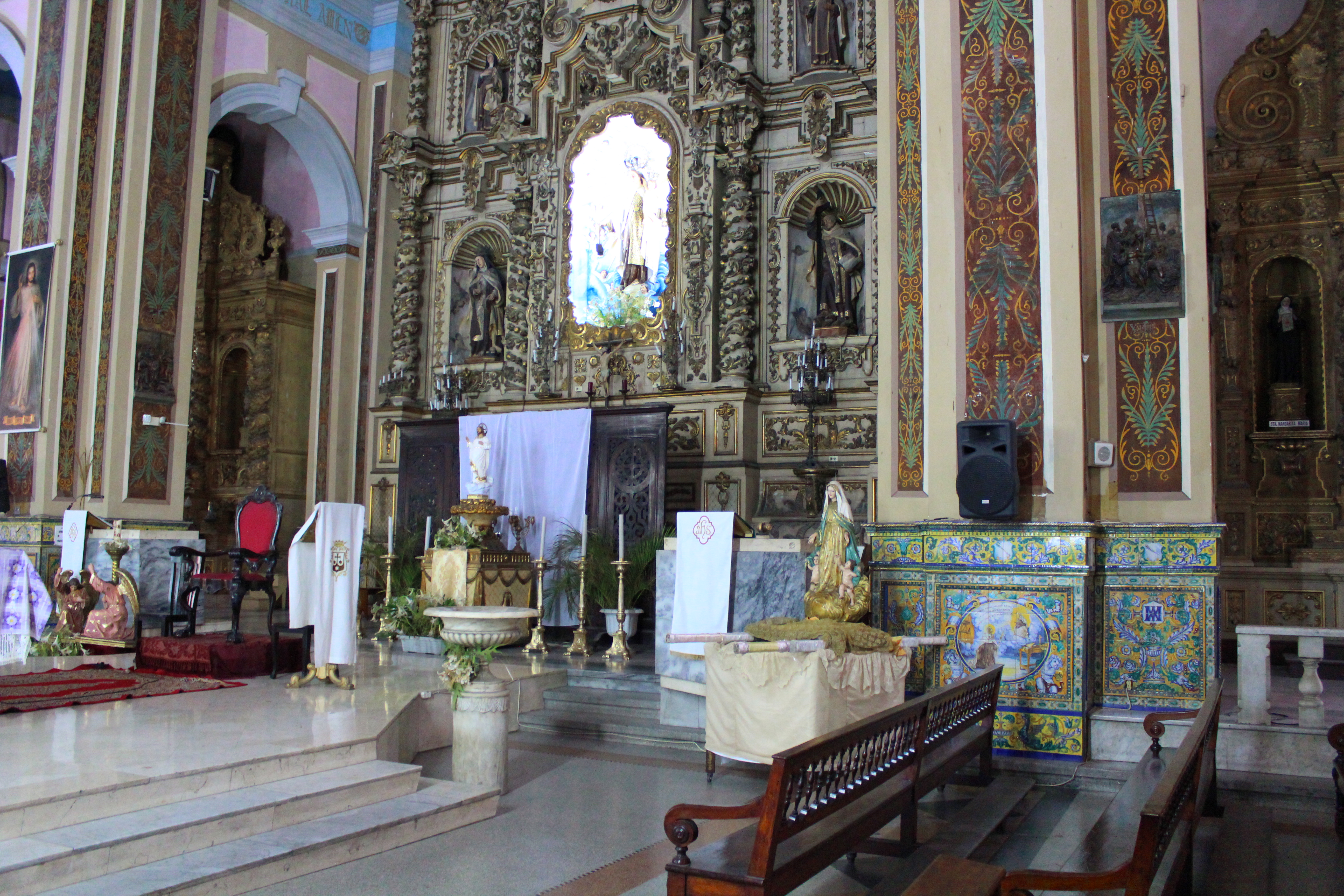
La Iglesia de Carmen
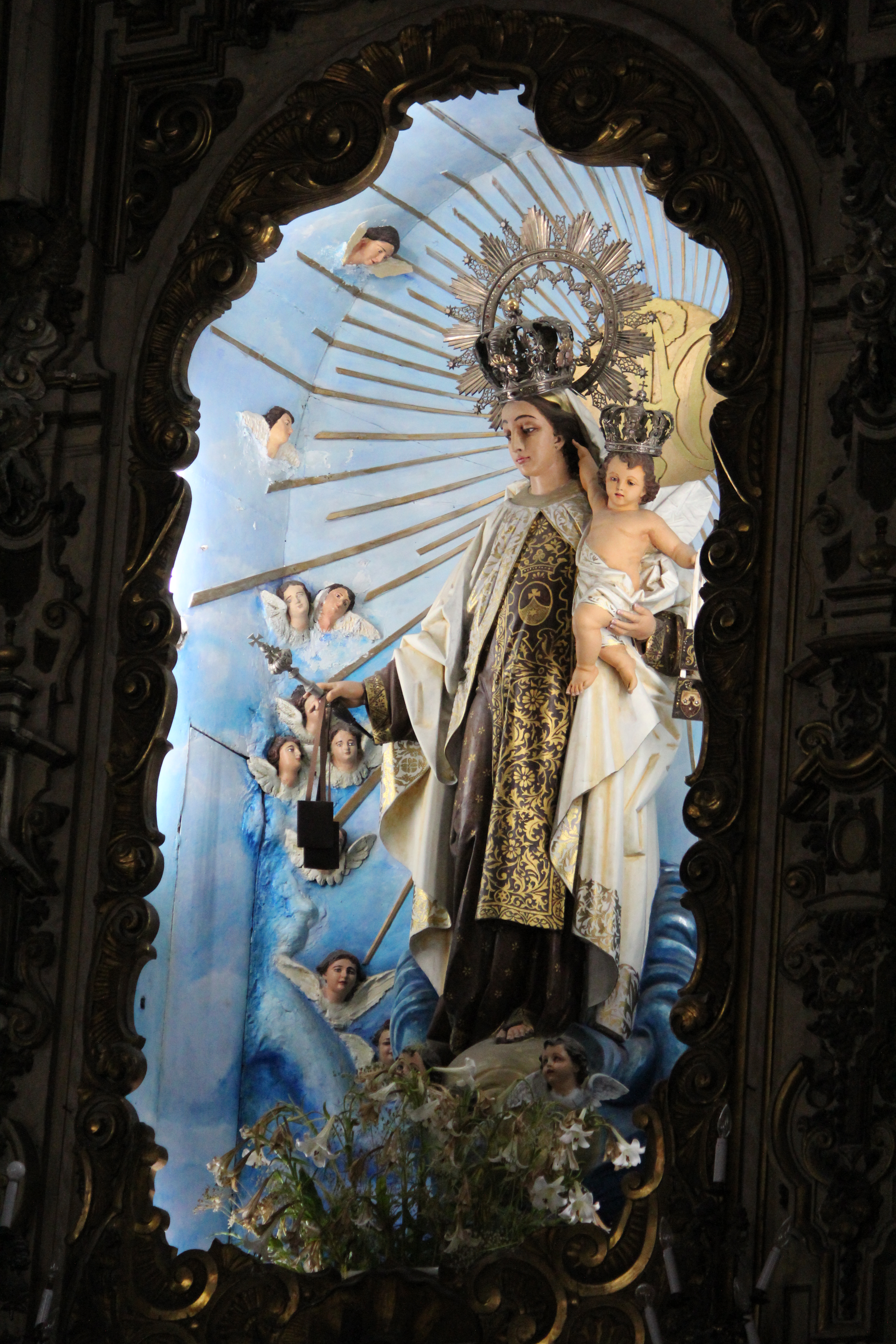
The doors were open so we stepped into the dim quietness of the sanctuary. An older lady was kneeling in one of the front rows, silently talking with God. A younger man stood in the isle reverently looking up at the statues of saints. In the hush of the room, the click of my DSLR sounded too intrusive. After a few close-up shots, I switched to my phone camera.
Although I am not Catholic, I felt compelled to spend a few moments in prayer before I continued my wander about the room. In a place where the communist government discourages religion, this church had obviously been preserved with love.
Our visit was cut short when a nun from the adjoining convent began closing up the doors for the mid-morning break. It was time to move on down the street.
We had walked several blocks down the street, and had stopped next to a building to discuss where to go next when a smiling man approached us.
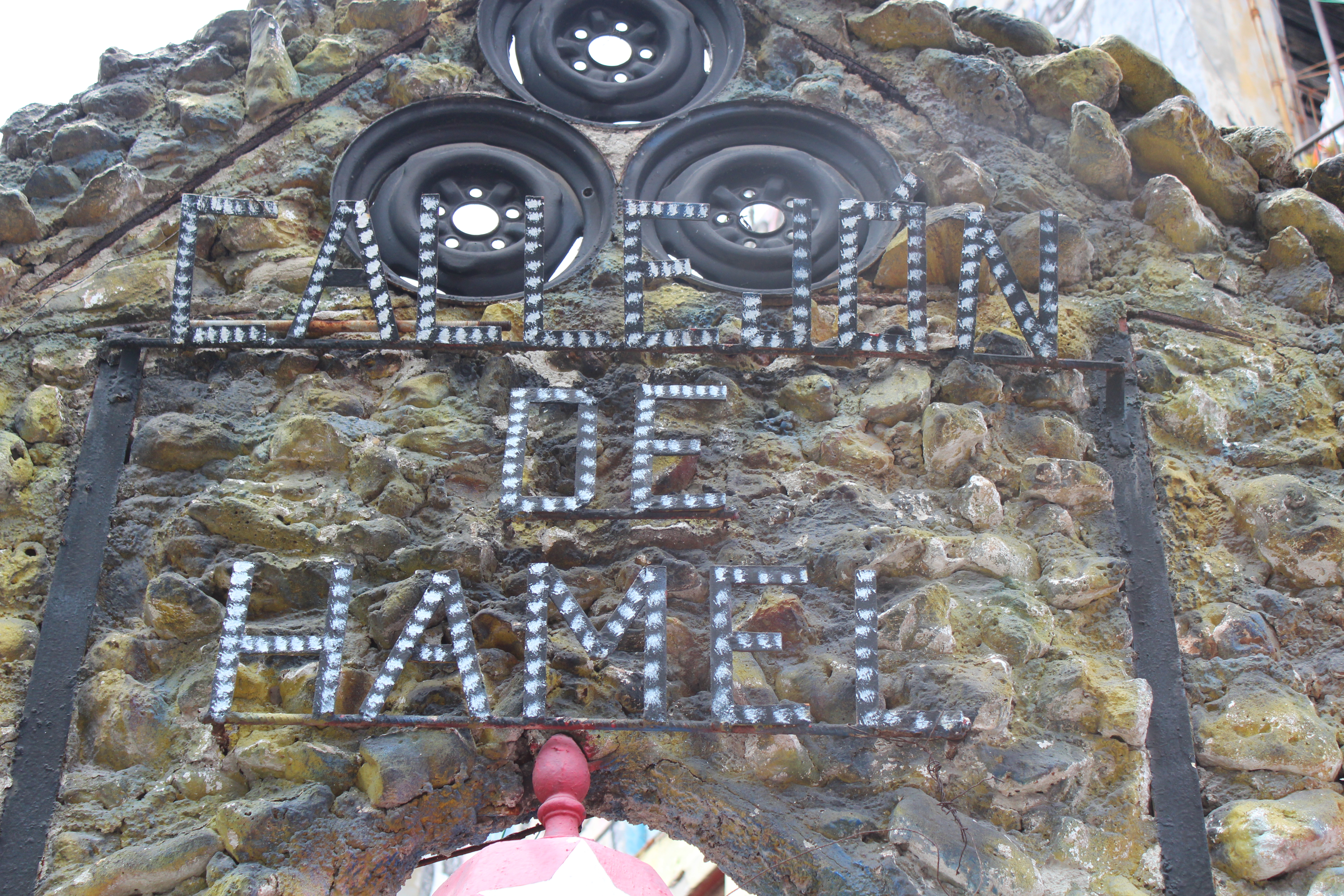
“Hello! Where are you visiting from?” Felix Javier asked in heavily-accented English. He introduced himself and explained that he is a promotional representative for the artist community of Callejón de Hamel. “Hamel,” he said was a couple blocks from where we were standing. He described the place as part art gallery and part music venue. It sounded like just the place for which we were looking. Felix also introduced his friend and business partner, Leo Moré, noting that Leo is a Rumba drum teacher in Hamel, as well as a tour guide.
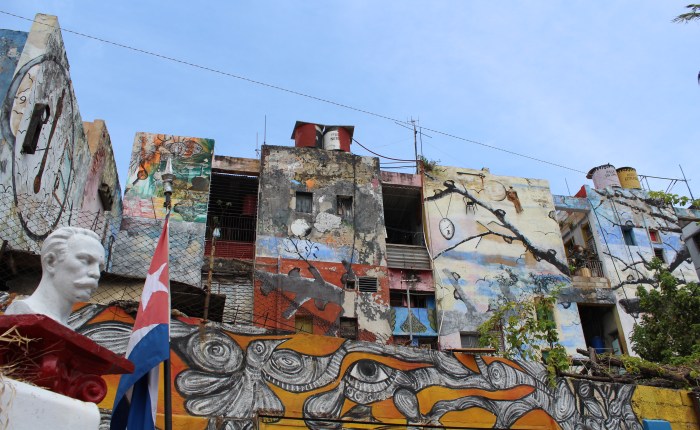
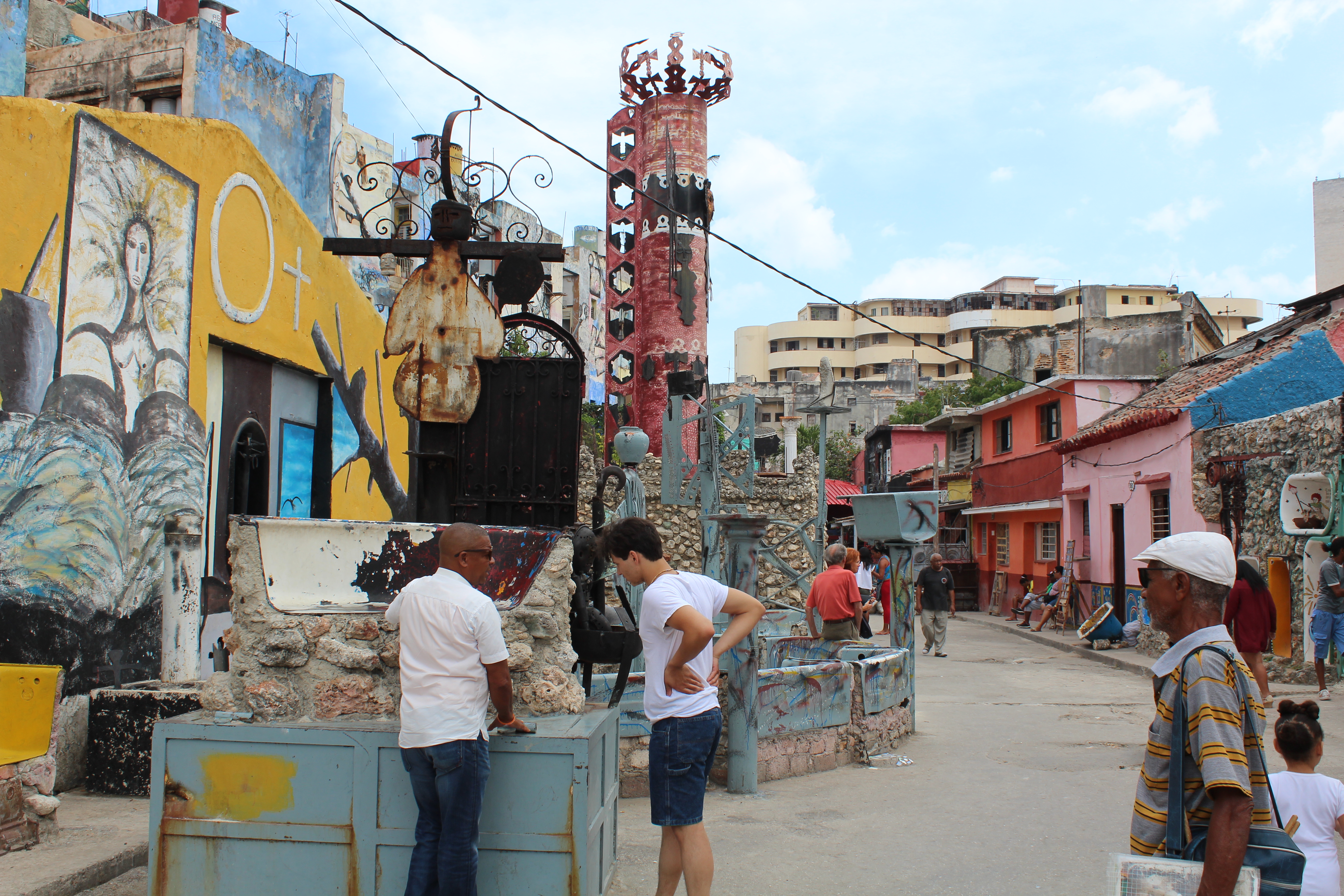
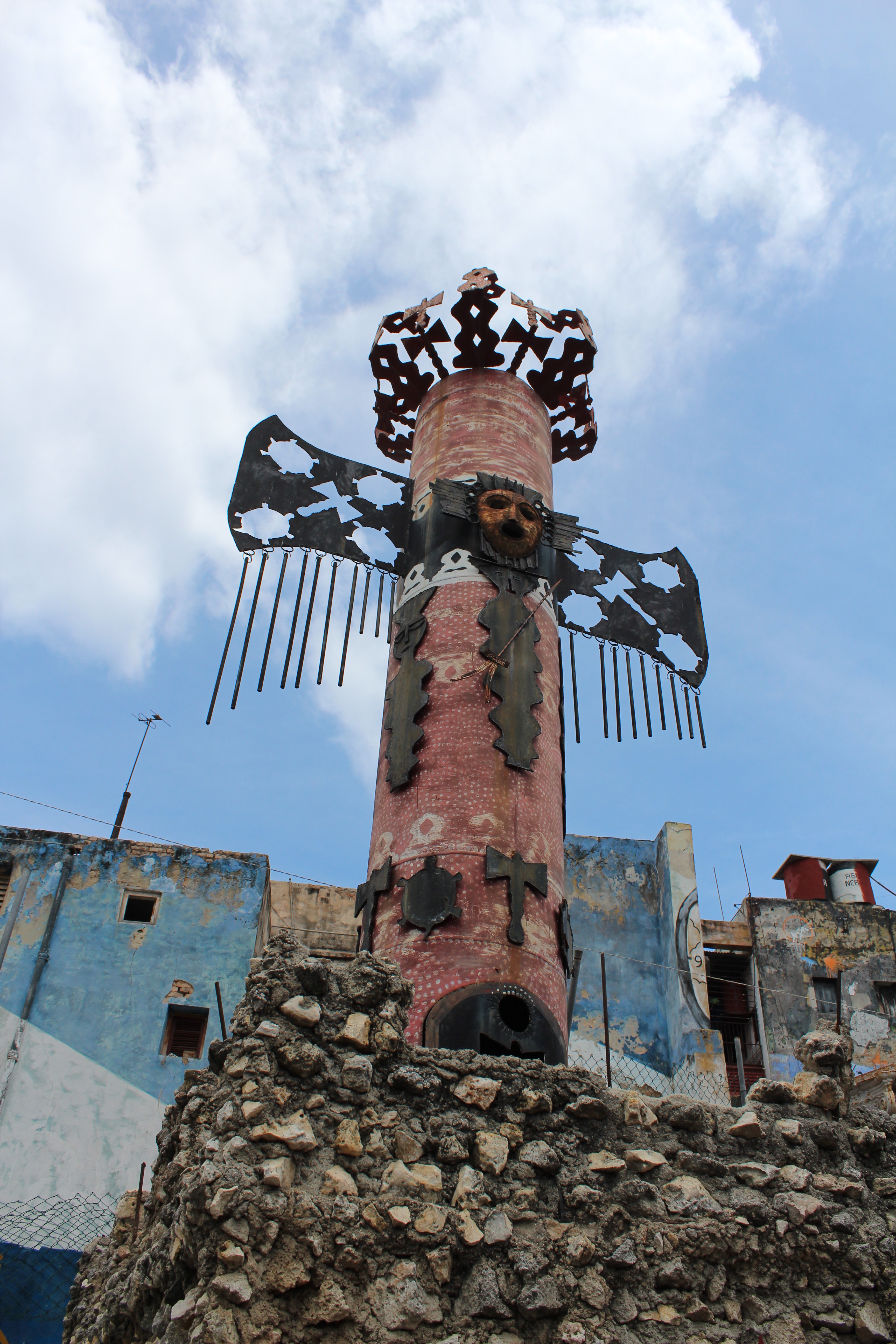
The four of us walked the few short blocks to Hamel which is located between Armburu and Hospital streets. There is no other way for me to describe Callejón de Hamel than as an alley covered in a riot of color. Brightly painted Murals and sculptures ingeniously made from all manner of recycled stuff line the narrow winding street.
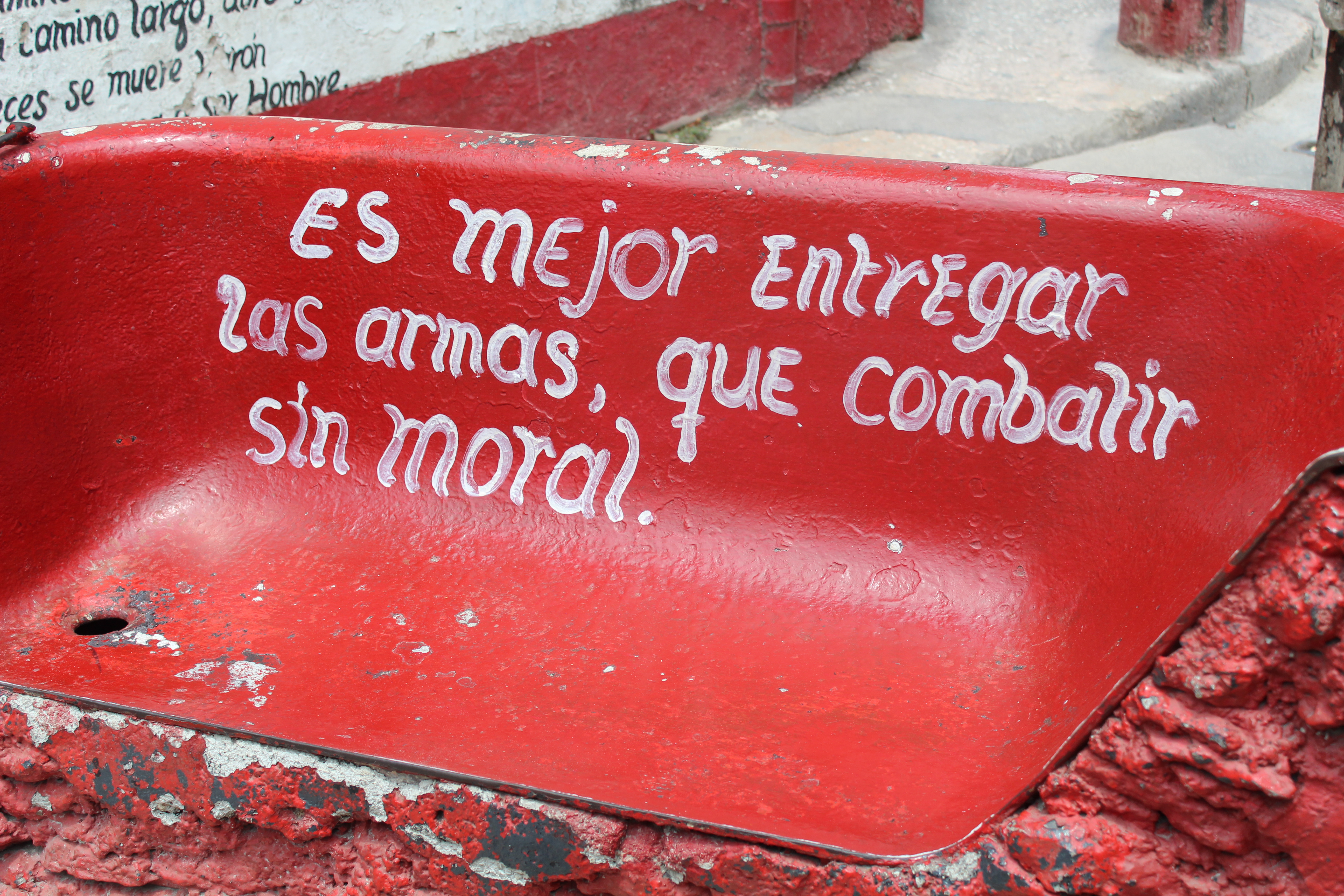
“It is better to hand over weapons than to fight without morals.”
I marveled at the colorful (and very useful) benches fashioned from discarded iron bathtubs. Intriguing sculptures made from old auto parts and other items which dotted the area, depicting a variety of human forms. Most of the murals and sculptures are by Cuban artist Salvador González, who started the alley project in 1990. Now people from all over the world, including celebrities, make a point of visiting the alley when they are in Havana.
Felix tells Tyler the history of the art in Hamel as Leo looks on.
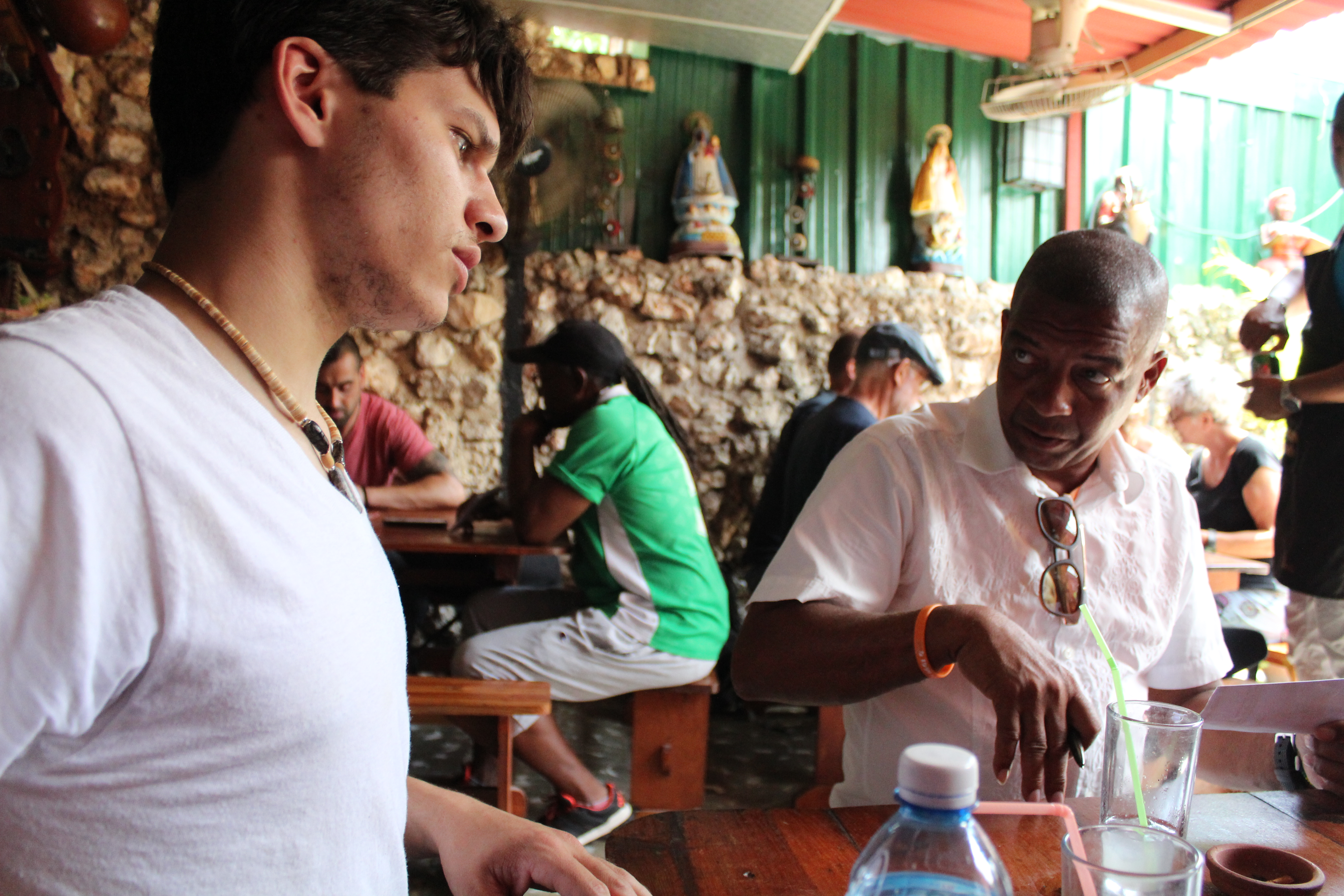
Halfway through the tour, Felix directed us to a bar called “El Barracón de Hamel, where he introduced us to the Cuban cocktail, the Billongo, a mixture of honey, rum, lime, mint, and ice. Although it proved to be very tasty, I decided the 90-degree temperatures and high humidity called more for a bottle of water than a rum beverage.
Felix explains something to Tyler during our break at El Barracón de Hamel.
The bar itself has its own claim to fame as a mecca for celebrities, the most recent being Mick Jagger, who stopped in for a drink when the Rolling Stones were in Havana to perform a free concert last year.
While in the bar, Leo, who speaks only Spanish, shared a bit of his life story as a Cuban musician. As a young man, Leo had traveled the world and performed on television with a Cuban National Music Group. He laid well-worn photos out on the table and noted that out of the dozens of band members, only a few are still alive to tell the stories of those days. Most have died, he said, but a few fled to the United States.
Today, Leo teaches people of all ages the art of Rumba drumming. He also performs with other Rumba musicians each Sunday in Hamel.
We made an appointment to return and formally interview Leo and shoot footage of him playing. Then Felix took us to an indoor gallery of Salvadore’s smaller works before we said goodbye to our new friends and took our leave at the opposite end of the alley.
What an afternoon it had been! We learned so much, saw some beautiful art, heard some great music, and got to know some interesting people … and that was only our first day exploring Havana!
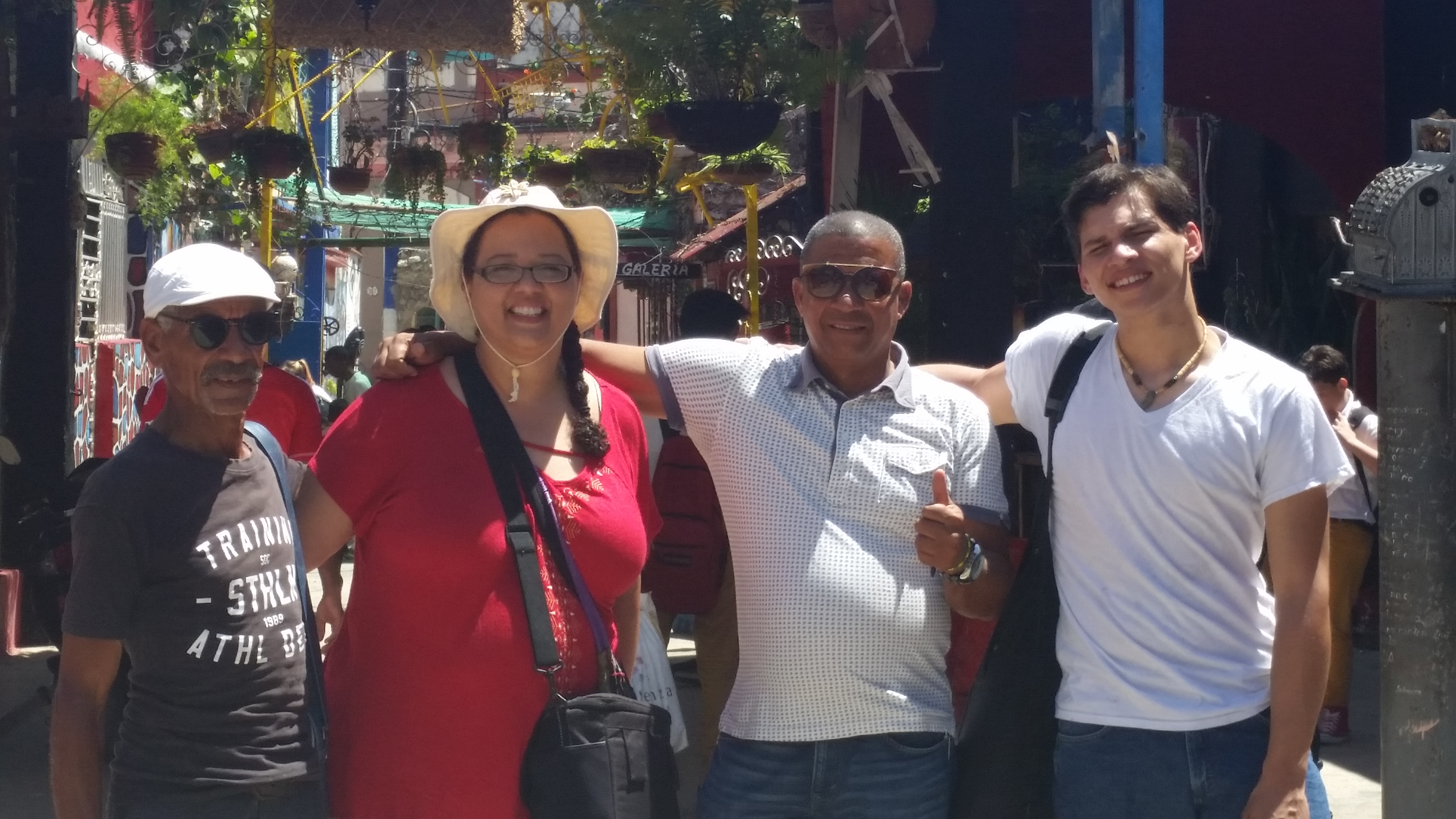
From left – Leo More, V. Lori Hedges, Felix Javier, and Tyler Hedges at the Callejon de Hamel.
Notes about visiting Callejón de Hamel
If you visit Hamel with one of the many guides (like Felix and Leo), understand they are not giving you a tour out of the kindness of their hearts. This is their job. They expect to be tipped.
Also, if you stop at El Barracón de Hamel for refreshments, they will expect you to pick up the tab. If you’re not willing to do so, you need to tell them up front.
There are many musicians there selling CDs of their music which, according to several with whom I spoke, provide money for scholarships for the Rumba school in Hamel. They offer the CDs for 10 CUCs each. If you don’t want one, politely, but firmly say “no” and keep walking.
Do visit on Sunday around noon if you want to see what the Rumba school is all about.
Lori in the “King’s chair.”
Below: Tyler and Leo collaborate on one of Tyler’s original songs, “Crazy.”
All photos and videos are the property of V. Lori Hedges, and may not be used without permission.


























 destinationinvestigations