By V. Lori Hedges
Have you ever wondered about the fascination people have with outlaws? People like Dillinger, Billy the kid, and Butch Cassidy not only are remembered long after their deaths, but they are admired, and in some locations, they are actually celebrated.
On this Destination Investigation Road Trip, we visited several sites that were all about remembering and celebrating the lives of some very famous outlaws and gunfighters: Bonnie and Clyde, Jesse James, Wild Bill Hickok, and Calamity Jane.
Bonnie Parker and Clyde Barrow
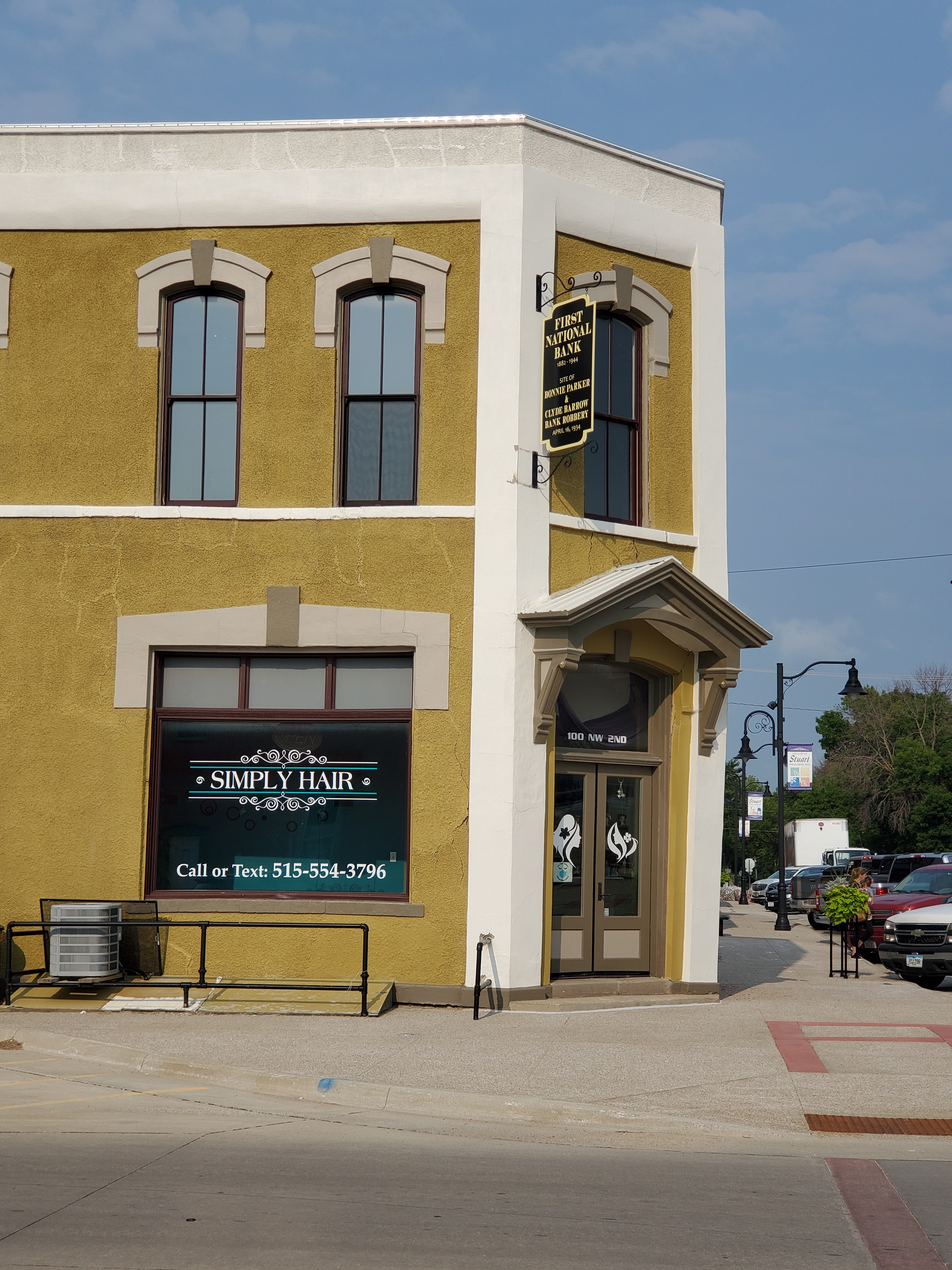
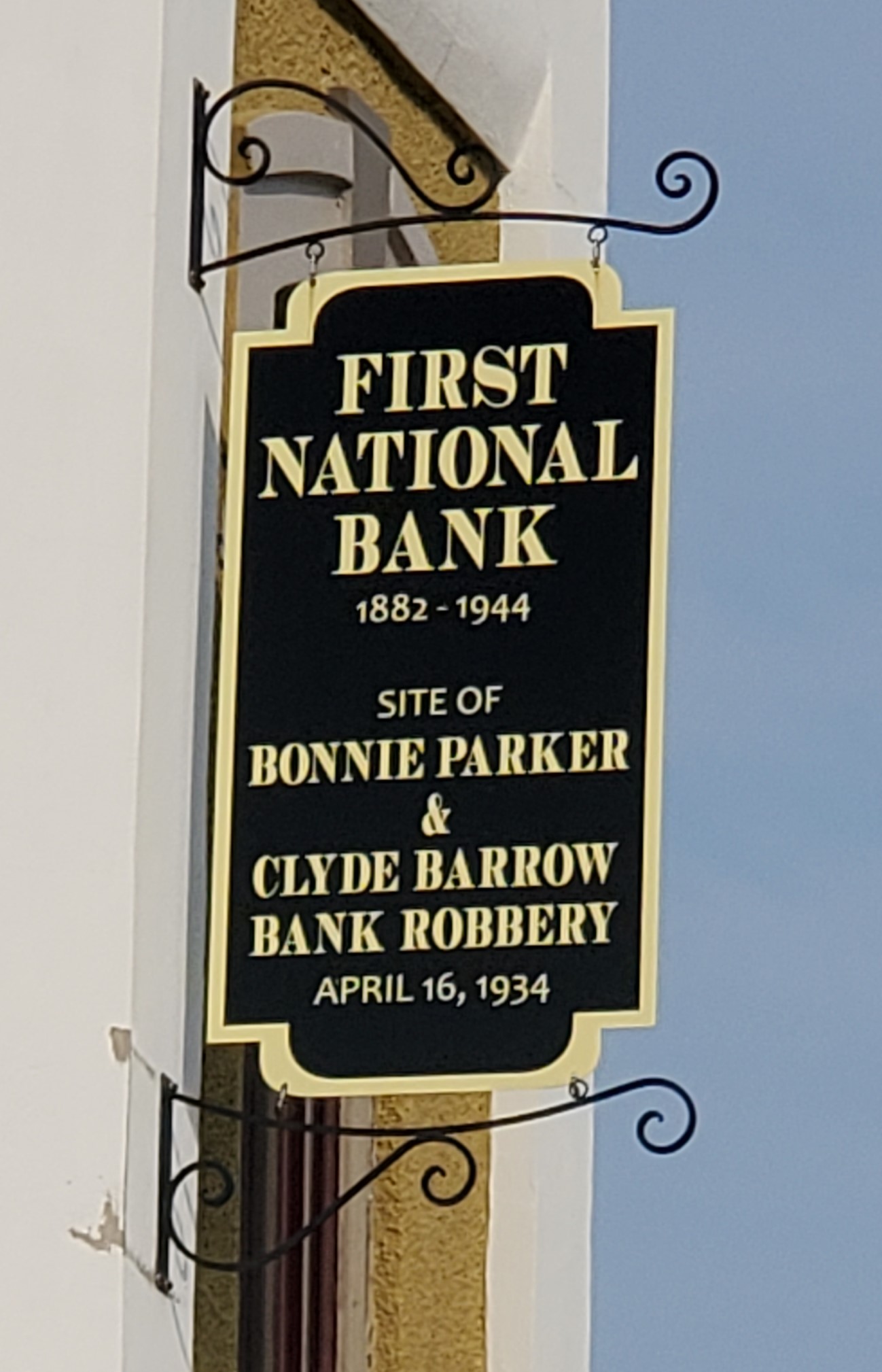
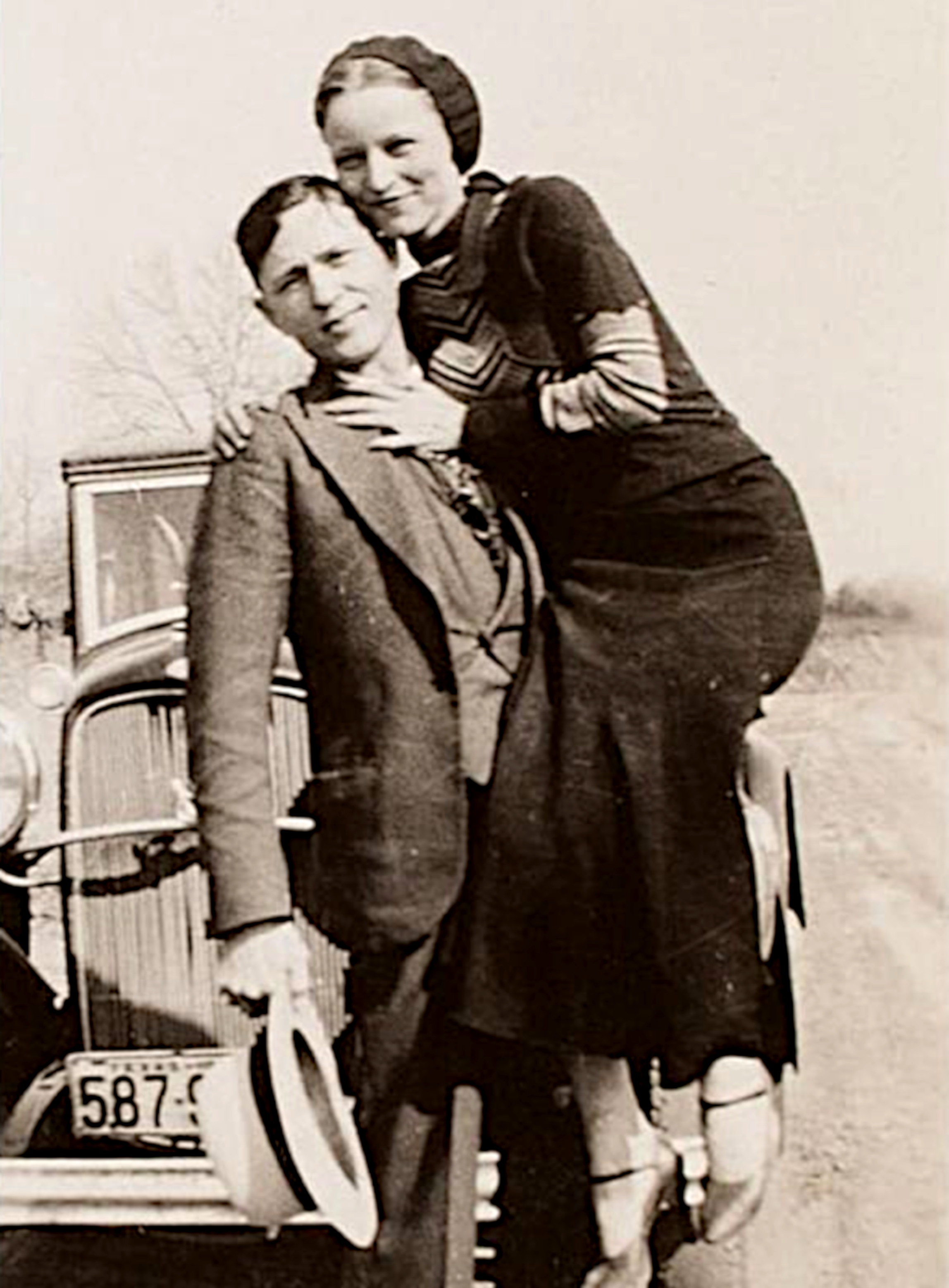
During our stay at a very nice Motel 6 in Stuart, Iowa, we found out that the town’s claim to fame is that Bonnie and Clyde’s last bank robbery happened just up the street. So, we went to check out the former bank that is now the home of a hair salon.
While we were there taking pictures, a woman stopped and welcomed us to her town. She then told us that not only did the Barrows rob the Stuart bank, back up the interstate about four miles in the town of Dexter is the site where the Barrow gang was ambushed by law enforcement.
So, we backtracked to Dexter, where we drove out into the countryside to the location of the former Dexfield Park.
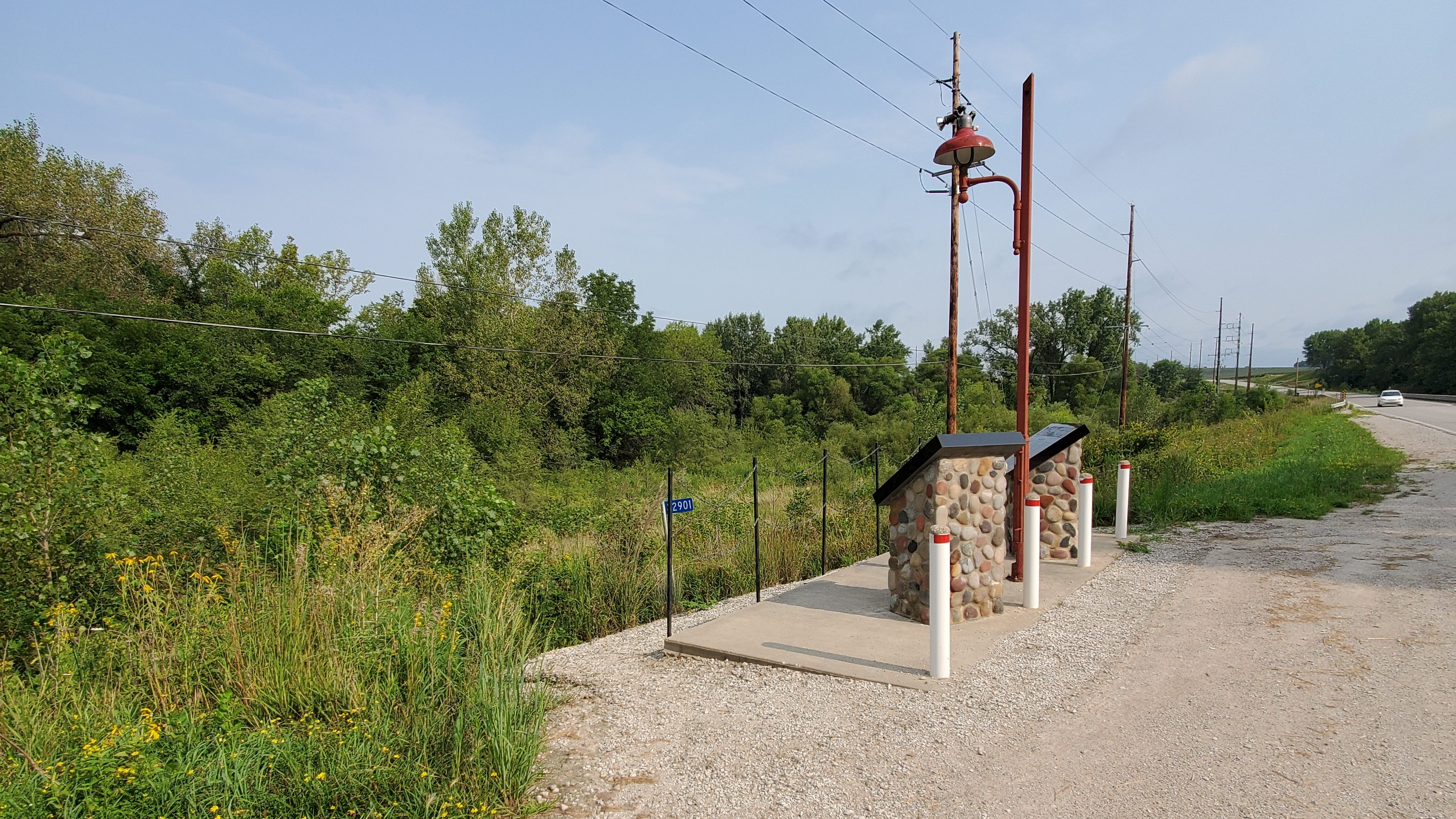
In the early 1900s, the park was a gathering place for a thriving community, and it even had an Olympic-sized swimming pool for use by the public. Today the area is grown up with only a roadside pull off and two granite markers to commemorate the park and the shootout.
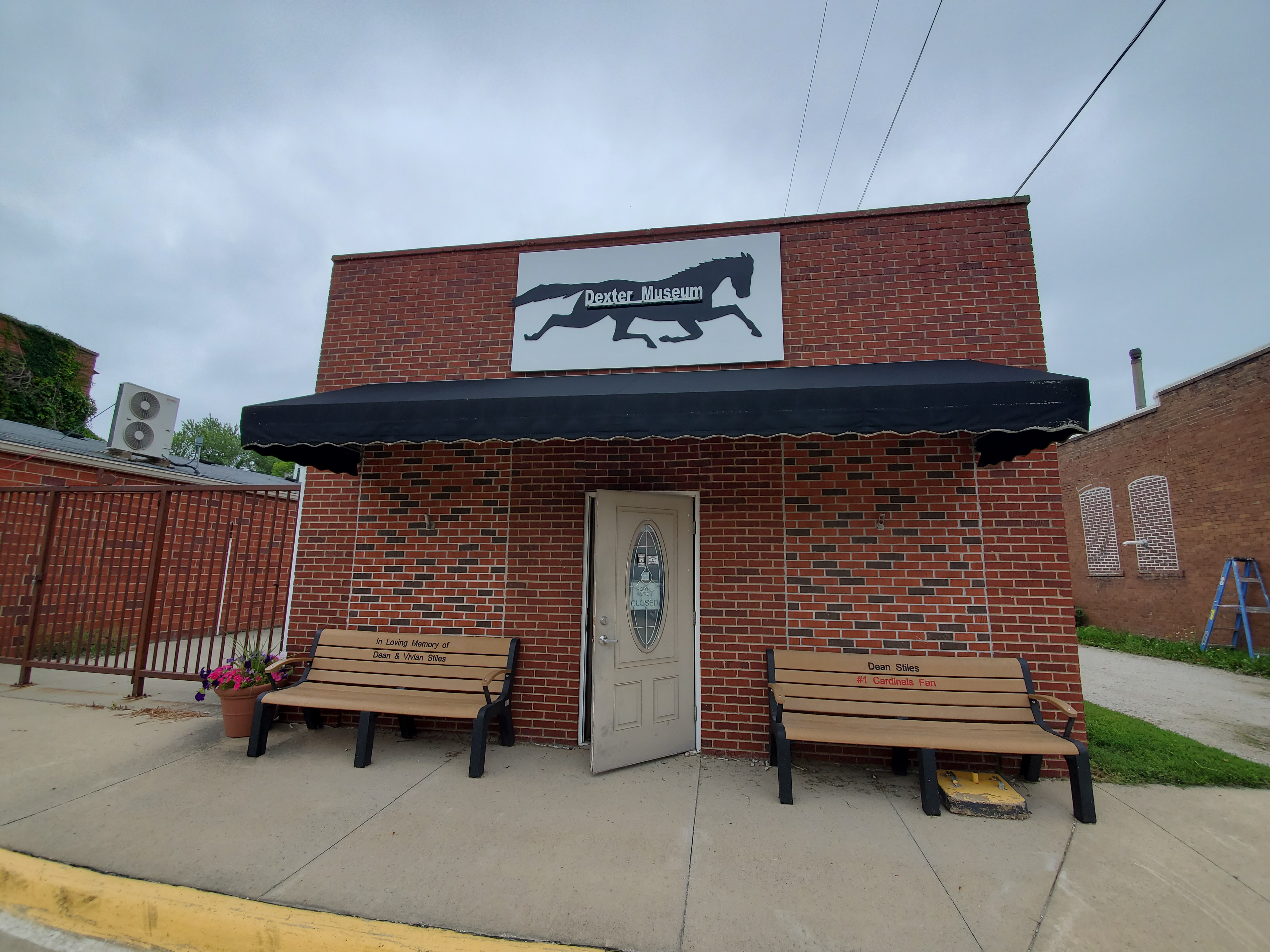
After stopping for a couple photos, we headed back into the little town of Dexter for breakfast at the Dexter Café. While there, we met fellow diners, Harold and Doris Feller, who invited us to the Dexter Museum next door.
If you want to know the history of Dexter and its brush with Bonnie and Clyde, this is the place to go, and the Fellers are the people to talk to.

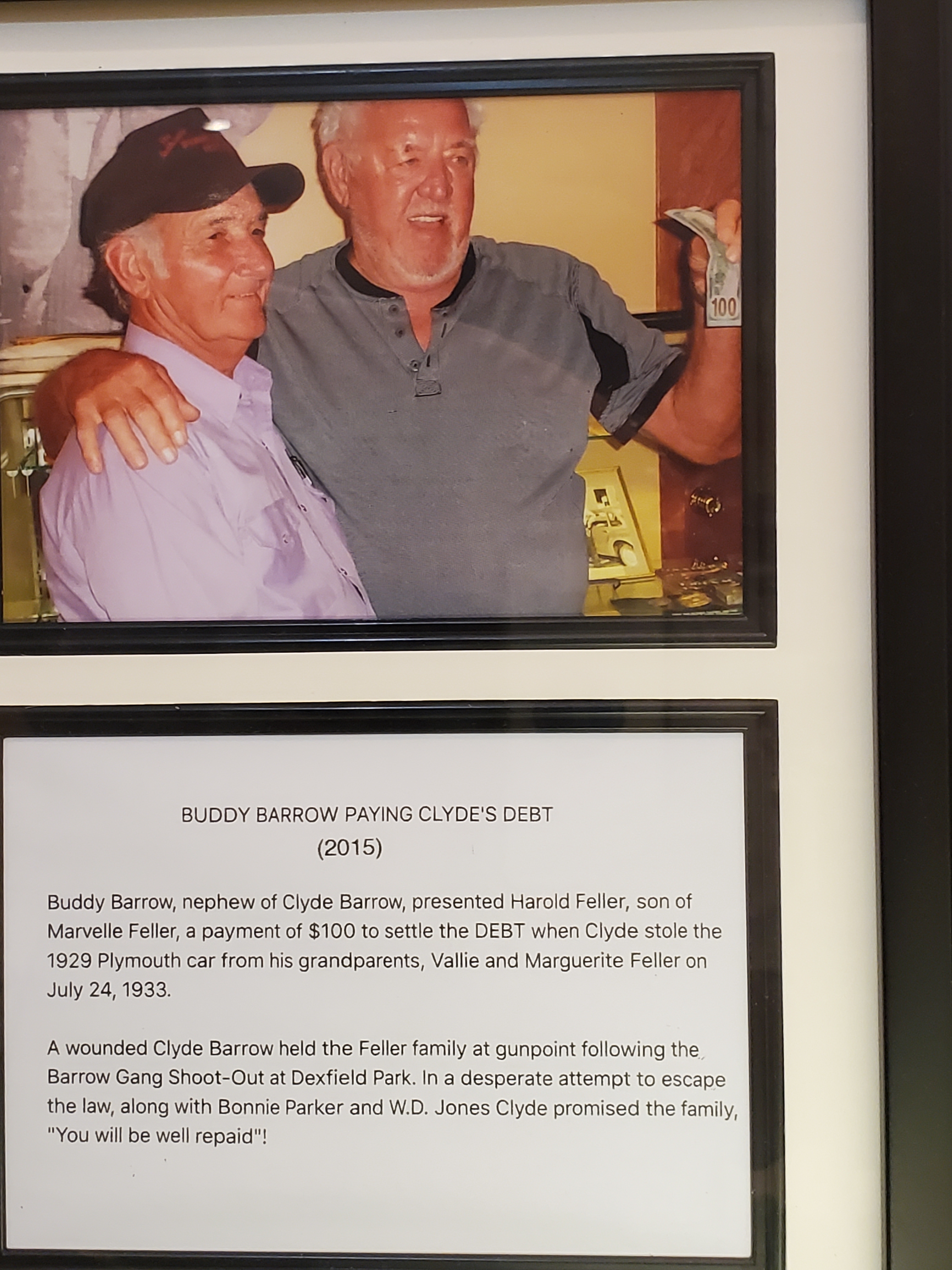
Harold’s family has a direct connection with the Barrows as it was his grandfather’s car that Clyde stole when they made their escape from the shootout. He said Clyde promised they would be reimbursed for their trouble, and in 2015, Clyde’s nephew, Buddy Barrow, came to Dexter. He made good on Clyde’s promise by presenting Harold with a $100 bill.
The museum is filled with photos, memorabilia, and newspaper clippings about the Barrows’ visits to the area and their crime spree across the country. Although the museum is very small, you could spend hours poring over the hundreds of items in the exhibits. However, the museum is not just about Bonnie and Clyde.
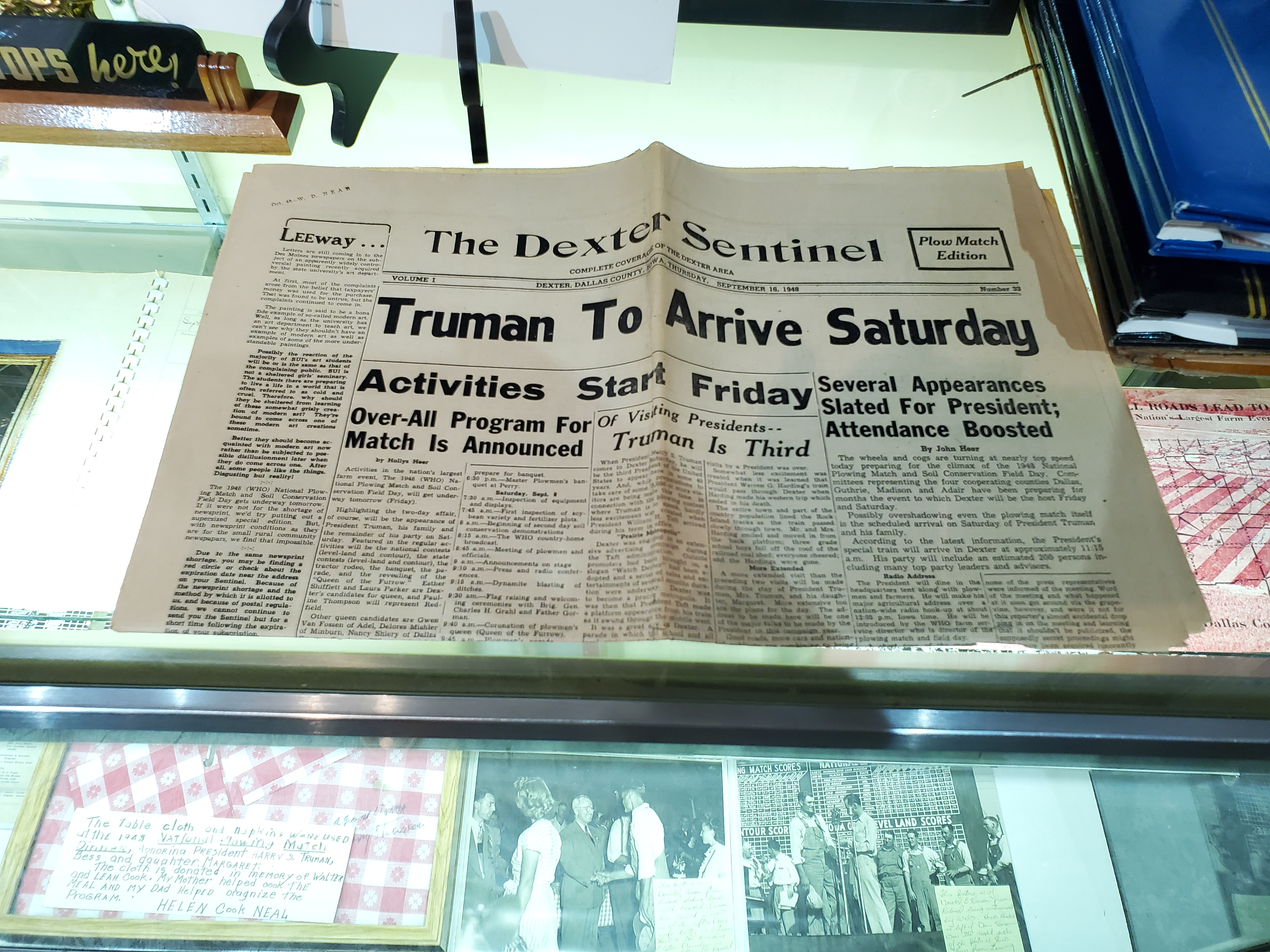
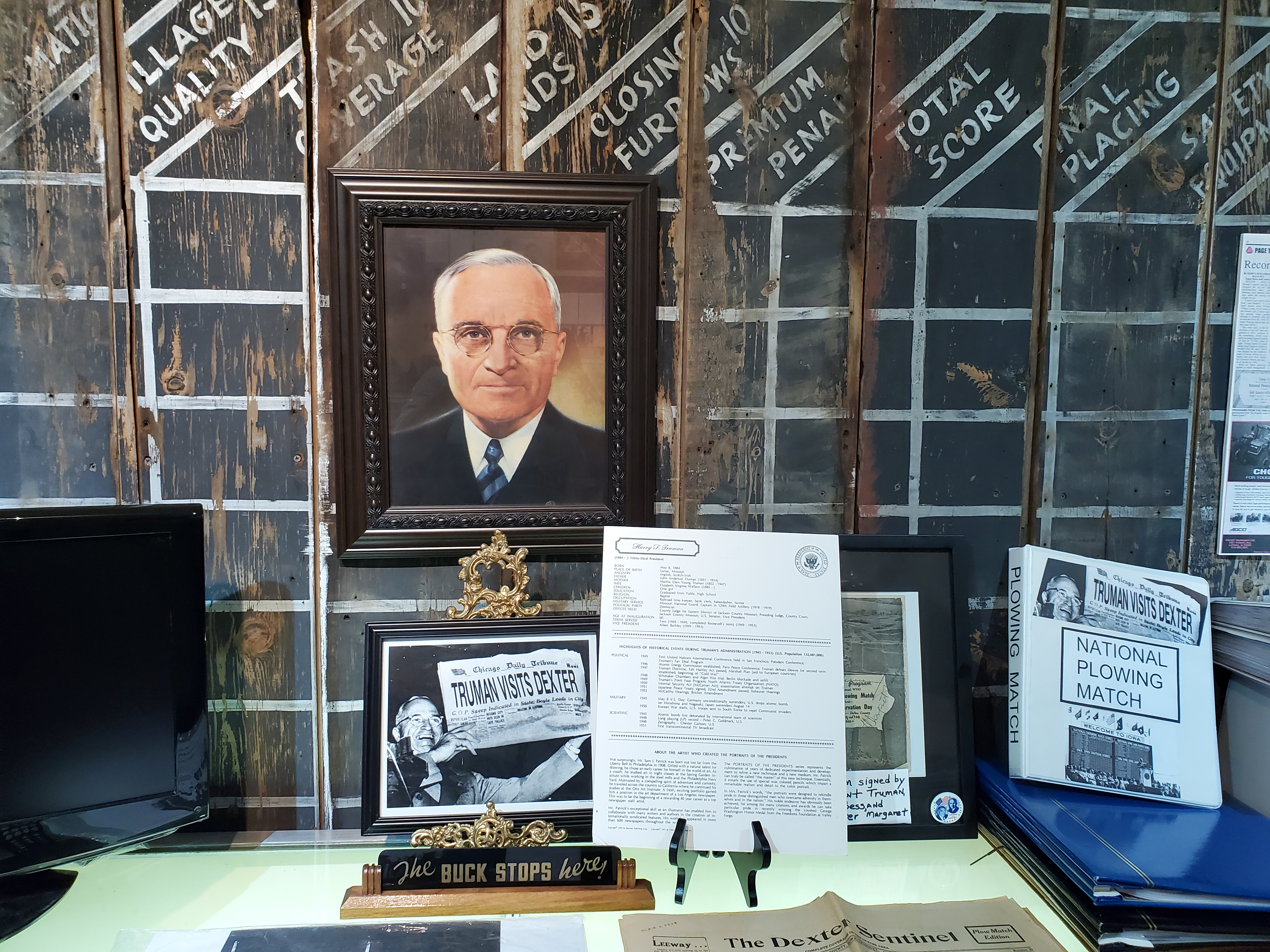
Dexter’s other claim to fame is President Harry S. Truman’s 1948 visit to the town. According to Doris, Truman arrived by train for the national plowing match. She said the women of the town cooked dinner for the presidential delegate.
“They made fried chicken and mashed potatoes and gravy,” Doris said, adding they also served fresh vegetables from local gardens.
In the showcase dedicated to the Truman visit is a tablecloth signed by the president and napkins used at the event.

Dexter and Stuart are both tiny Iowa towns, but they are worth a stop. The people are friendly and happy to share their communities’ history. If you want to know more about the Dexter Museum, check out its Facebook page: Memories of Dexter-The Original One-Horse Town.
Jesse James
Before leaving Dexter, Harold told us if we were interested in outlaws, Jesse James made his presence known not far from Dexter. Not far up the interstate in Adair, Iowa, you can find a memorial commemorating the first train robbery in the west. Of course, we had to see that! Off we went on a short drive through the countryside to a little roadside display next to a piece of unconnected train rails.
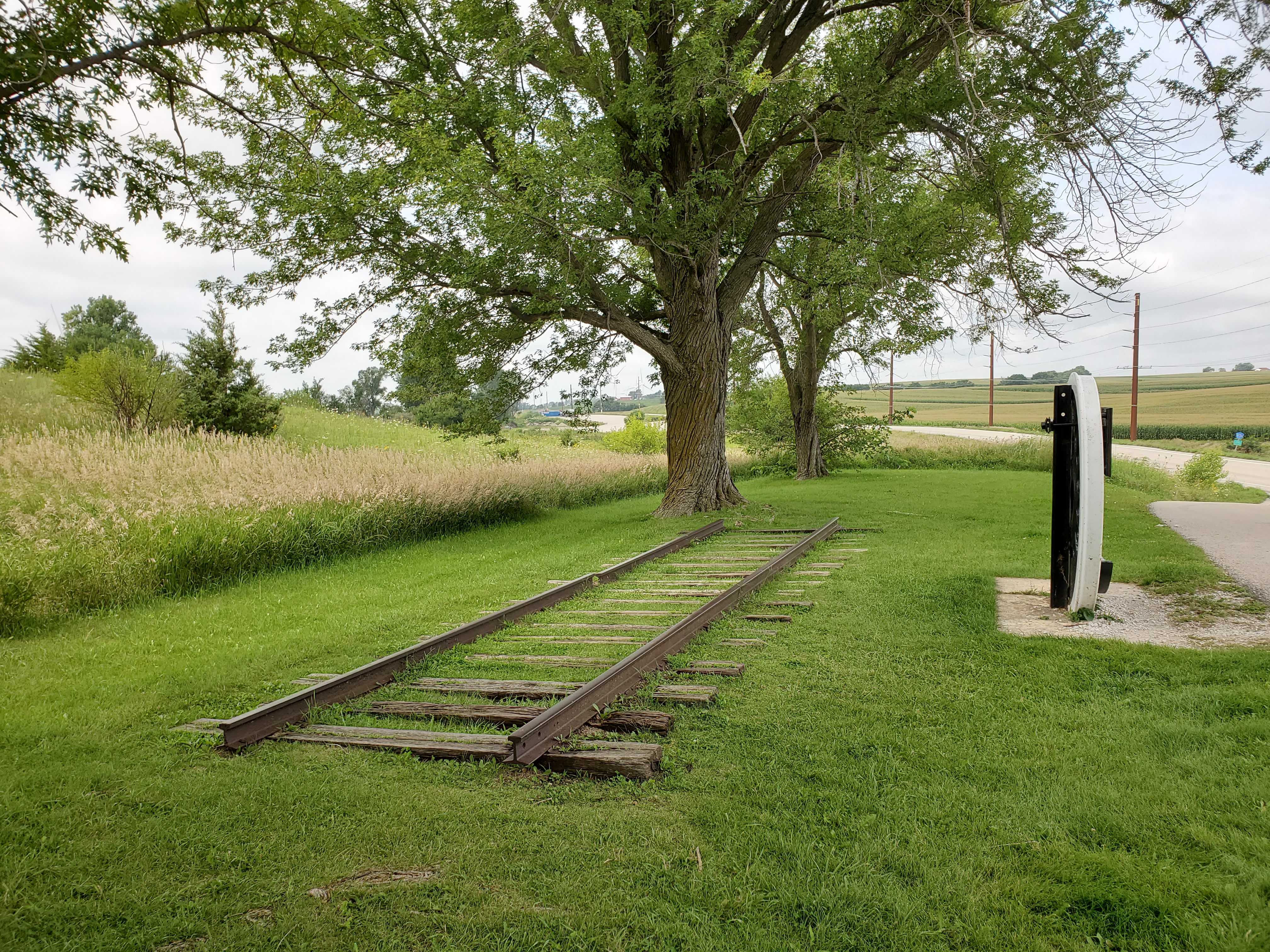
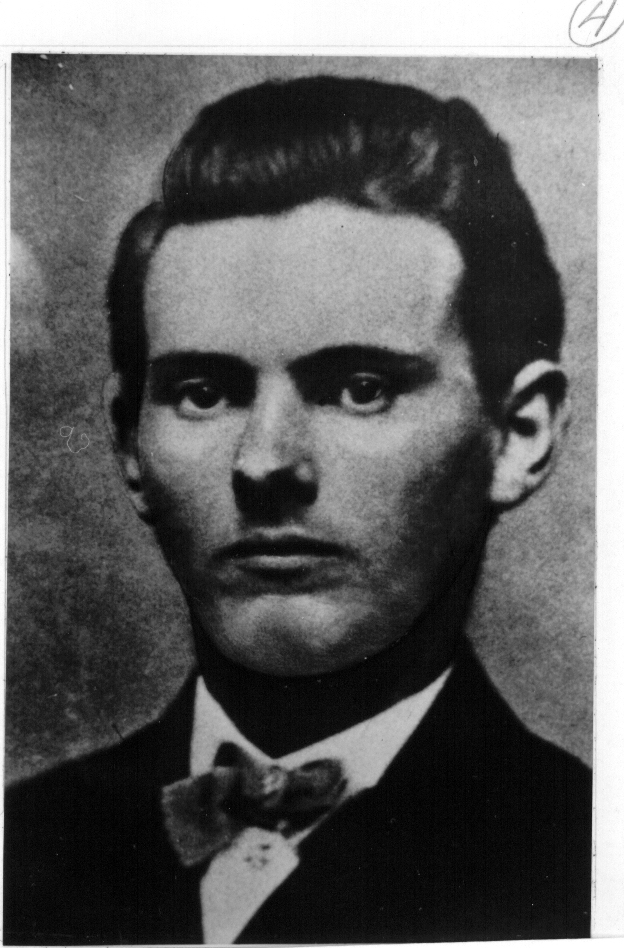
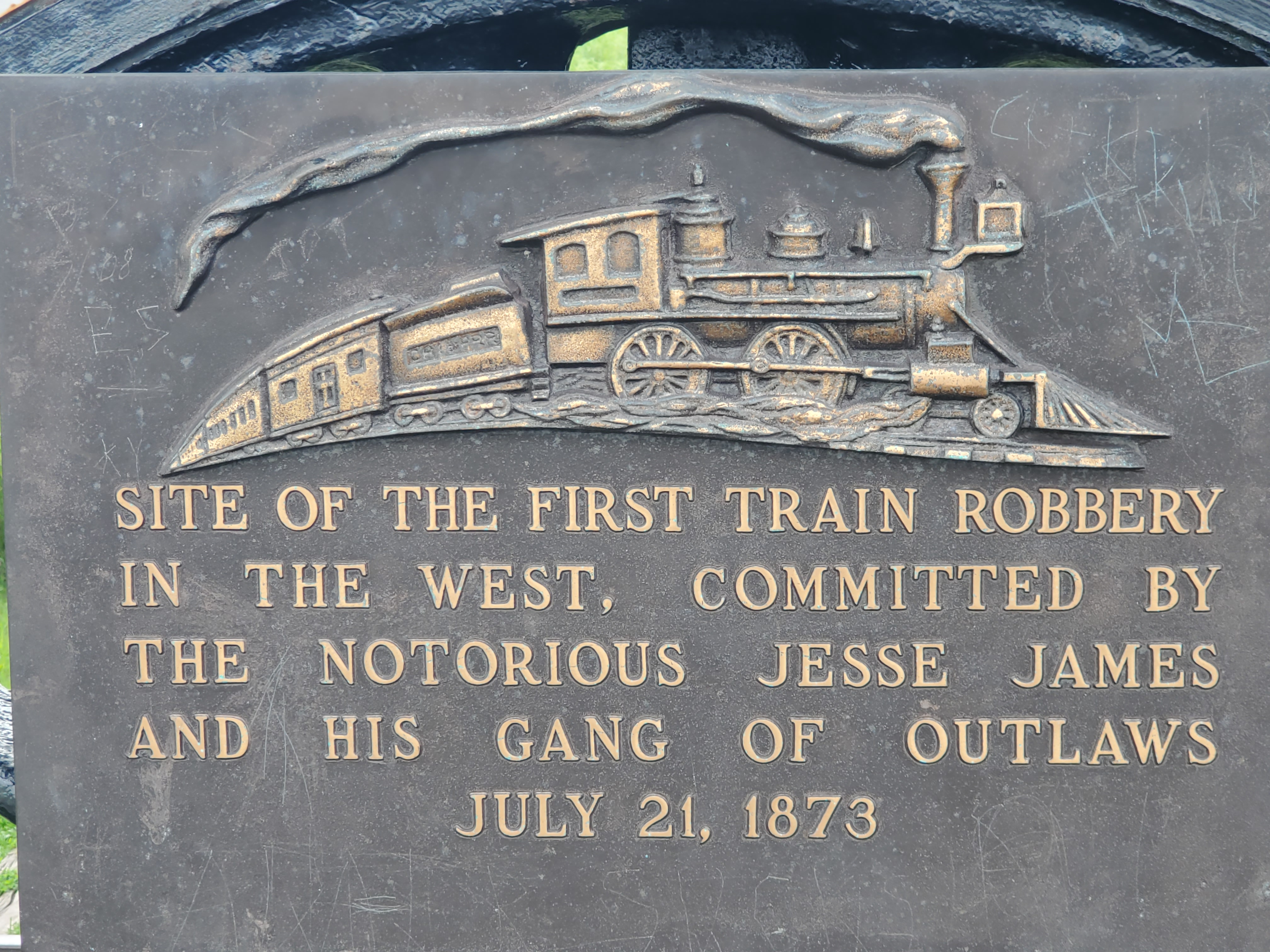
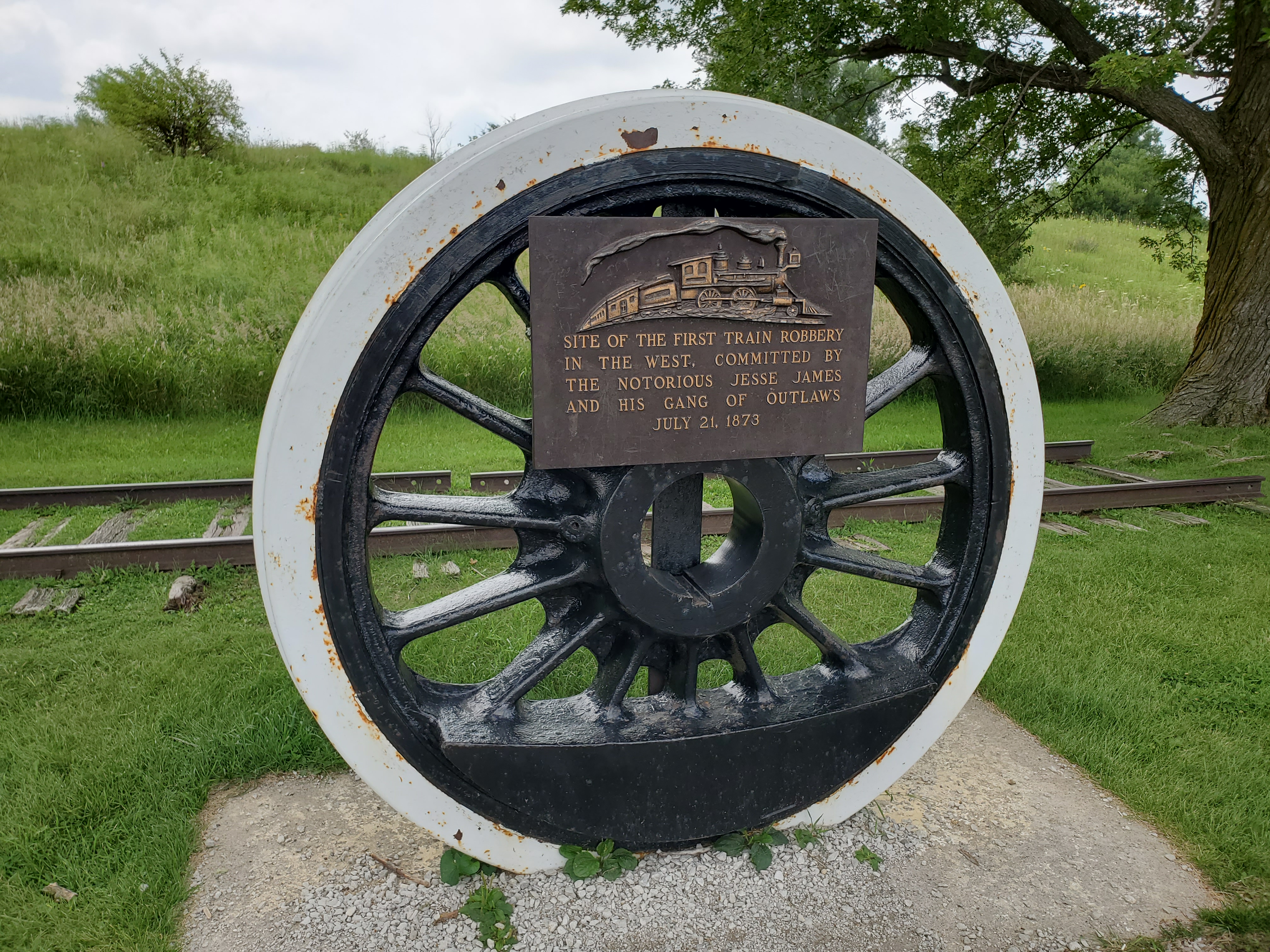
A plaque, erected by the Rock Island Railroad in 1954, designates it as the, “Site of the first train robbery in the West, committed by the notorious Jesse James and his gang of outlaws. July 21, 1873.” Another sign tells the whole story of the great train robbery.
According to the sign, the James gang was after a train shipment of $75,000 in gold that was being shipped east. To stop the train, the men disconnected two rails on a curve near Adair. When the train came through, it caused the track to jerk out of place, plunging the train engine into a ditch where it overturned, killing the engineer and fireman and injuring several passengers.
However, when the bandits forced the guard to open the train’s safe, they found only $2,000 in currency. After robbing the passengers to add to the haul, they only gained about $3,000 total.
After the train heist, the gang escaped to Missouri and split up. A $10,000 reward was offered by the governor of Missouri for the capture of Jesse James, dead or alive.
Wild Bill Hickok
Toward the end of our westward journey, we pulled into the town of Deadwood, S.D., a town that has hosted more of its share of cowboys, prospectors, prostitutes, and gunslingers. The most famous of those was Wild Bill Hickok.
Born James Butler Hickok, Wild Bill was a master marksman. He was involved in several gunfights during his lifetime, and he served as sheriff of Hays City, Kansas, and marshal of Abilene, Kansas. Hickok was turned into a legendary gunslinger through accounts of his exploits being retold in the Harper’s New Monthly Magazine.
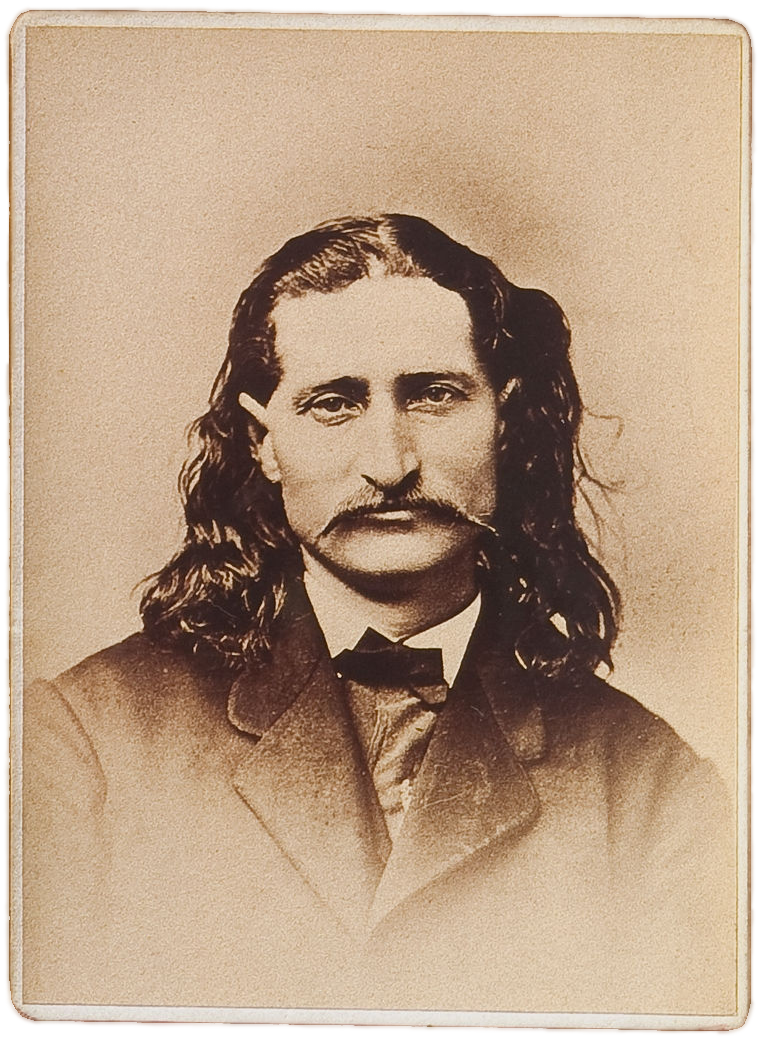
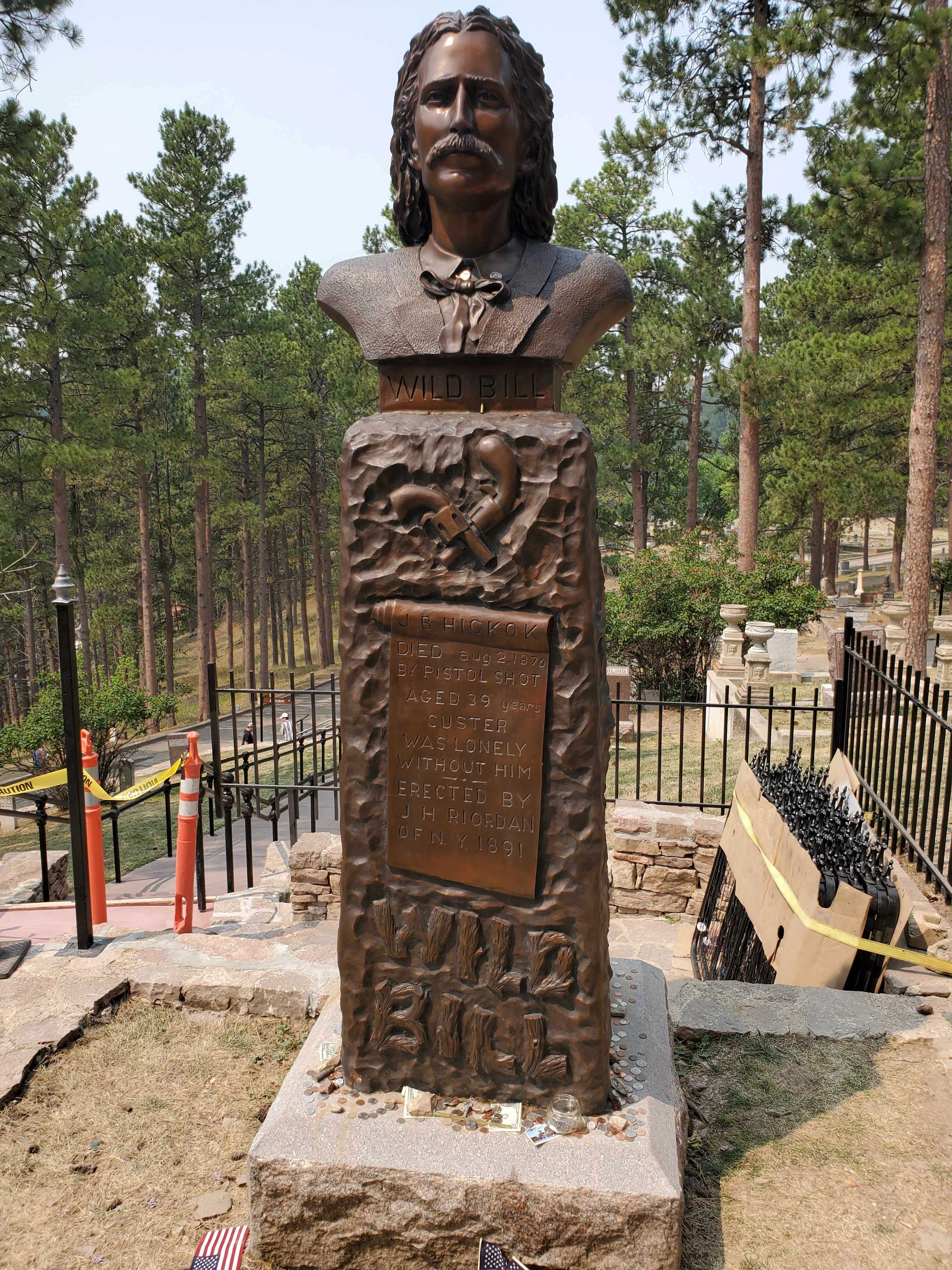
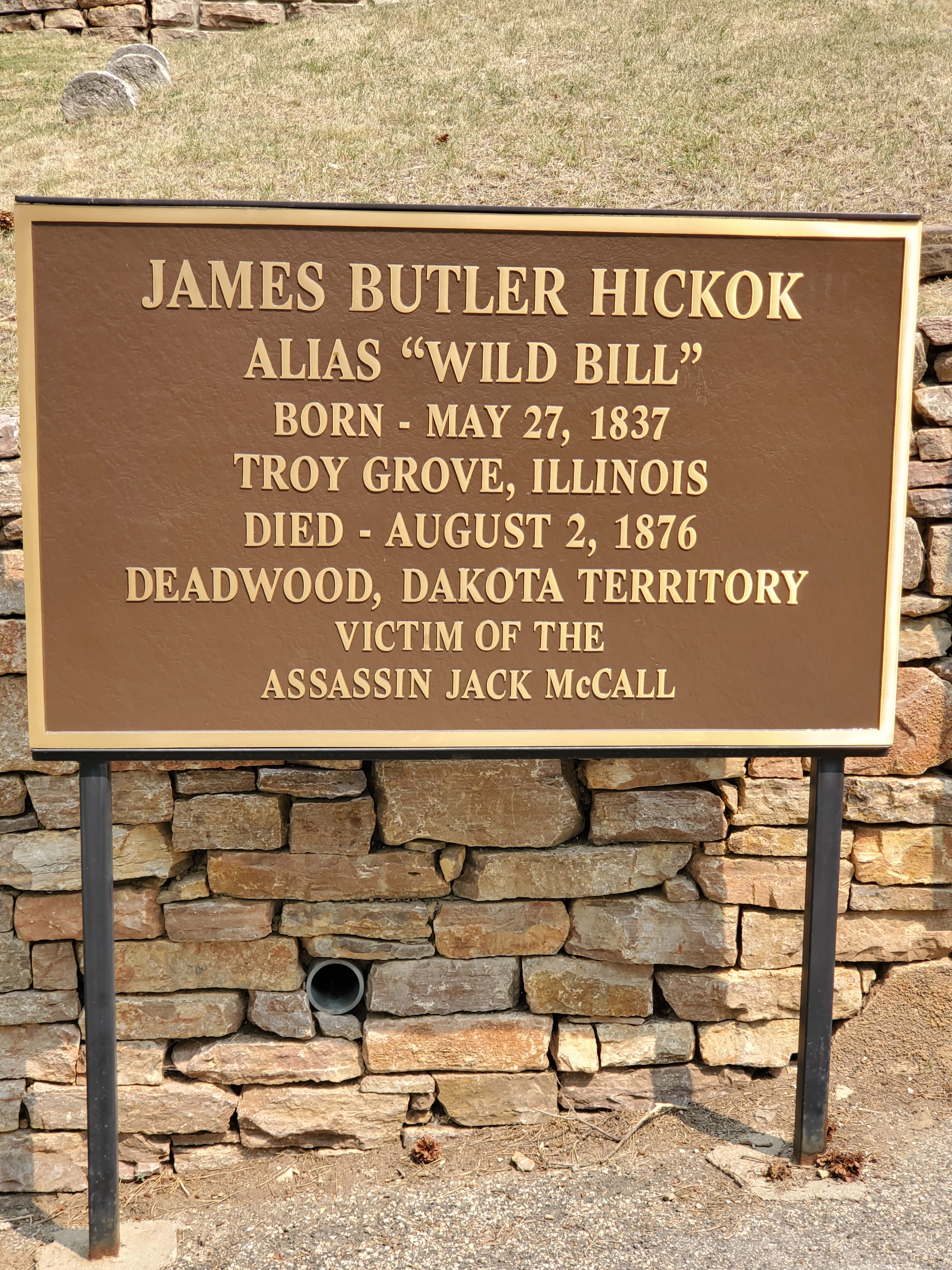
Besides being a skilled gunman, Hickok was also an avid poker player and became a regular at the tables at the Nuttal & Mann Saloon in Deadwood. On Aug. 1, 1876, Hickok won quite a bit of money from Jack McCall, who was a less skilled player. The next evening, Hickok was involved in another game when McCall walked up behind him and fatally shot him in the back of the head. The poker hand that Hickok was holding when he was killed – a pair of black eights and a pair of black aces – became known as “the dead man’s hand.”
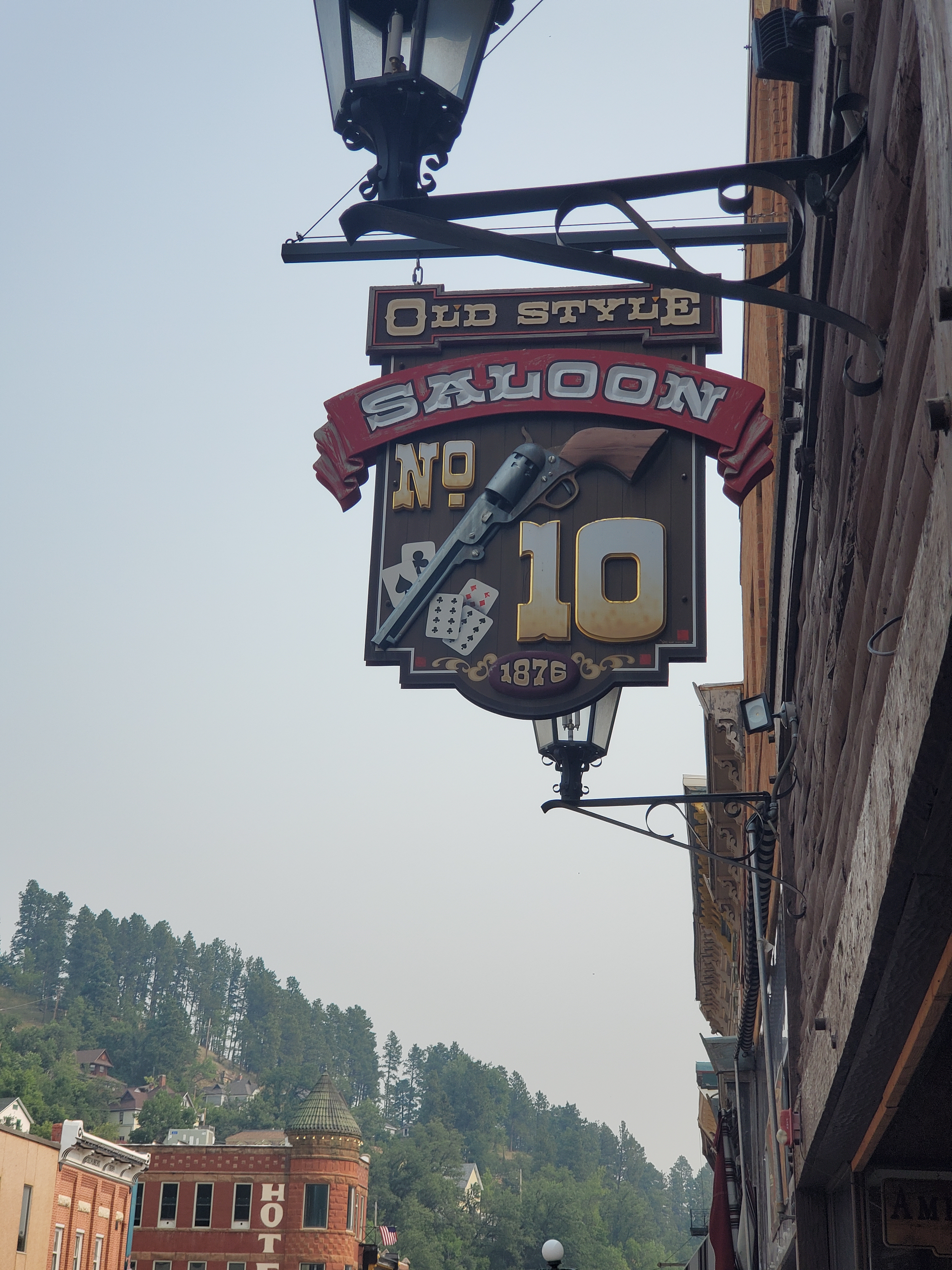
The location of the Nuttal & Mann Saloon, 624 Lower Main St., Deadwood, is now known as Wild Bill’s Bar and Trading Post, original location of Saloon No. 10, although the original building was destroyed by fire. There is another bar called the Saloon No. 10, located at 657 Main St., Deadwood, that claims to have the chair that Hickok was sitting in when he was shot. The two businesses are not related.
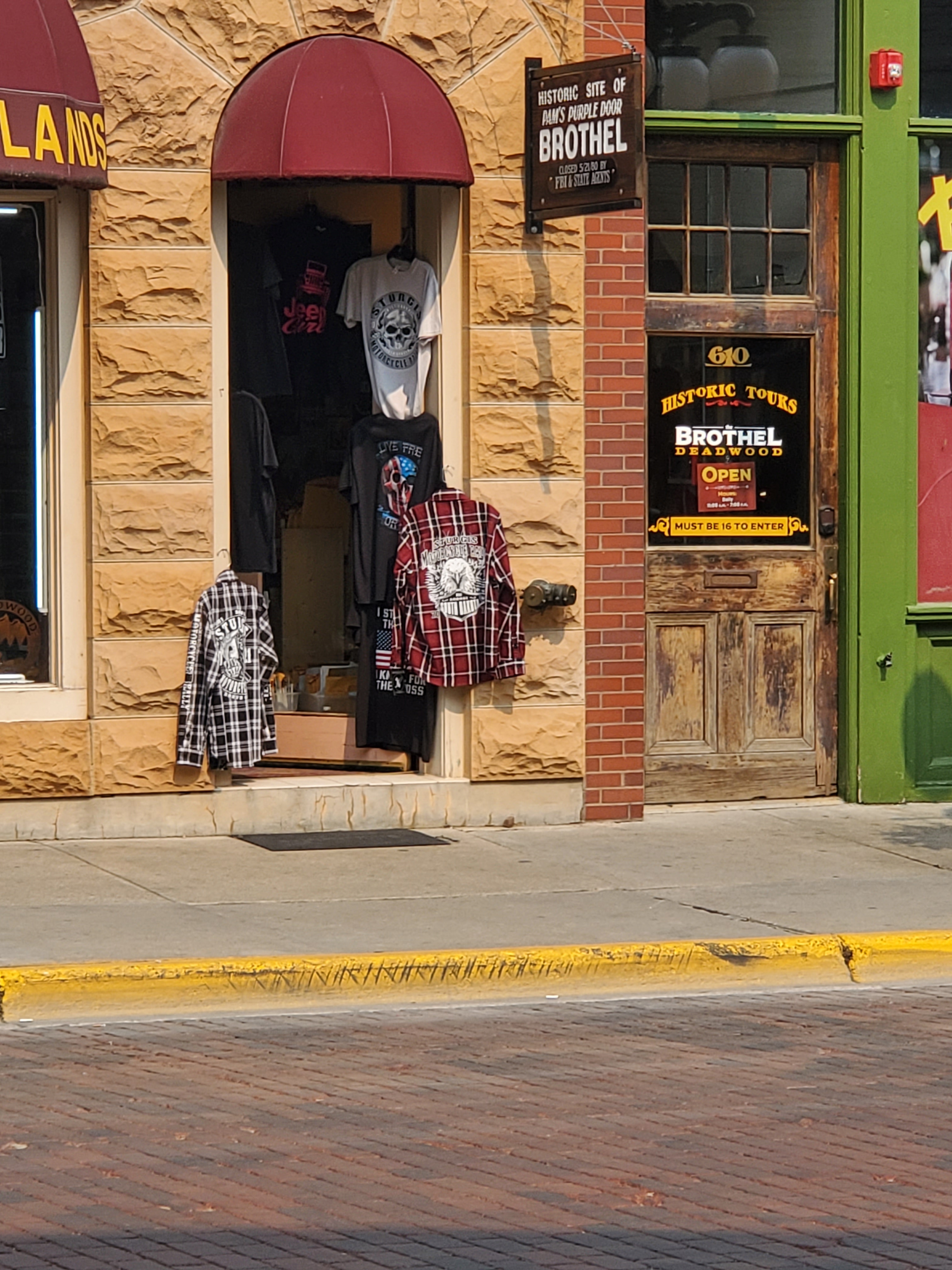
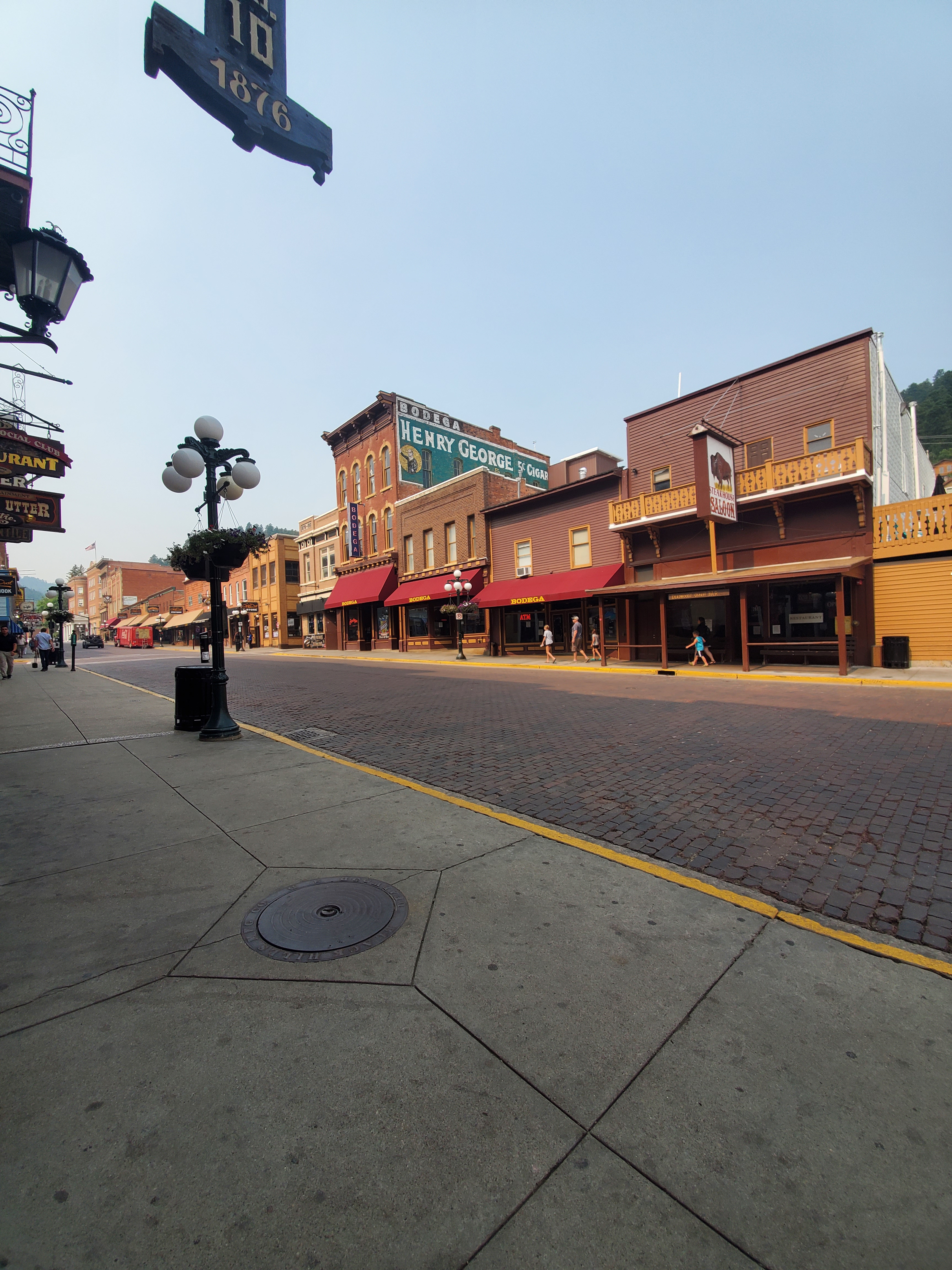
I have been interested in the stories of gunfighters and lawmen of the old west since my first trip into cowboy country at age 13. My sister is particularly interested in the stories about Wild Bill. Because of that, visiting Hickok’s grave was on the list of places to go. Hickok is buried in Mount Moriah Cemetery in Deadwood. Next to his grave is another notorious wild west figure: Calamity Jane.
Calamity Jane
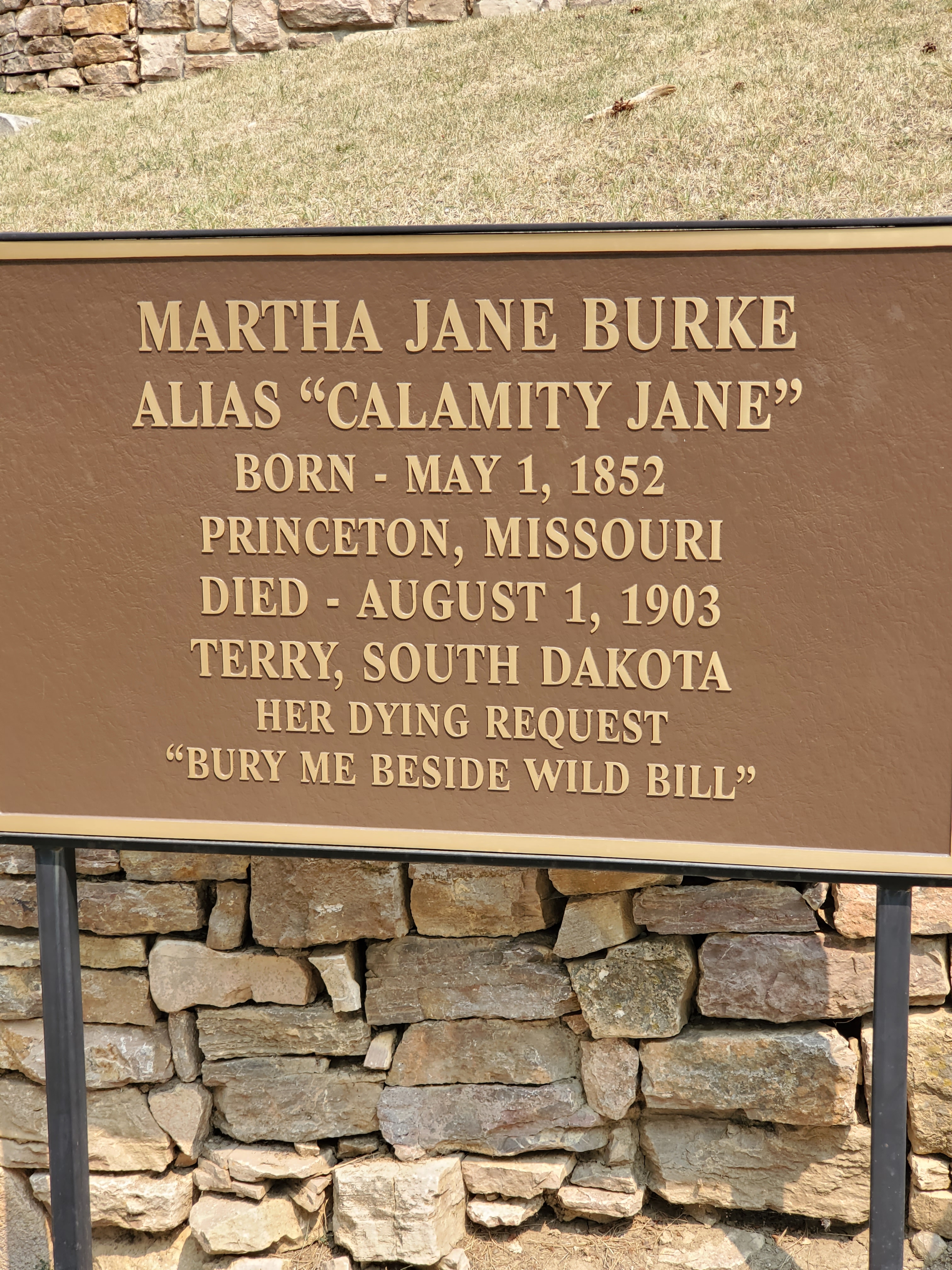
Born Martha Jane Cannary, Calamity Jane was a renowned sharpshooter and frontierswoman. Her life story is a mixture of fact and fiction, some of which will probably remain a mystery.
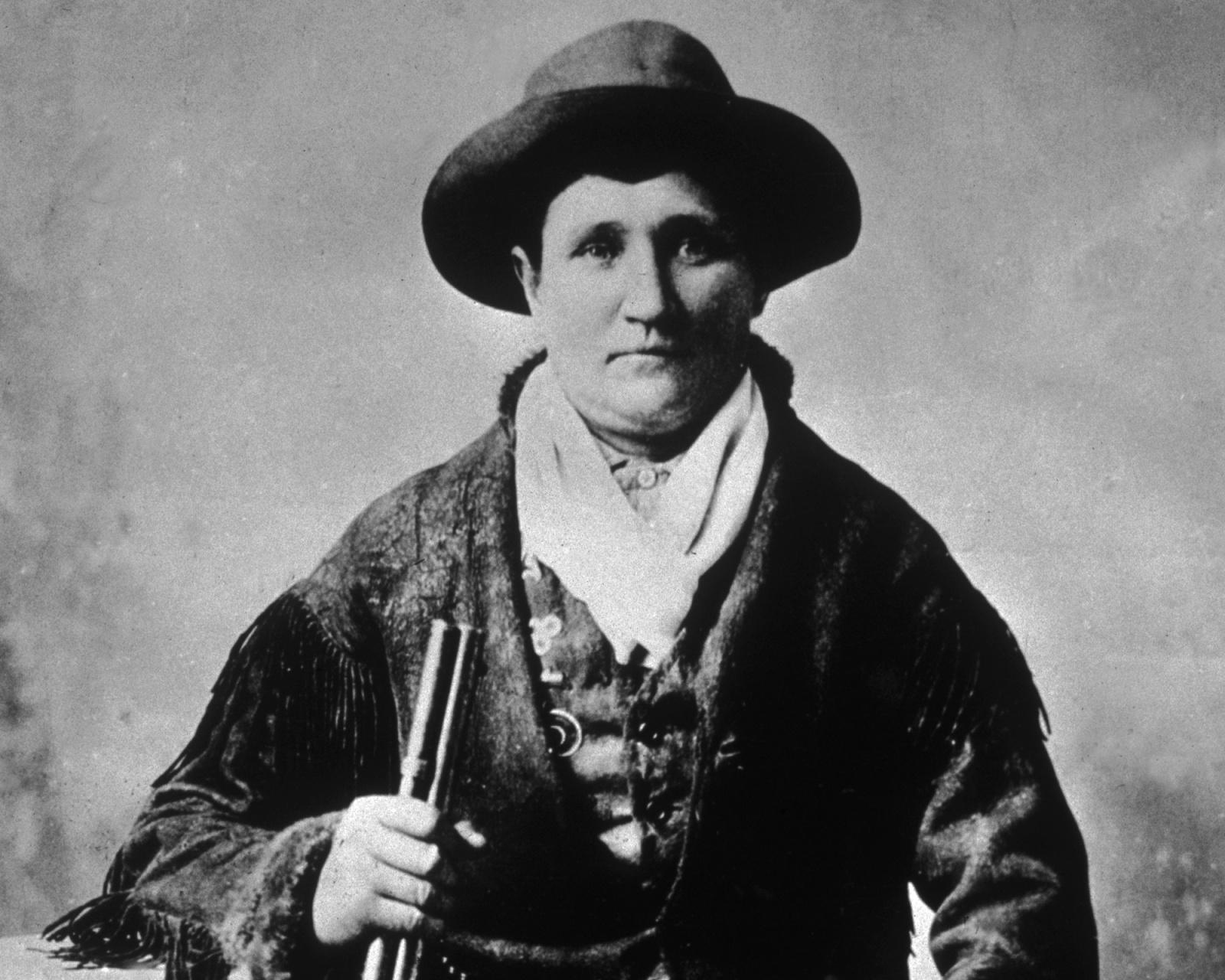
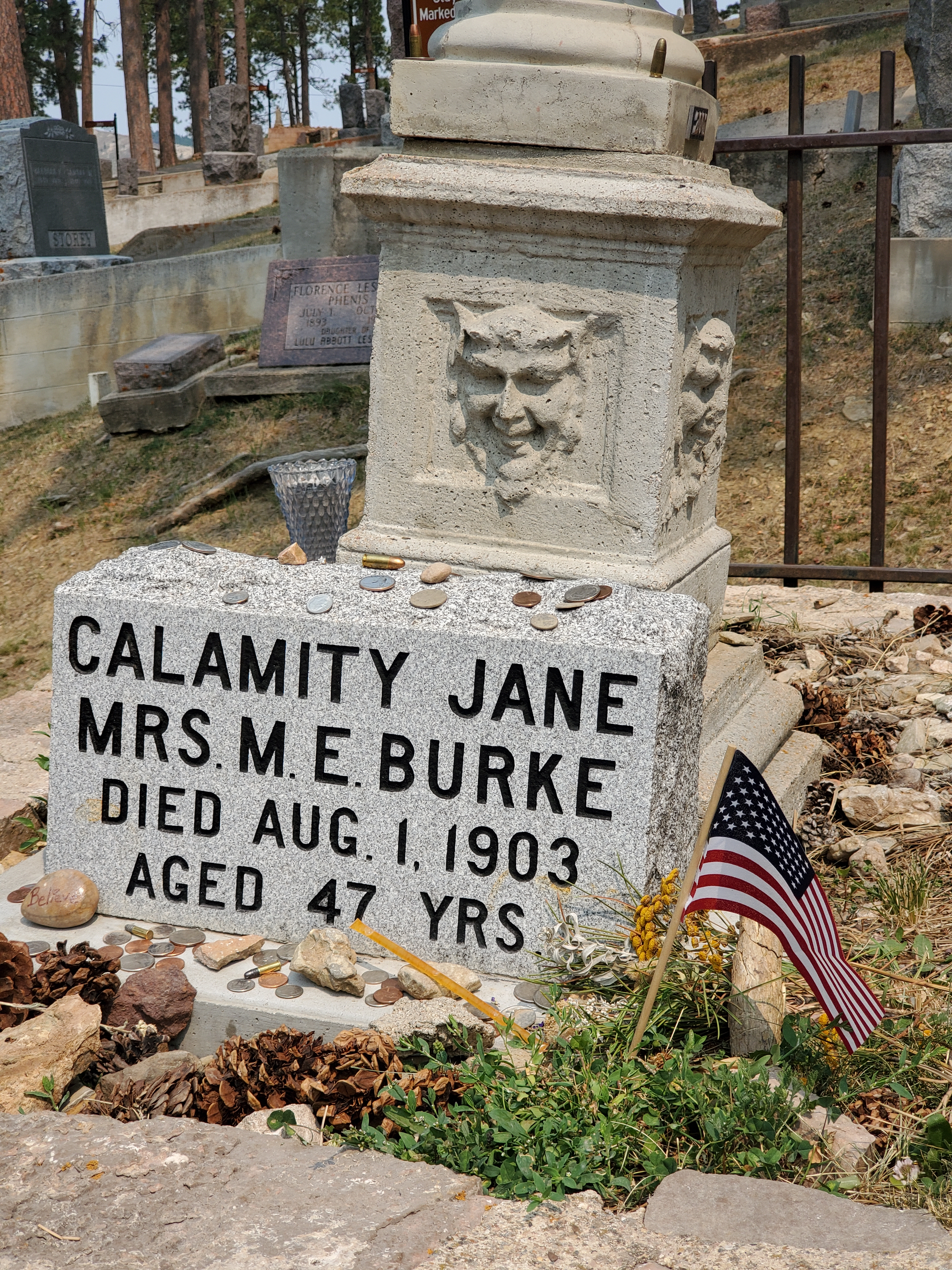
During her life, it has been reported that she served as an army scout and explorer but had also worked as a dance-hall girl and possibly was a prostitute for a short time. She was known to have preferred wearing men’s clothing and is most often pictured that way.
There have been some claims that Jane was involved with Wild Bill and may have actually married him and had a child with him, but there is no evidence to substantiate the claim.
There are also may stories of Jane’s heroic activities, including once saving a stagecoach from an Indian attack and another time, serving as a nurse during a smallpox epidemic.
Calamity Jane died Aug. 1, 1903, and was laid to rest next to Wild Bill. Some say she asked to be buried next to him, while others say she was buried there as a “posthumous joke” on Hickok.
***
Visiting Mount Moriah Cemetery and standing at the sites of the train heist and bank robbery really brings the stories from history to life. Somehow, it is easier to picture those navigating the hardships of the old west in the 1800s when you are walking the streets that they walked.
They were real people and not just characters in a magazine or in a movie. If you get the opportunity to travel near these sites, take the time to stop and take it all in. Let these sites make the ghosts from the past real again.
All video and photos, except the portraits of Jesse James, Bonnie and Clyde, Wild Bill, and Calamity Jane, are the property of V. Lori Hedges and may not be used without permission.

 destinationinvestigations