By V. Lori Hedges
He did not want to look at the fish. He knew that half of him had been destroyed. The sun had gone down while he had been in the fight with the sharks. “It will be dark soon,” he said. “Then I should see the glow of Havana.. If I am too far to the eastward I will see the lights of one of the new beaches.” I cannot be too far out now, he thought. I hope no one has been too worried. There is only the boy to worry, of course. But I am sure he would have confidence. Many of the older fishermen will worry. Many others too, he thought. I live in a good town. He could not talk to the fish anymore because the fish had been ruined too badly. Then something came into his head. “Half fish,” he said. “Fish that you were. I am sorry that I went too far out. I ruined us both. But we have killed many sharks, you and I, and ruined many others. How many did you ever kill, old fish? You do not have that spear on your head for nothing.”
-Excerpt from “The Old Man and the Sea” by Ernest Hemingway (published in 1952)
I think I was in seventh grade when I was assigned to read Hemingway’s famous story about the old Cuban fisherman, Santiago, and his solo quest to bring in a large Marlin. At that age, I didn’t even remotely appreciate the story or the talent that created the prose. It was just an assignment that I had to read for a grade. However, as an adult, I can recognize why Hemingway is such a celebrated author.
Also, although I was aware of his status as a hunter, fisherman and all-around-man’s-man, I really didn’t know much about his history, especially concerning Cuba. Visiting Finca Vigía or Farm Lookout, located in the town of San Francisco de Paula just outside of Havana, gave me a fresh and intimate look at the life of one of America’s most important writers.
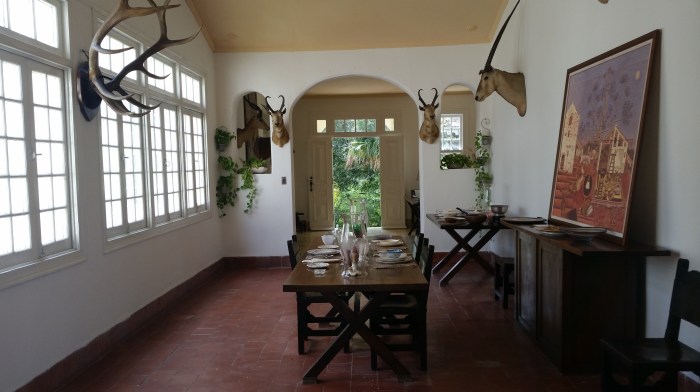
Lush vegetation borders the sweeping drive leading up to what is now known as the Hemingway Museum. After paying the 5 CUCs admission fee, you are directed up the remaining length of driveway where the sprawling house is perched at the crest of the hill. A flight of steps leads you to a broad veranda that boarders the house on all sides. Visitors are permitted to look through the open windows and doors, but are prohibited from entering.
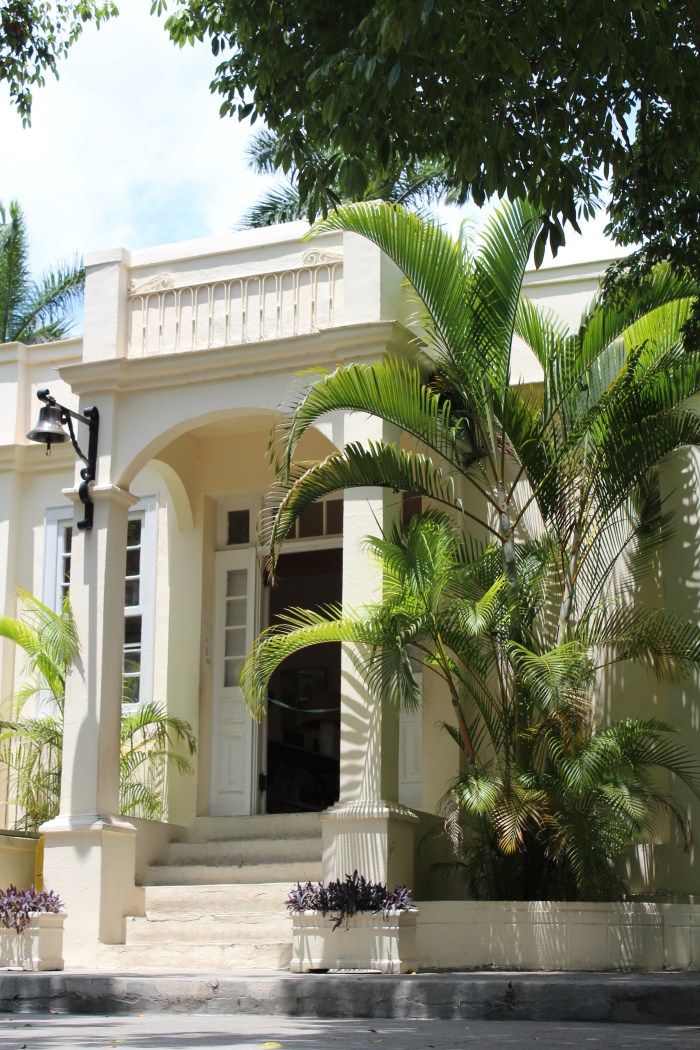

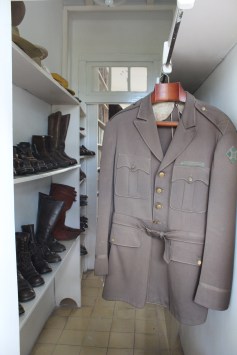
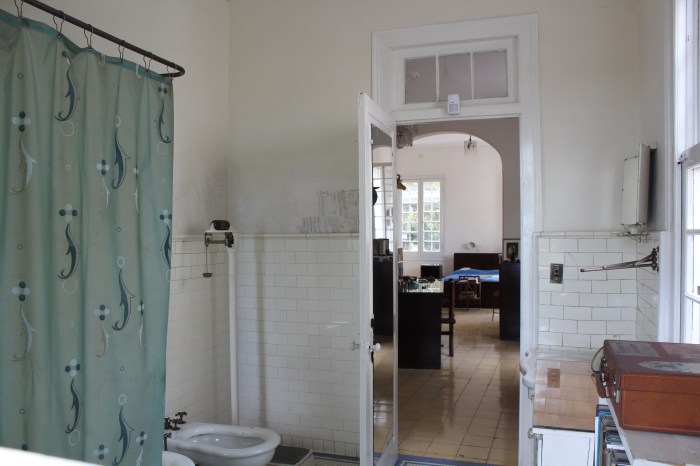
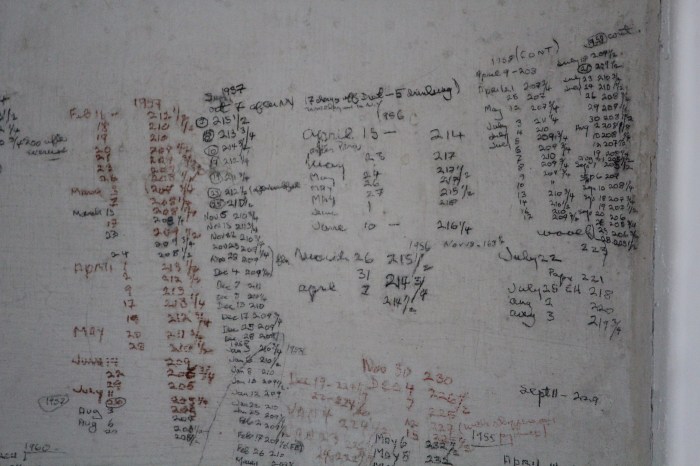
As I stood in the doorway of the main entrance, I got the feeling that the great man had just skipped off to Havana for a visit to a favorite bar or that he’d headed off for a day of fishing. The house is as he left it. His vast collection of books sit ready for him on their shelves. Record albums are laid out waiting to be played. His clothes are neatly hung in his closet.
Hemingway spent more than 20 years in Cuba. When he left Cuba in 1960, he simply closed the house and left for Spain. It is believed he planned to return sometime in the future. However, physical illness and an onset of mental illness, forced Hemingway to return to the United States to his other home in Ketchum, Idaho. After enduring several hospitalizations, Hemingway committed suicide on July 2, 1961. Following his death, the Cuban government obtained possession of Finca Vigía and decided to turn it into a museum honoring this friend of the Cuban people.
It is said that Ernest Hemingway loved Cuba and its people, especially the hardworking fishermen that populated the small coastal villages near Havana. Today, his memory is honored, not only by the museum, but at the landmark places he loved and patronized around Havana during his time living on the island. In fact, Cuba has declared that Havana is Hemingway’s “real home.”
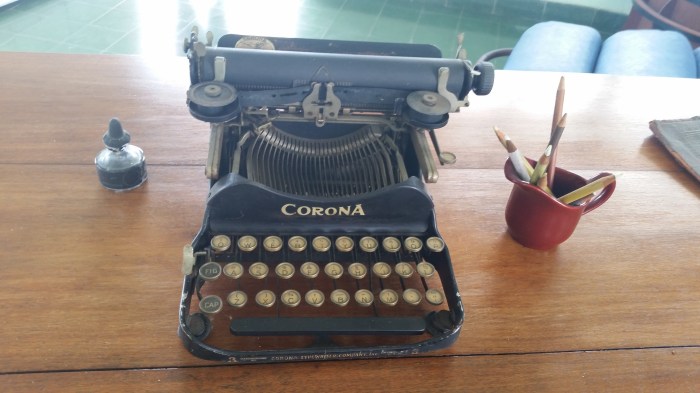
I found Finca Vigía to not only be a very beautiful place, but also very inspirational. In my mind, I could imagine him in his office, standing barefoot on his rug as he hammered out a book on his Corona typewriter. I could “see” him entertaining celebrity guests, such as Ava Gardner and Spencer Tracy, around the sparkling swimming pool. I could visualize him battling to land a big fish on his yacht, the Pilar.
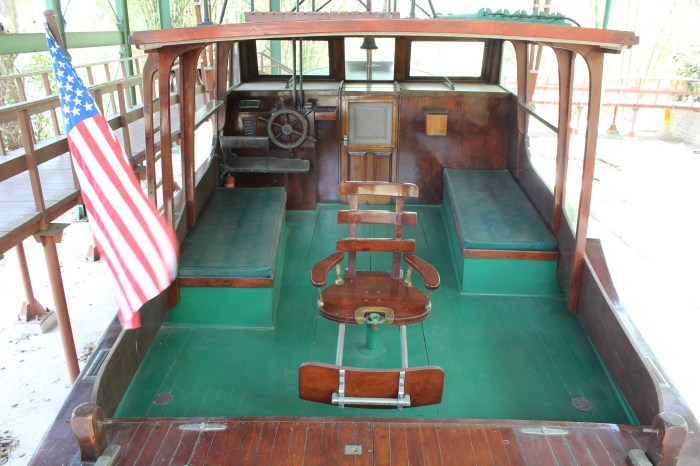
Hemingway was a man with a big personality and a big, bold life. He lived for adventure. Whether it was as a decorated soldier, a celebrated war correspondent, a social activist, or a Pulitzer-prize winning author, the man known as Papa was the epitome of carpe diem. Viewing Finca Vigía and learning more about Hemingway’s history reminded me yet again that life is not a rehearsal, and we only pass this way once so we need to live boldly.
Visiting his home in Cuba has also sparked a desire in me to take another look at his celebrated works – just to see what all the fuss is about. I think I’ll start by rereading “The Old Man and the Sea.”


***
To find out more about our adventures in Cuba, stay tuned for Part 5!
All photos are the property of V. Lori Hedges, and may not be used without permission.

 destinationinvestigations